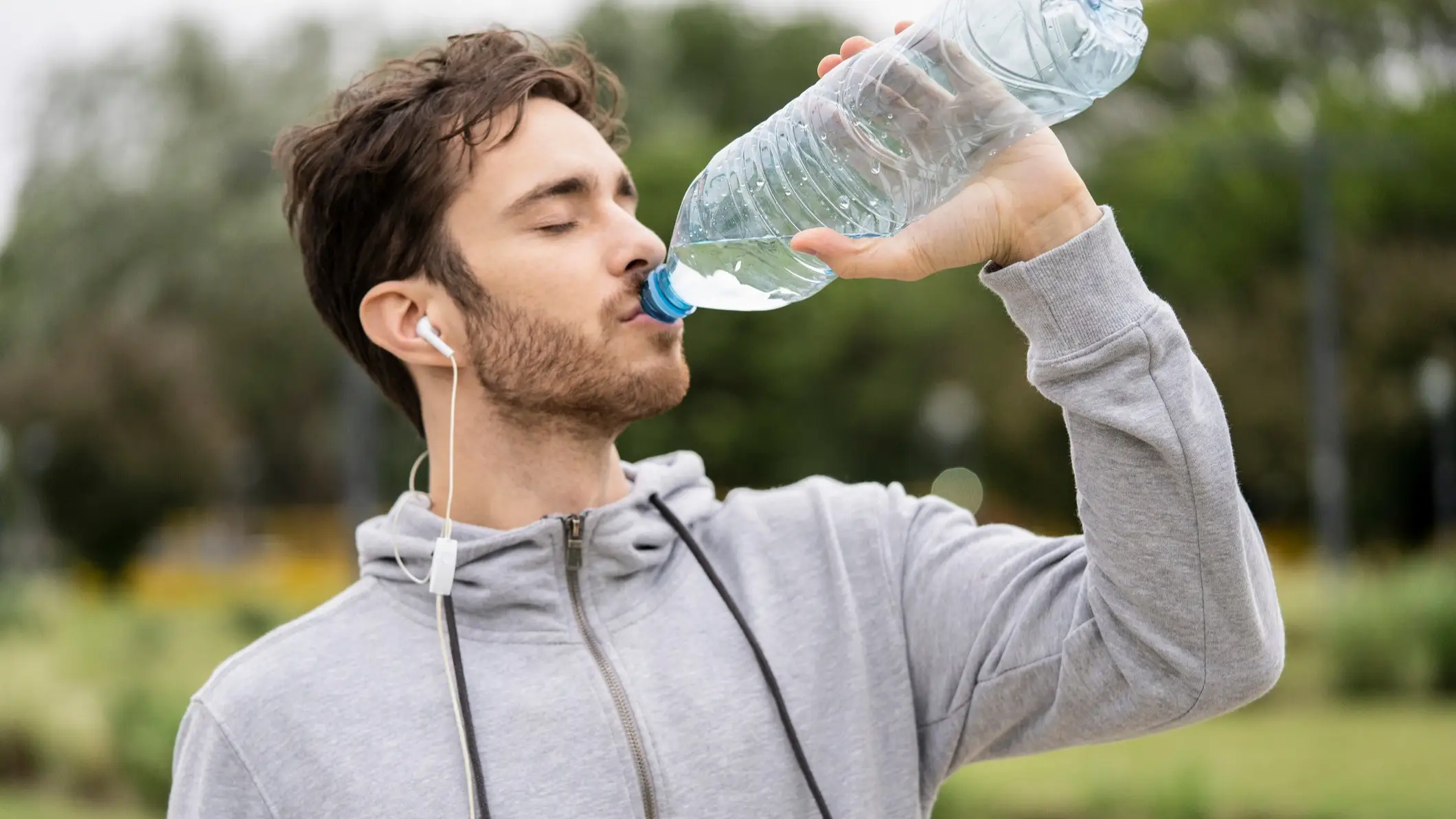
Huge warning to anyone that drinks bottled water

Nearly everyone in the world will have had at least a sip of bottled water in their lifetime but there are literally thousands of reasons to avoid it.
Everything that once seemed perfectly normal now comes with a health warning, whether it's drinking beer, eating bacon from the supermarket or in this case, having bottled water.
Anyone who's spent time in London will know that the tap water is a long way from Michelin star, and if you're not willing to shell out on a filter jug, then maybe you're simply purchasing bottled water in bulk.
Certainly in America, that seems to be a common concept, and if the environmental damage of doing that rather than having a reusable water bottle wasn't already bad enough, it seems as if it's way worse for our health as well.
Advert
It's not just about avoiding water that has gone warm inside the bottle, although there's no chance of that in the UK right now.
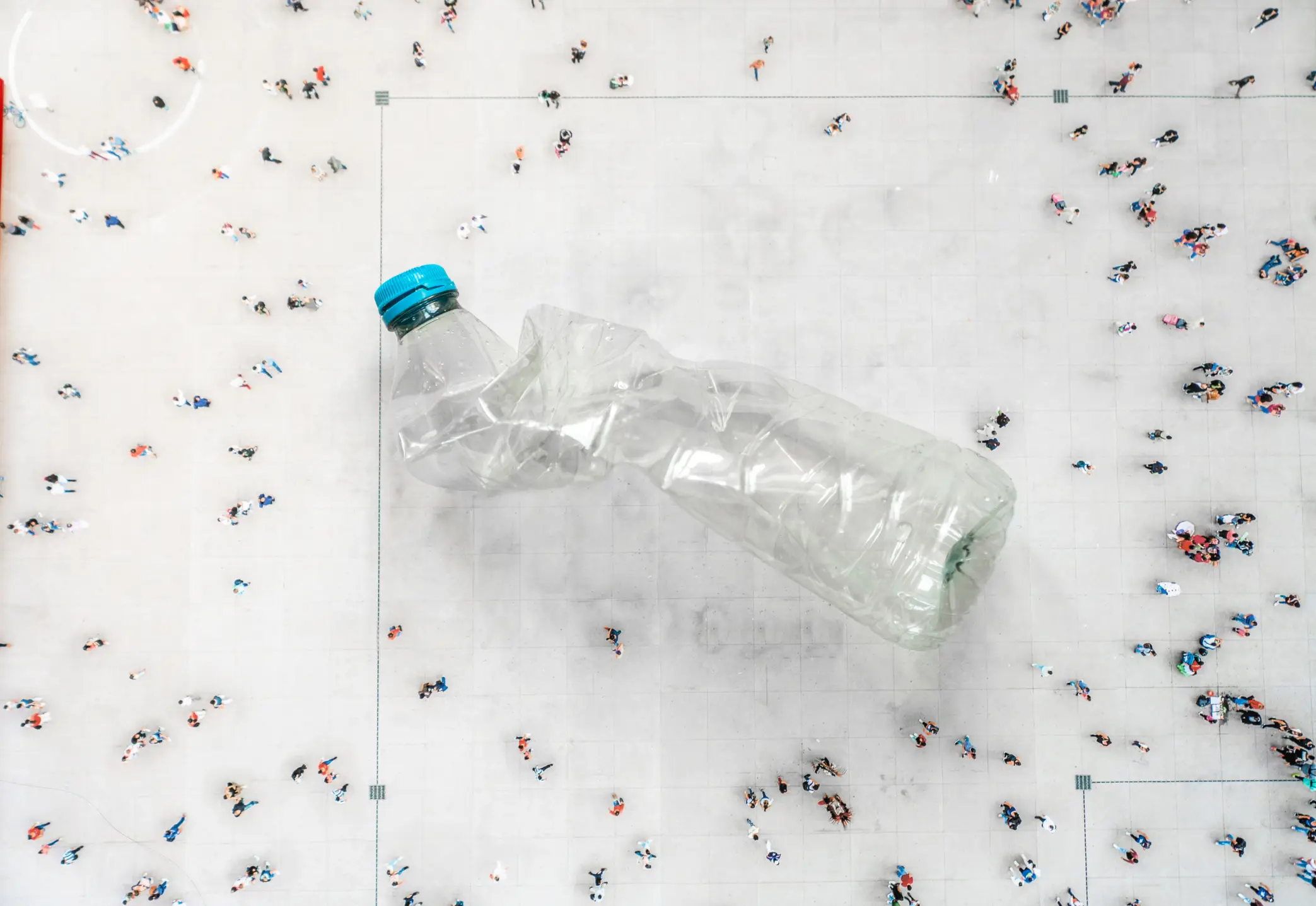
Instead, it's all about the amount of microplastics inside each bottle, a number which is seemingly going in one direction, despite environmental groups' efforts to clean up oceans and move to a more sustainable resource than plastic.

Sarah Sajedi, a doctoral student at Concordia University in Canada, reviewed over 140 scientific papers to determine the effects of plastic bottles on the human body, and she made a horrifying discovery.
On average, people ingest around 39,000 to 52,000 microplastic particles per year from food and drinking water.
But those who drink bottled water on a daily basis are ingest nearly 90,000 more microplastic particles into their bodies.
“Drinking water from plastic bottles is fine in an emergency, but it is not something that should be used in daily life,” Sajedi explains. “Even if there are no immediate effects on the human body, we need to understand the potential for chronic harm.”
Well, scientists have long been in agreement that microplastics can be very bad for the human body, as they have been linked to inflammation, cell damage and potentially toxic chemicals that can disrupt hormones and even lead to increased cancer risk later in life.
Verena Pichler, an associate professor of pharmaceutical chemistry, added: "Studies suggest that microplastics may have a role in amplifying inflammation, which is concerning.
"If an inflammatory response persists or is actively promoted by continuous exposure to plastics, this could have implications for tumour formation and disease progression.
"Although the direct role of microplastics in cancer development is still being investigated, existing scientific databases and studies indicate a probable connection."
So, it's not just about saving the environment, but potentially saving yourself from harm, when your nan buys you a new reusable water bottle each Christmas.
Topics: Environment, Health, Science, UK News, Cancer
 James Moorhouse