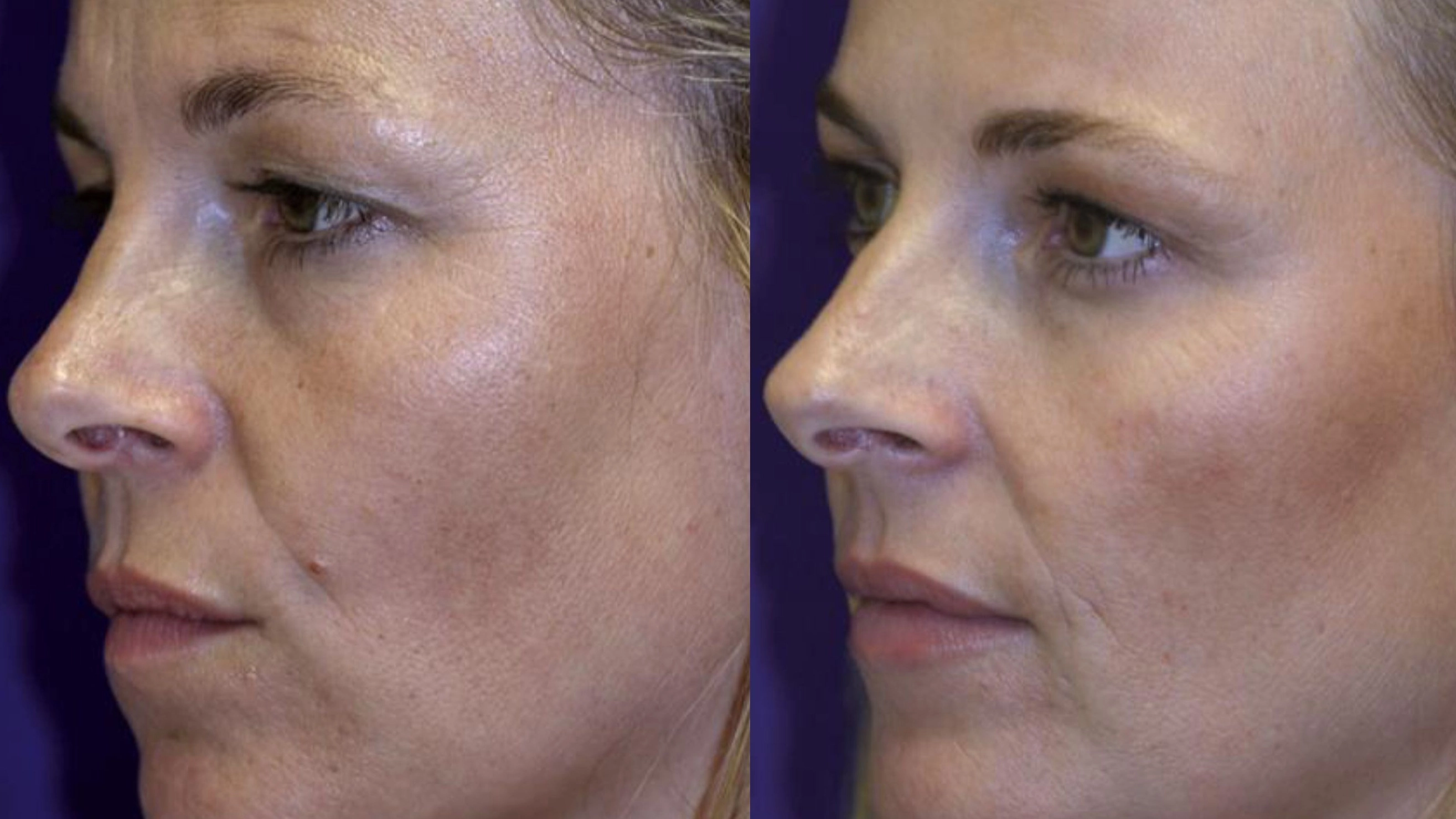
Identical twins show off insane difference after one used botox for 20 years and other didn’t

In the UK, 900,000 Botox injections are carried out every year, and side-by-side pictures from a twin study have shown exactly how it can change your face.
Last year, ITV surveyed 1,000 young people and found that almost one in five of them had undergone some sort of Botox or filler.
Side effects of Botox, short for botulinum toxin, can include headaches, fever, fatigue, diarrhoea, vomiting and occasionally difficult swallowing. But long-term it is very effective at reducing wrinkles.
In 2006, a scientific study was carried out by a Beverly Hills plastic surgeon Dr William Binder to examine how much getting Botox can really affect how you look - and it yielded some very interesting results.
Advert
It involved two female identical twins. One received Botox injections two to three times a year for 13 years from the age of 25, undergoing injections in the forehead, between the eyebrows and in the crow's feet region.
The other had received Botox only twice several years prior in the forehead and between her eyebrows.
The first set of photos were taken when they were 38.
What were the key differences between the twins in 2006?
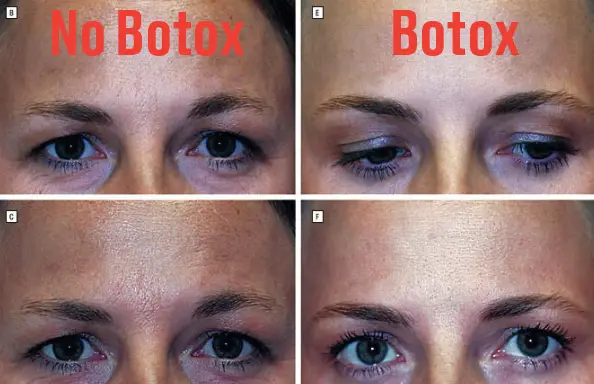
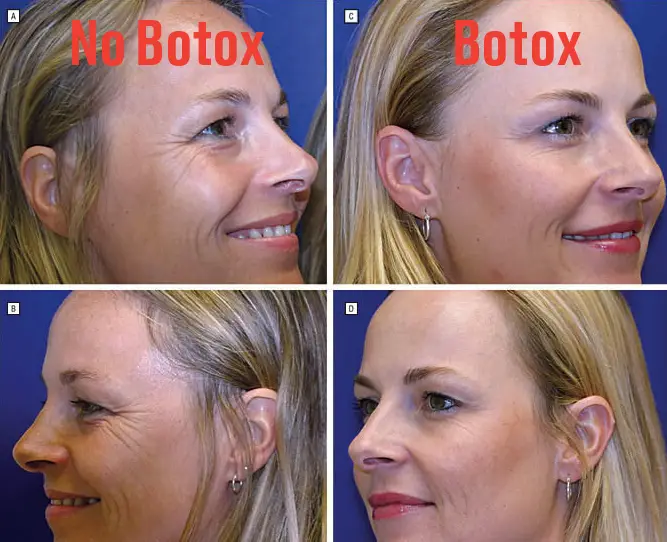
From the photos, you can see that the twin who had regular Botox had smoother skin and fewer wrinkles, while her sister had forehead lines and more prominent crow's feet when she smiled.
This is particularly significant as the twin who had regular Botox had not had injections in her crow's feet for seven months, with Botox usually wearing after two to six months.
As for why the effects of Botox might last longer in the twin who was regularly treated, Dr Binder wrote the injections work by 'not only by inhibiting the patient's ability to contract the target muscle but also perhaps through behavioural modification'.
He added: "With long-term treatment, the patient may become used to having little, if any, need or ability to contract the target muscle and may eventually 'learn' to avoid even trying to contract it."
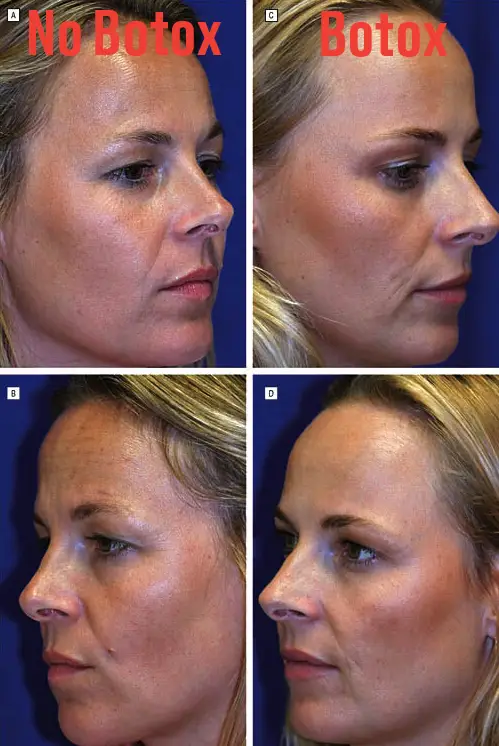
What did the twins look like six years later in 2012?
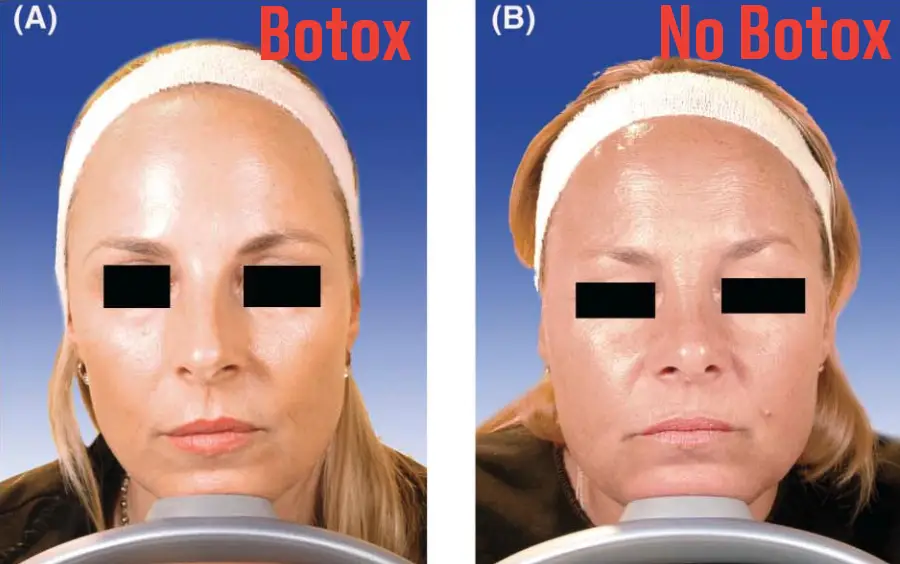
Six years later, when the twin sisters were 44, they were assessed in a follow-up.
The treated twin had continued to get regular injections every four to six months, although her dose had decreased over the last few years.
Her sister had undergone two more Botox treatments in the years between the original study and the follow-up.
The difference between the twins was more marked this time, with Dr Binder and co-author Dr Alexander Rivkin writing: "The skin texture of the treated twin looks smooth with small pores, whereas skin of the sporadically treated twin shows signs of ageing with a greater number of wrinkles and visible pores."
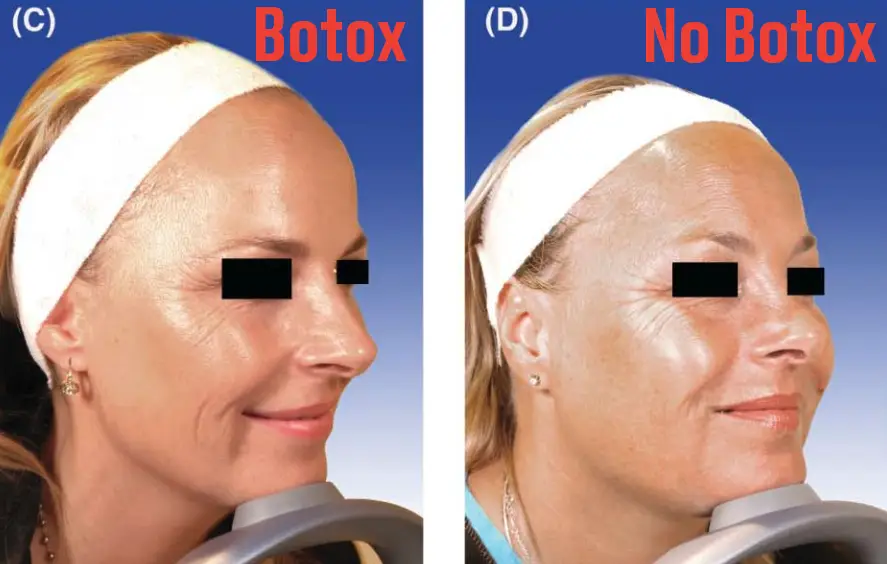
Both twins used factor 45 to factor 50 sunscreen on a daily basis, neither smoked, and both lived active lifestyles.
Though the twins lived in different countries, the twin that didn't have regular Botox lived in Munich, which has a lower UV index to Los Angeles, where the Botox twin lived.
Wrinkles are known to form when facial muscles contract, and as you age, the production of proteins such as collagen and elastin, which give your skin structure and elasticity, decreases.
Additional words by Anish Vij.
 Joshua Nair