ladbible homepage
ladbible homepage
  • iconNews
  • videos
  • entertainment
  • Home
  • News
    • UK
    • US
    • World
    • Ireland
    • Australia
    • Science
    • Crime
    • Weather
  • Entertainment
    • Celebrity
    • TV
    • Film
    • Music
    • Gaming
    • Netflix
    • Disney
  • Sport
  • Technology
  • Travel
  • Lifestyle
  • Money
  • Originals
    • FFS PRODUCTIONS
    • Say Maaate to a Mate
    • Daily Ladness
    • UOKM8?
    • FreeToBe
    • Citizen Reef
  • Advertise
  • Terms
  • Privacy & Cookies
  • License Our Content
  • About Us & Contact
  • Jobs
  • Latest
  • Archive
  • Topics A-Z
  • Authors
Facebook
Instagram
X
Threads
Snapchat
TikTok
YouTube
Submit Your Content Here
  • SPORTbible
  • Tyla
  • GAMINGbible
  • LADbible Group
  • UNILAD
  • FOODbible
  • UNILAD Tech
Lad solves 20,000-year Ice Age drawing mystery

Home> News

Published 13:36 6 Jan 2023 GMT

Lad solves 20,000-year Ice Age drawing mystery

He made the discovery despite being just a 'person off the street'

Claire Reid

Claire Reid

google discoverFollow us on Google Discover

A bloke ‘off the street’ has managed to solve a 20,000-year Ice Age mystery about why our ancient ancestors made cave paintings.

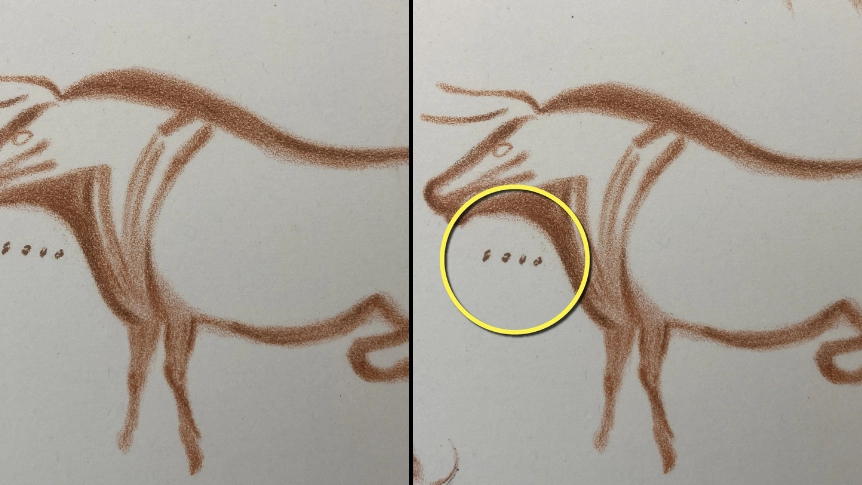
Cave paintings are common throughout Europe, with animals such as fish and cattle often depicted, but archaeologists have long been baffled by the inclusion of dots and other such markings made near to the animal drawings.

Until Ben Bacon, a furniture conservator from London, took it upon himself to study the ancient markings and came to the conclusion that they were an early attempt at marking the lunar calendar and the reproduction cycles of animals.

Advert

Bacon approached academics with his theory and was told to pursue, despite him being effectively 'a person off the street’.

In the end, Bacon collaborated with a team including two professors from Durham University and one from University College London to publish a paper in the Cambridge Archaeological Journal.
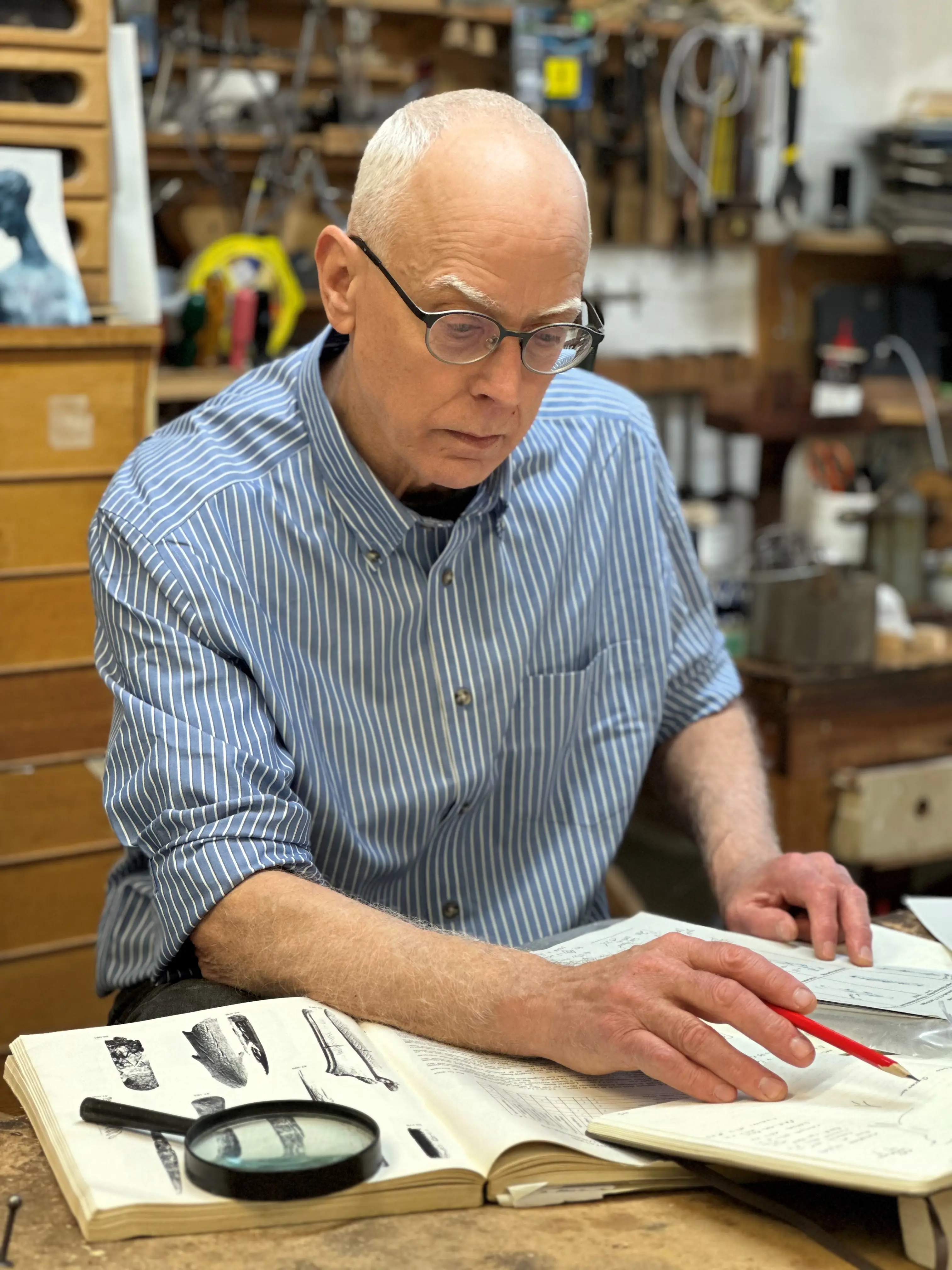
Ben Bacon made the incredible discovery.
PA

Bacon, who has an English degree but decided not to go into academia, told PA: “The meaning of the markings within these drawings has always intrigued me so I set about trying to decode them, using a similar approach that others took to understanding an early form of Greek text.

“Using information and imagery of cave art available via the British Library and on the internet, I amassed as much data as possible and began looking for repeating patterns.

“As the study progressed, I reached out to friends and senior university academics, whose expertise was critical to proving my theory.
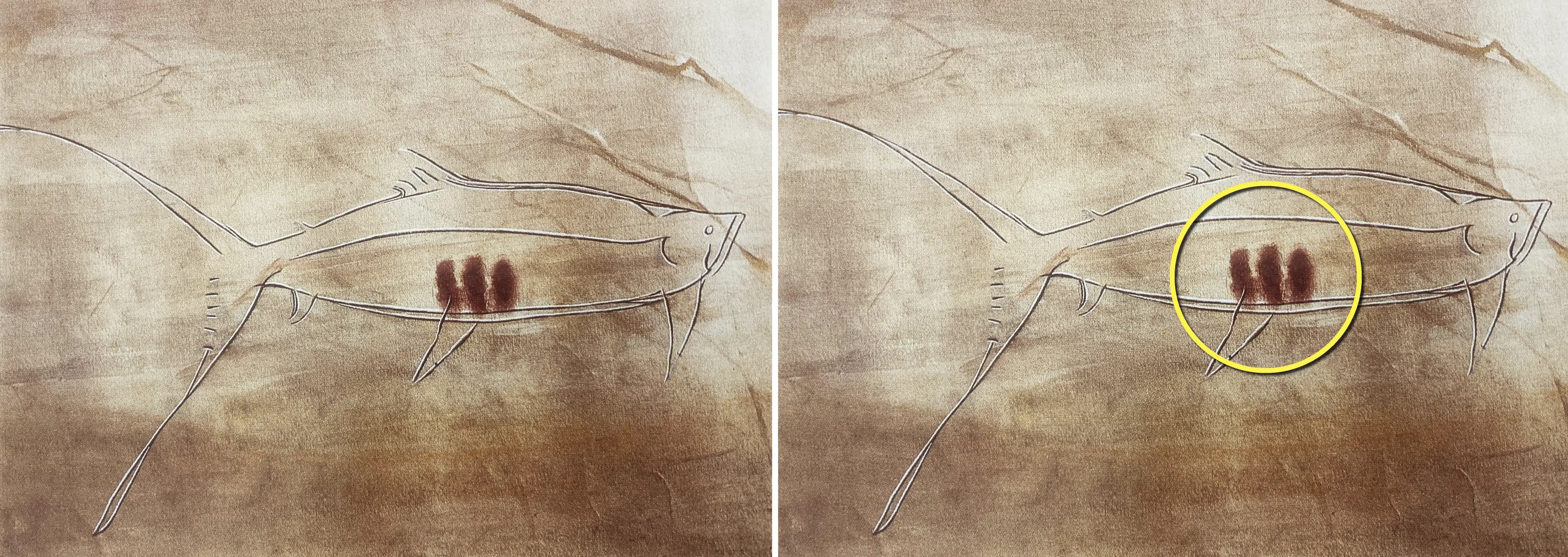
The markings had remained a mystery for centuries.
PA

“It was surreal to sit in the British Library and slowly work out what people 20,000 years ago were saying but the hours of hard work were certainly worth it.”

The symbols are well known to experts, but no one was clear on what they meant until Bacon decided to get involved.

One such symbol resembles the letter Y, which he believed meant ‘giving birth’.

Using the birth cycles of equivalent animals today as a reference point, the team was able to work out that the number of marks associated with Ice Age animals were a record, by lunar month, of when they were mating.

Professor Pettitt, of the Department of Archaeology at Durham University, said: “To say that when Ben contacted us about his discovery was exciting is an understatement. I am glad I took it seriously.
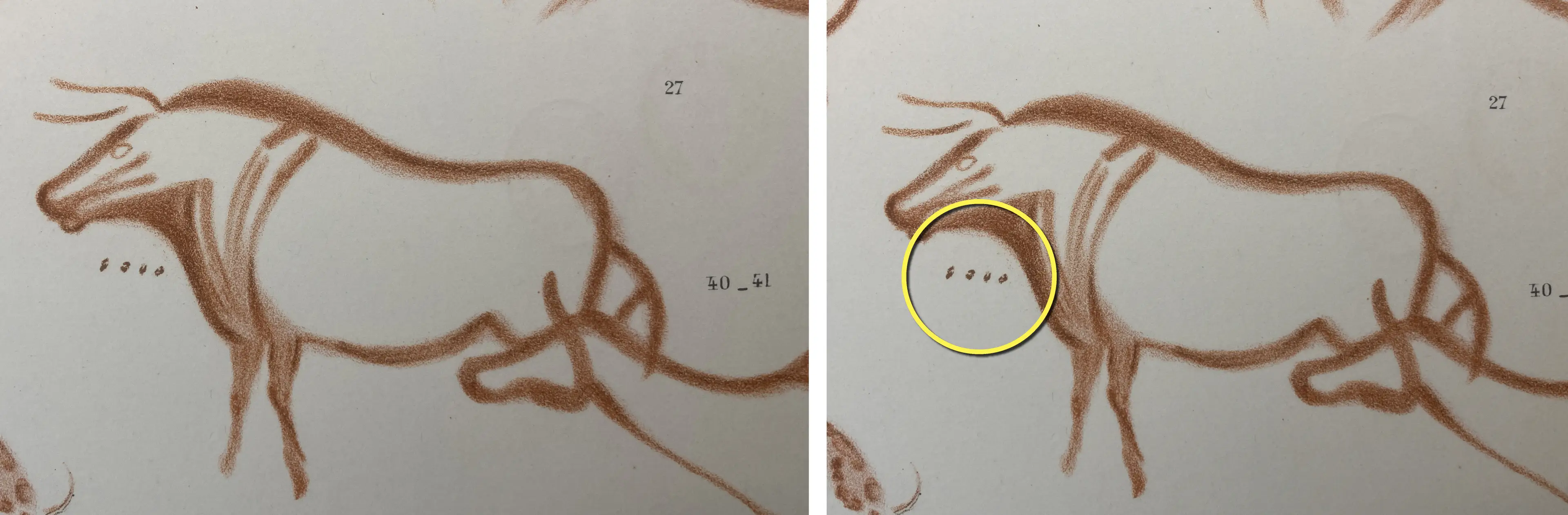
His discovery has been hailed as ‘fascinating’ by one expert.
PA

“This is a fascinating study that has brought together independent and professional researchers with expertise in archaeology and visual psychology, to decode information first recorded thousands of years ago.

“The results show that Ice Age hunter-gatherers were the first to use a systematic calendar and marks to record information about major ecological events within that calendar.

“In turn, we’re able to show that these people, who left a legacy of spectacular art in the caves of Lascaux and Altamira, also left a record of early timekeeping that would eventually become commonplace among our species.”

Featured Image Credit: PA

Topics: UK News

Claire Reid
Claire Reid

Claire is a journalist at LADbible who, after dossing around for a few years, went to Liverpool John Moores University. She graduated with a degree in Journalism and a whole load of debt. When not writing words in exchange for money she is usually at home watching serial killer documentaries surrounded by cats. You can contact Claire at [email protected]

Recommended reads

The Inbetweeners set to return with 'new movie on Netflix'Channel 4Supercomputer predicts most likely winner of the 2026 Grand NationalPAUL ELLIS/AFP via Getty ImagesArtemis II astronauts warned of 'space comedown' effect after crashing back to earthNASA/Bill IngallsMan drinks alcohol and lifts weight for 90 days straight to see how bad it actually is(YouTube/@Clawhammer Supply)

Advert

  • Bride solves bizarre four-year mystery after guest she didn't know appeared in her wedding pictures
  • Aviation expert 'solves' 10-year-old mystery of exploding plane that killed all 224 on board
  • New forensic study ‘solves mystery’ of Jesus’ final moments
  • Stephen Fry asked very personal question about 30-year age gap relationship by neurodivergent interviewer

Choose your content:

an hour ago
15 hours ago
  • PAUL ELLIS/AFP via Getty Images
    an hour ago

    Supercomputer predicts most likely winner of the 2026 Grand National

    There are some shocks and surprises in store if the supercomputer is right...

    News
  • NASA/Bill Ingalls
    an hour ago

    Artemis II astronauts warned of 'space comedown' effect after crashing back to earth

    NASA said their splashdown was 'textbook'

    News
  • Carl De Souza/Getty
    15 hours ago

    How much a pint costs at the 2026 Grand National, get your overdraft ready

    There will be plenty of sore heads on Sunday morning

    News
  • (NASA via Getty Images)
    15 hours ago

    NASA 'anxious' as Artemis crew approach fireball return reaching 23,839 mph speeds

    The crew's return to Earth is considered the 'most dangerous' part of the journey

    News