ladbible homepage
ladbible homepage
  • Home
  • News
    • UK
    • US
    • World
    • Ireland
    • Australia
    • Science
    • Crime
    • Weather
  • Entertainment
    • Celebrity
    • TV
    • Film
    • Music
    • Gaming
    • Netflix
    • Disney
  • Sport
  • Technology
  • Travel
  • Lifestyle
  • Money
  • Originals
    • FFS PRODUCTIONS
    • Say Maaate to a Mate
    • Daily Ladness
    • UOKM8?
    • FreeToBe
    • Citizen Reef
  • Advertise
  • Terms
  • Privacy & Cookies
  • License Our Content
  • About Us & Contact
  • Jobs
  • Latest
  • Archive
  • Topics A-Z
  • Authors
Facebook
Instagram
X
Threads
Snapchat
TikTok
YouTube
Submit Your Content Here
  • SPORTbible
  • Tyla
  • GAMINGbible
  • LADbible Group
  • UNILAD
  • FOODbible
  • UNILAD Tech
Incredible animation shows the moment extremely rare black hole rips apart star in explosion
Home>News>Science
Published 17:19 3 Aug 2025 GMT+1

Incredible animation shows the moment extremely rare black hole rips apart star in explosion

NASA believe they spotted the moment a black hole devoured a star

Joe Harker

Joe Harker

google discoverFollow us on Google Discover

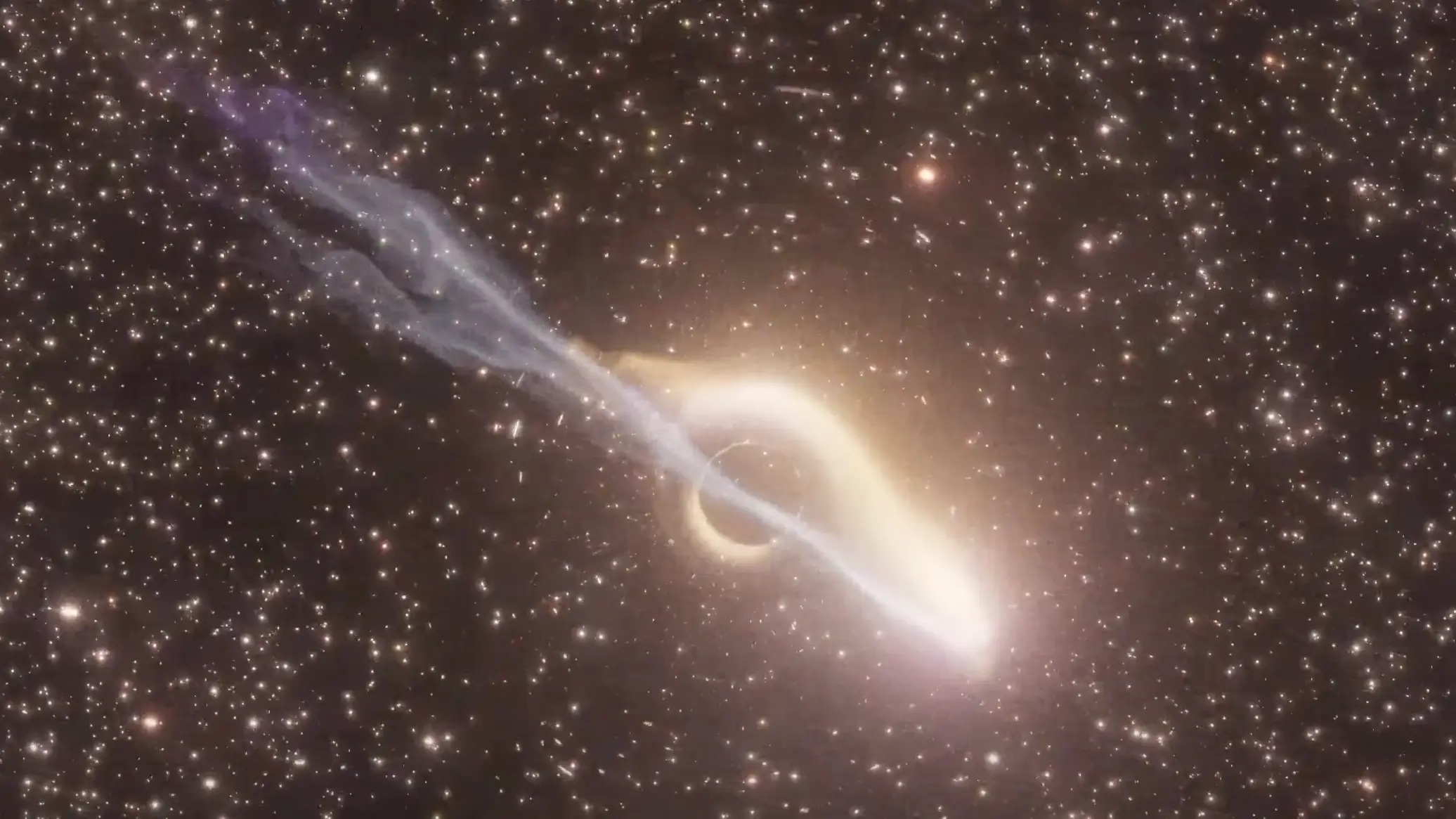
NASA helped create a stunning animation of the moment a star was torn to shreds by a black hole and destroyed in a great explosion of light.

Out in space, there are things called intermediate-mass black holes, which are between 100 and 10,000 times larger than our own sun and capable of devouring the stars themselves.

Experts believe these kinds of black holes are a missing link between the stellar-mass black holes which are formed from collapsing stars and the truly gargantuan supermassive black holes which sit at the centre of a galaxy.

With our telescopes and monitoring instruments pointed out into space, a team of researchers think they've found one, and even more than that, they reckoned they spotted the moment it ate an actual star.

Advert

They explained that they used the Hubble Space Telescope and the Chandra X-Ray Observatory to spot this intermediate-mass black hole dubbed HLX-1 at work.

As you can see in the animation the space telescopes looked at a pair of galaxies very far away where they spotted a cluster of stars gathered around the black hole on the outskirts of one of those galaxies which they called NGC 6099.

This is all happening around 450 million light years away from us, so these events transpired long before even the dinosaurs existed.

In the animation simulating the events the scientists believe they observed a 'tidal disruption event' which occurs when a star gets too close to a black hole and is torn apart by the unbelievably strong cosmic forces which power black holes.

In essence the star is pulled in and 'spaghettified', which is where a black hole compresses an object into something very long and thin.

Even something as powerful as a star isn't safe from spaghettification, and the animation shows the star being sucked into the black hole and looping the stellar material around the mighty phenomenon.
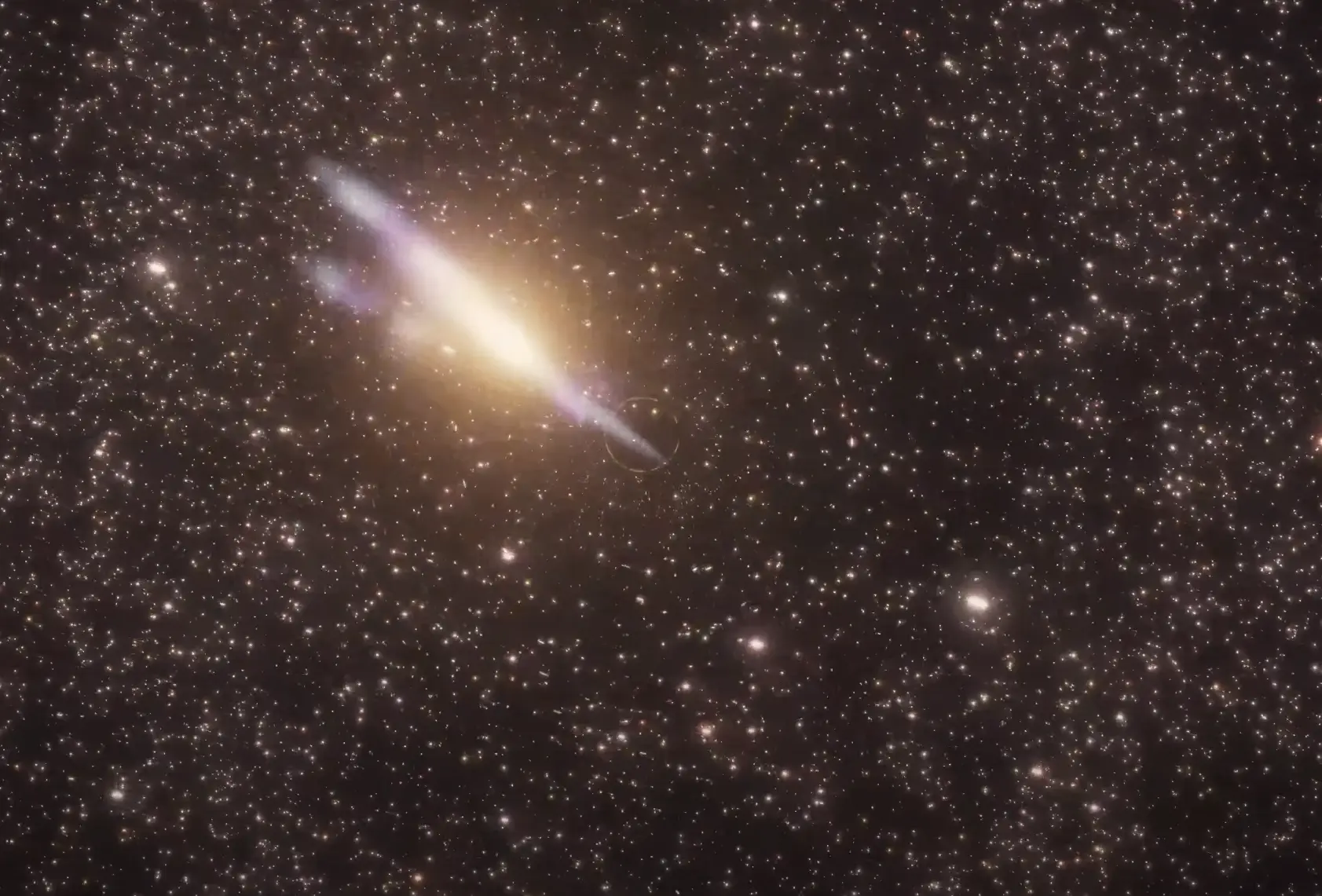
One string of space spaghetti coming right up (NASA, ESA, Ralf Crawford (STScI))

There's then a big flash of radiation generated by the destruction of the star, as one of the near-infinite denizens of the cosmos is devoured and destroyed.

These events happened hundreds of millions of years ago but we've been fortunate enough to be able to observe them and then produce a simulation giving us an even clearer idea of how a star died long before there was ever such a thing as a human.

Of course, the researchers have noted that there's a chance HLX-1 isn't real and what they saw was actually something else.

NASA experts are on the lookout for more intermediate-mass black holes as they are particularly rare.

Space telescopes do much of the work of spotting potential sites where they might be, and when you find a black hole there's always a chance you'll catch it gobbling up a star.

Featured Image Credit: NASA, ESA, Ralf Crawford (STScI)

Topics: Space, Science, NASA

Joe Harker
Joe Harker

Joe graduated from the University of Salford with a degree in Journalism and worked for Reach before joining the LADbible Group. When not writing he enjoys the nerdier things in life like painting wargaming miniatures and chatting with other nerds on the internet. He's also spent a few years coaching fencing. Contact him via [email protected]

X

@MrJoeHarker

Recommended reads

Virgin Island star says favourite part of losing her virginity wasn’t shown in new episodeChannel 4Millions of Brits face driving ban as ‘cognitive’ tests could become compulsoryGetty Stock PhotoMan visits Nutty Putty cave 16 years after man suffered ‘worst death of all time’YouTube/ScootSkiNew £5,000 deposit mortgage launches with no ‘bank of mum and dad’ allowedGetty Stock Images

Advert

Choose your content:

4 hours ago
8 hours ago
10 hours ago
  • Getty Stock Photo
    4 hours ago

    Millions of Brits face driving ban as ‘cognitive’ tests could become compulsory

    Drivers over 70 could have to do two tests if they want to keep their licence

    News
  • Instagram/@_kickitkenny_9
    8 hours ago

    Teenager left hanging by broken leg on power line after car crash shares sobering new images five years later

    Kennedy Bingham lost her leg in 2021 from an accident in which she was ejected from a car and left upside down on a power line

    News
  • National Highways
    10 hours ago

    Archaeologists find 8,000-year-old human remains hidden beneath English fields

    Archaeological digs for the A46 Newark Bypass scheme have uncovered an historical marvel

    News
  • Assad NIYAZI / AFP via Getty Images
    10 hours ago

    Situation that Bible says is ‘end of the world’ is happening right now

    A Bible prophecy that came before Armageddon in the Book of Revelation is underway

    News
  • Major scientific breakthrough as black hole producing 'UFO' captured for first time
  • Scientists may have discovered biggest ever black hole in the universe
  • UK scientists have successfully created the world's first 'black hole bomb'
  • James Webb telescope findings suggest we might be living 'inside a black hole'