ladbible homepage
ladbible homepage
  • iconNews
  • videos
  • entertainment
  • Home
  • News
    • UK
    • US
    • World
    • Ireland
    • Australia
    • Science
    • Crime
    • Weather
  • Entertainment
    • Celebrity
    • TV
    • Film
    • Music
    • Gaming
    • Netflix
    • Disney
  • Sport
  • Technology
  • Travel
  • Lifestyle
  • Money
  • Originals
    • FFS PRODUCTIONS
    • Say Maaate to a Mate
    • Daily Ladness
    • UOKM8?
    • FreeToBe
    • Citizen Reef
  • Advertise
  • Terms
  • Privacy & Cookies
  • License Our Content
  • About Us & Contact
  • Jobs
  • Latest
  • Archive
  • Topics A-Z
  • Authors
Facebook
Instagram
X
Threads
Snapchat
TikTok
YouTube
Submit Your Content Here
  • SPORTbible
  • Tyla
  • GAMINGbible
  • LADbible Group
  • UNILAD
  • FOODbible
  • UNILAD Tech
8,000-year-old relic found at bottom of ocean could lead to 'mind-blowing' discovery

Home> News> Science

Updated 19:20 13 Dec 2023 GMTPublished 19:18 13 Dec 2023 GMT

8,000-year-old relic found at bottom of ocean could lead to 'mind-blowing' discovery

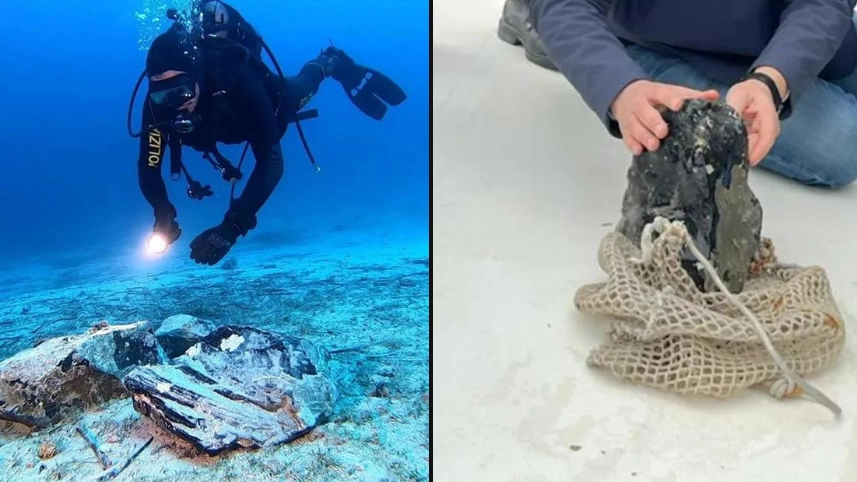
The exciting discovery was made near the White Grotto of Capri

Stefania Sarrubba

Stefania Sarrubba

google discoverFollow us on Google Discover

A series of mysterious artefacts have been found off the coast of Naples, and while it could lead to further 'mind-blowing' discoveries, it's also left scientists scratching their heads.

The exciting discovery was made near the island of Capri in the Bay of Naples, southern Italy, back in October.

The objects - made from volcanic glass - have been found near the White Grotto, a cavern not too far from the more famous Blue Grotto, popular with tourists thanks to its blue waters.

Advert

The White Grotto is now having its place in the sun too as the discovery prompted speculations about the possibility of finding remains of a Neolithic shipwreck, dating between 8,000 to 5,000 years ago.

The Naples Police Department and marine archeologists joined forces to recover the objects made of obsidian, a shiny, black volcanic glass formed when lava extruded from a volcano cools rapidly with minimal crystal growth.

The most significant item found on the seabed has a weight of eight kilograms (17.6 pounds) and measures around 28 x 20 x 15 centimetres (11 x 8 x 6 inches).
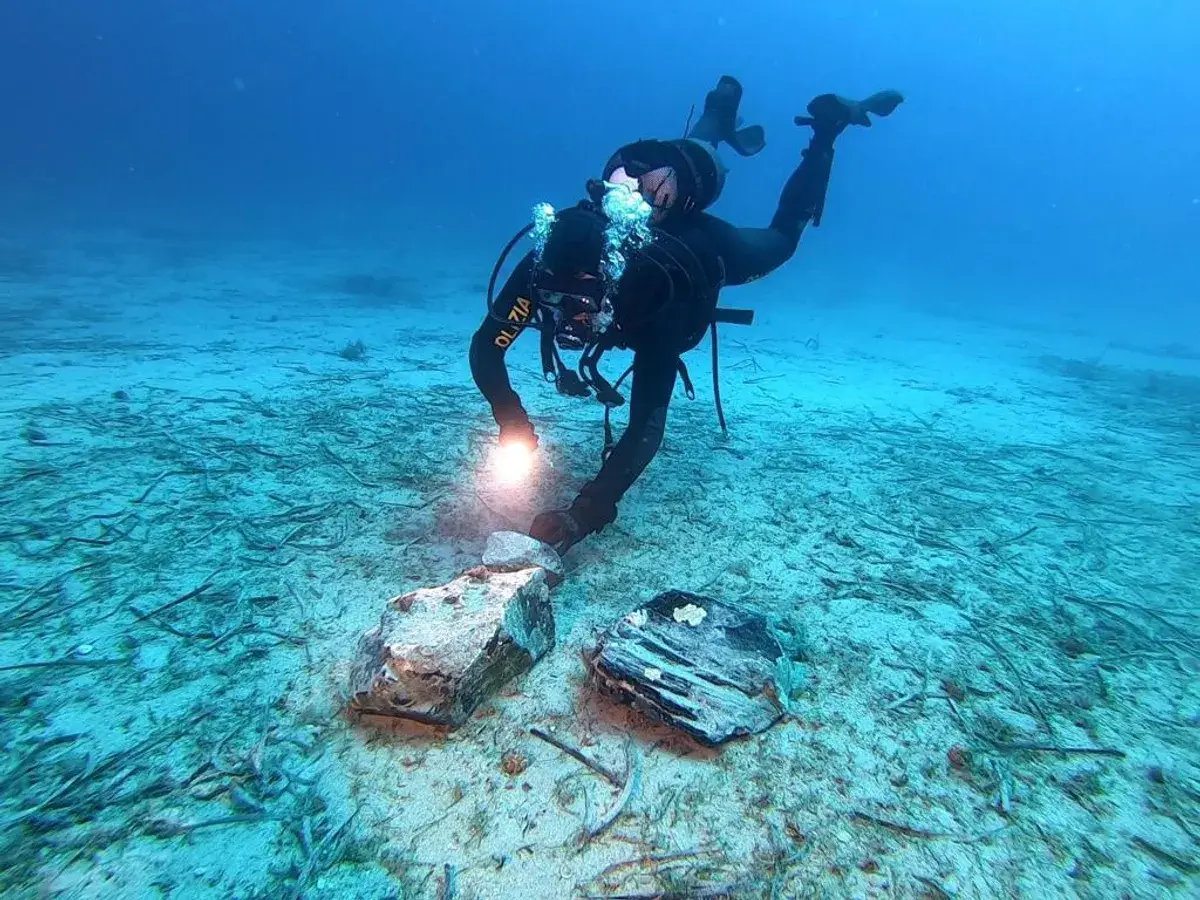
The relics were found in October.
Superintendency of the Metropolitan Area of Naples

Found at a depth of 30 to 40 meters (98 to 132 feet) below the surface, the object is puzzling researchers as no one seems to know what it was used for exactly. Interestingly, the artefact bears marks and carvings on its surface that confirm it was modified by human hands in some way.

"It is necessary to carry out an extensive instrumental survey of the seabed to verify the possible presence of the hull or other cargo material,” Mariano Nuzzo, the superintendent of archaeology, fine arts, and landscape for the Naples metropolitan area, said in a statement released in November.

If marine archaeologists were to find a Stone Age shipwreck, this would be the first discovery of its kind, as Sandro Barucci, a researcher and author of books on ancient seafaring, told Newsweek.

"The remains of a Neolithic hull in Mediterranean waters have never been found to date. There are cases of Neolithic boats found on the European mainland or in freshwater, lakes, and rivers. But the Mediterranean Sea has a pleasant temperature and salinity for the wood-eating mollusk, Teredo navalis.
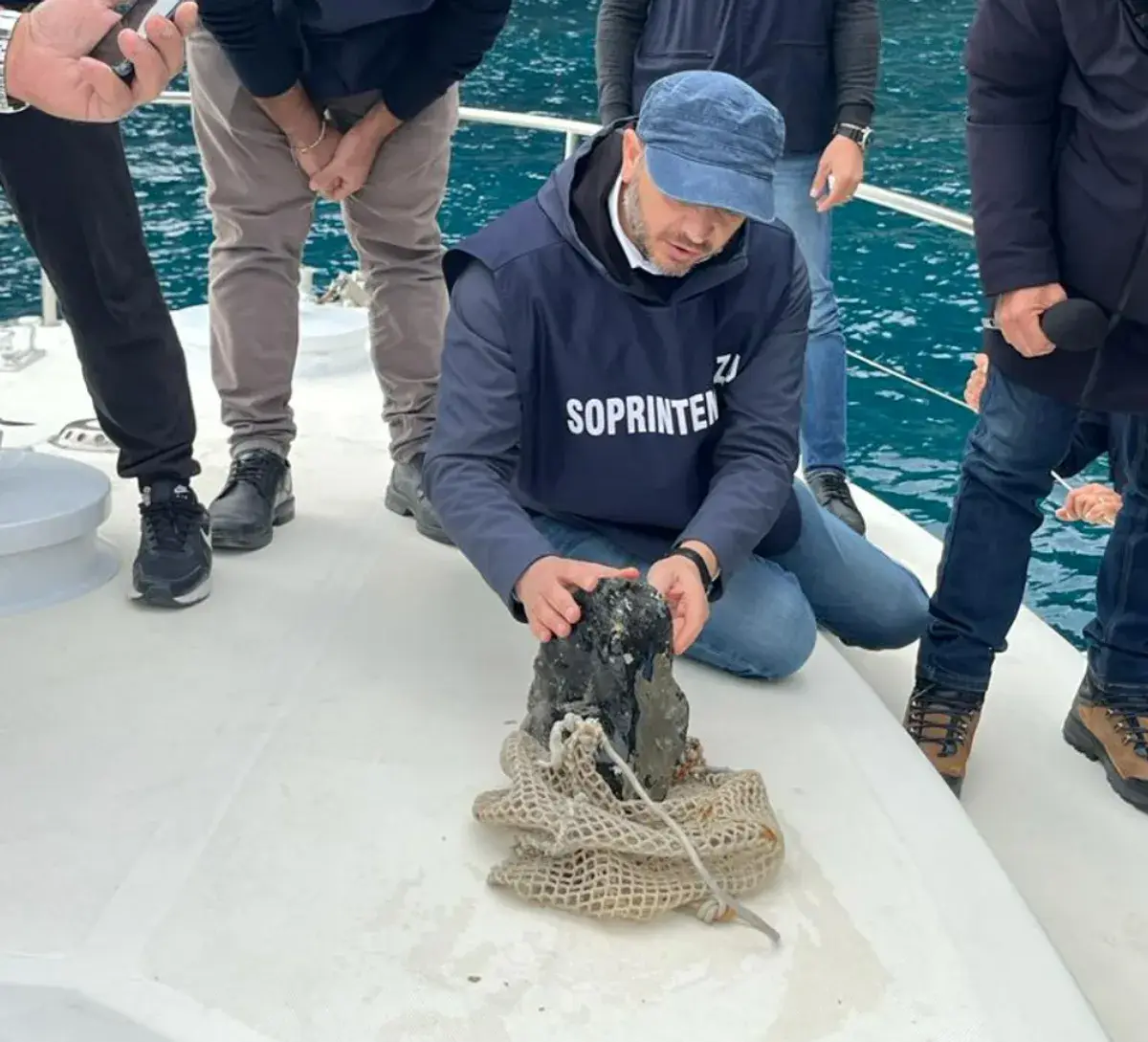
The artefacts were located at a depth of 100 to 130 feet.
Superintendency of the Metropolitan Area of Naples

"Thus, wooden ships of all ages, when they sink in the Mediterranean, are prey for these mollusks," he explained.

“At Capri, if the boat had sunk quickly into the sand and remained protected, it would perhaps be possible to find some wooden parts, especially if it were a dugout canoe – i.e. made from a single large hollowed-out tree trunk. But it would truly be a very rare event, indeed unique,” he added.

While it isn't clear at present if the hull will ever be found, Nuzzo hinted at how further explorations of the seabed could clarify how the obsidian objects were deposited to the seafloor, while also investigating the role of prehistoric Capri.

Featured Image Credit: Superintendency of the Metropolitan Area of Naples

Topics: Science, World News, Environment, History

Stefania Sarrubba
Stefania Sarrubba

Recommended reads

What astronauts actually eat in space after historic Artemis II launchJim WATSON / AFP via Getty ImagesThe Boys fans have missed massive plot points for final seasonPrime VideoUS Congressman issues bombshell warning over UFO secrets that would leave the world ‘unglued’Heather Diehl/Getty ImagesScientists finally discover location of male G-spot and it's not where previously thoughtGetty Stock Photo

Advert

Choose your content:

an hour ago
2 hours ago
  • Jim WATSON / AFP via Getty Images
    an hour ago

    What astronauts actually eat in space after historic Artemis II launch

    While space food traditionally used to be limited, technological advances now allow astronauts to eat a wider variety

    News
  • Heather Diehl/Getty Images
    an hour ago

    US Congressman issues bombshell warning over UFO secrets that would leave the world ‘unglued’

    He claimed he couldn't give details because bad things happened to those who tried to talk

    News
  • Getty Stock Photo
    2 hours ago

    Scientists finally discover location of male G-spot and it's not where previously thought

    The scientists made a very detailed study of the penis

    News
  • Chris Arjoon/Icon Sportswire via Getty Images
    2 hours ago

    Trump’s granddaughter, Kai, faced backlash for ‘out of touch’ video before ‘delusional’ dream job admission

    Kai documented visiting a grocery store with her Secret Service agent

    News
  • 140,000-year-old discovery at the bottom of the ocean could give huge insight into ancient ways of life
  • 1,200 year-old discovery could explain why Mayan civilisation completely disappeared
  • Archaeologists make incredible 7,000-year-old discovery at the bottom of the Mediterranean Sea
  • People can't get over what explorer said when reaching bottom of the ocean in 'scariest thing imaginable'