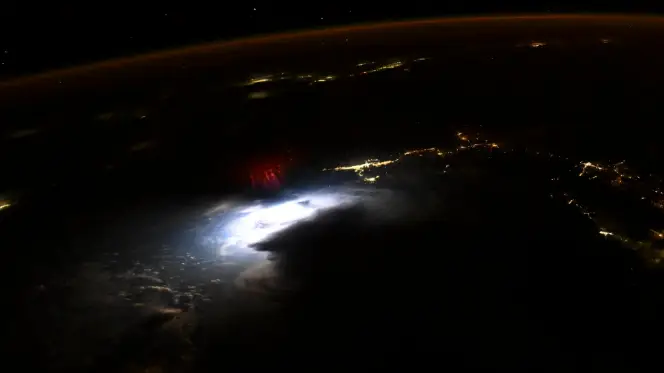
NASA astronaut's stunning time-lapse of Earth lightning storm from ISS has to be explained to be believed

A NASA astronaut has explained what her social media space picture means after posting a shot of her view from space, and it’s amazing.
Earth is just so weird.
There are things that happen every single day that you just can’t comprehend.
For example, we have stunning views, mysterious natural wonders, celestial events above us and atmospheric occurrences all the time.
Advert
But as we’re firmly planted on Earth, it’s not often a person would be able to see things like that happen above the clouds.
However, Nichole Ayers, who has been a NASA astronaut since 2021, revealed a very cool event that you can immediately see in her picture posted to X.
In her post, you can see Nicaragua, Costa Rica and Panama from above.
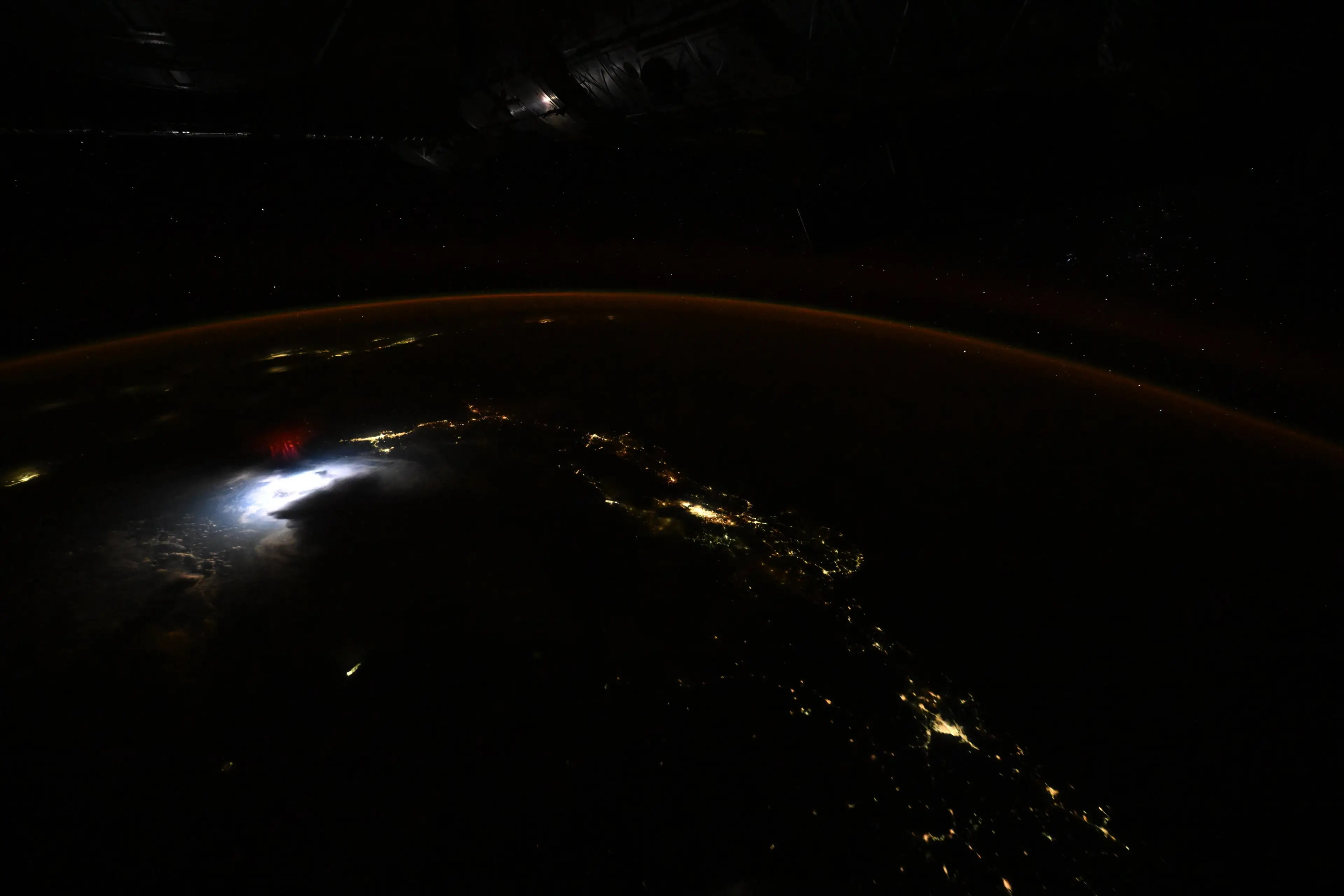
Most of the scene is dark, with a few spots of light thanks to electricity and buildings, but one thing stands out above all.
It’s a giant white glow and red streak in the left-hand side.
At first, you might believe it to be a large stadium with a million lights illuminating it - but that would be very wrong.
Instead, it’s a lightning strike, and a ‘sprite.'
Okay, so you might be confused about what this is, but according to Ayres, it’s simple science.
She wrote for her followers: “Soooooo much going on in this picture. This shot came from a time-lapse sequence that I set up in the Cupola. You can see Nicaragua, Costa Rica, and Panama, with South America off in the distance.
She explained: “The first eye-catching thing is the lightning strike just north of Panama City. The red line is a sprite, which is upward directed lightning that gets up into the upper atmosphere and is difficult to catch in a picture. The next thing I noticed was the reflection of that lightning strike on the @Space_Station structure!”
According to the astronaut, the light was ‘so bright you can see it on the metal exterior of the Station.’
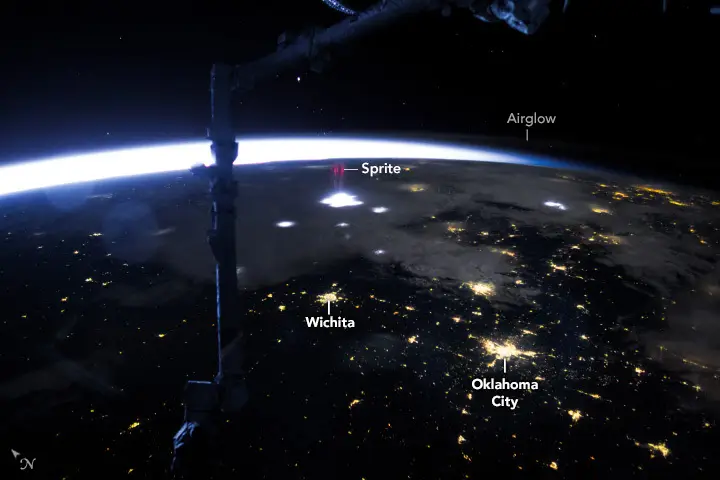
As for the ‘sprite’, this ‘faint red air glow above the vibrant orange of the base atmospheric layer’, is actually a reaction caused by the ‘atomic oxygen in the f-region of the atmosphere and occurs 300-600 kilometers above Earth.’
Sprites have previously been captured on film last year by those working on the International Space Station, such as this one over North America.
The space station’s Canadarm2 robotic arm captured a timelapse video using a long sequence of photographs at short intervals, and shows an absolute party of lightening strikes around a specific region.
Flashes of lightning light up the storm system and produce one large sprite, which momentarily shoots upwards as the ISS comes closer to the area.
According to NASA, sprites appear to be connected to ‘positively charged cloud-to-ground lightning strokes’ as the positively charged lightning ‘interacts with atmospheric nitrogen, creating an electrical breakdown that produces flashes of red light.'
Allegedly hard to photograph, the sky needs to be clear of clouds to be able to see a sprite from Earth’s surface.
It’s pretty cool what Earth can do.
 Britt Jones