ladbible homepage
ladbible homepage
  • iconNews
  • videos
  • entertainment
  • Home
  • News
    • UK
    • US
    • World
    • Ireland
    • Australia
    • Science
    • Crime
    • Weather
  • Entertainment
    • Celebrity
    • TV
    • Film
    • Music
    • Gaming
    • Netflix
    • Disney
  • Sport
  • Technology
  • Travel
  • Lifestyle
  • Money
  • Originals
    • FFS PRODUCTIONS
    • Say Maaate to a Mate
    • Daily Ladness
    • UOKM8?
    • FreeToBe
    • Citizen Reef
  • Advertise
  • Terms
  • Privacy & Cookies
  • License Our Content
  • About Us & Contact
  • Jobs
  • Latest
  • Archive
  • Topics A-Z
  • Authors
Facebook
Instagram
X
Threads
Snapchat
TikTok
YouTube
Submit Your Content Here
  • SPORTbible
  • Tyla
  • GAMINGbible
  • LADbible Group
  • UNILAD
  • FOODbible
  • UNILAD Tech
'Significant' space breakthrough made as NASA receives signal from 290 million miles away

Home> News> Science

Updated 15:34 9 Oct 2024 GMT+1Published 15:29 9 Oct 2024 GMT+1

'Significant' space breakthrough made as NASA receives signal from 290 million miles away

NASA has managed to change space communication forever

Joshua Nair

Joshua Nair

google discoverFollow us on Google Discover

A huge breakthrough has been made in space exploration, and it could change the way that we explore our solar system.

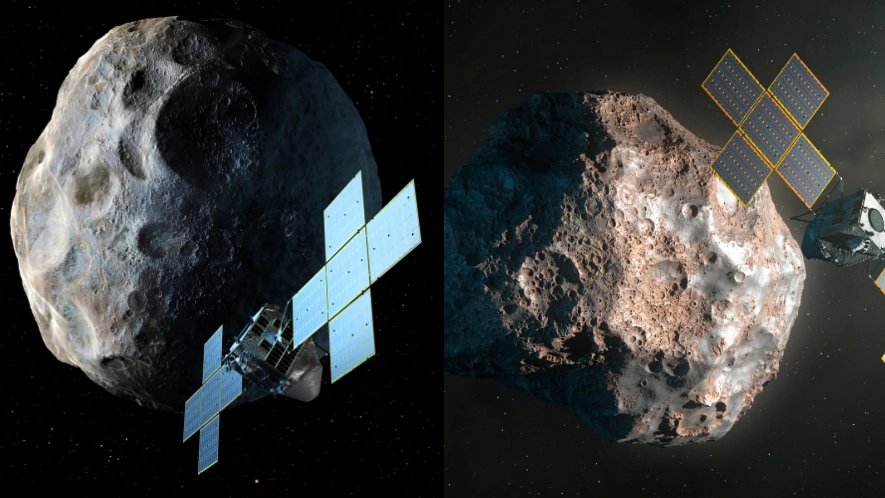
NASA completed the feat in July this year, after sending the Psyche spacecraft out into space on 13 October 2023, so it could explore a 140-mile-wide metallic asteroid named 16 Psyche.

Its aim was to prove that lasers could be used to send messages deep into space, and the attempt was made earlier this year to find out if this was possible.
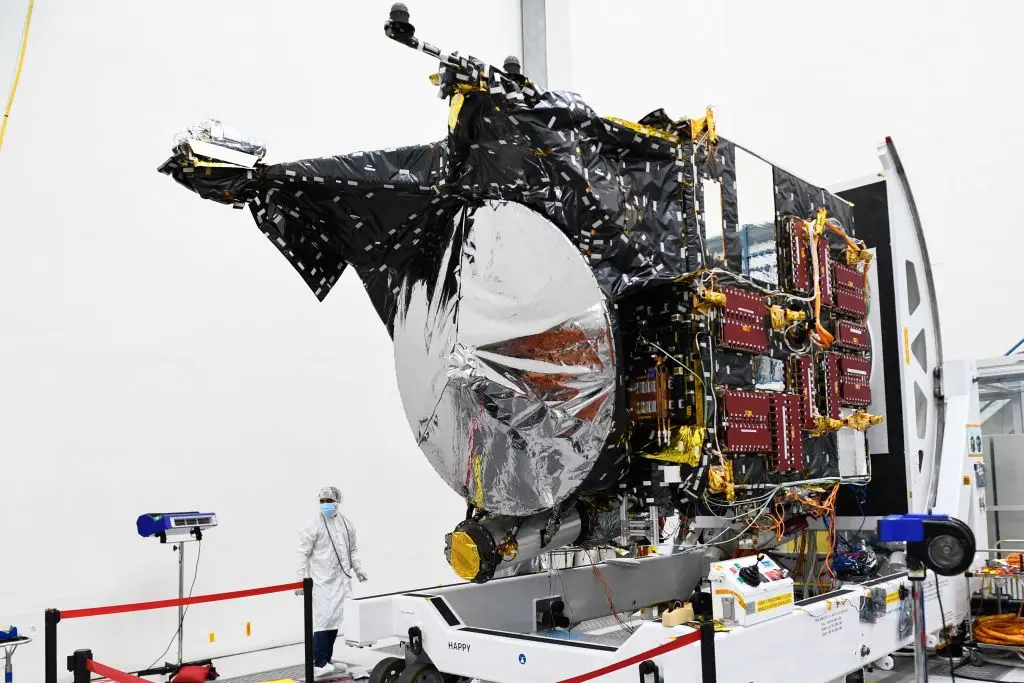
It's been a year since the spacecraft was launched (PATRICK T. FALLON/AFP via Getty Images)

Advert

A laser signal was successfully sent from Earth to the space tech about 290 million miles away, a massive game changer in the science world.

It was done with the help of NASA's Deep Space Optical Communications technology demonstration, which has responsible for this mission and developing the use of lasers to send messages.

Apparently, the achievements did stop there, as the 290 million miles that it travelled is about the distance between Earth and Mars at their furtherest points apart.

NASA hopes that this can aid future planned missions to Mars, which they have been talking about for decades.

Meera Srinivasan, the project's operations lead, stated: "The milestone is significant. Laser communication requires a very high level of precision, and before we launched with Psyche, we didn't know how much performance degradation we would see at our farthest distances.

"Now the techniques we use to track and point have been verified, confirming that optical communications can be a robust and transformative way to explore the solar system."

NASA are hopeful that this advancement could help in future manned missions to Mars (Getty Stock Photo)

Bill Nelson, an administrator at NASA also weighed in, revealing that this test broke the record for the 'farthest laser communication ever sent', taking to X to congratulate the successful team and hailing the revolutionary achievement.

He wrote: "NASA has broken the record for the farthest laser communication ever sent! We sent a laser signal to our Psyche spacecraft about 290 million miles away.

"Congrats, team. This extraordinary achievement will transform the way we explore the solar system."

For all you boffins out there, NASA detailed that the system managed to achieve 'a sustained downlink data rate of 6.25 megabits per second, with a maximum rate of 8.3 megabits per second'.

Basically, it signalled that the laser could prove to be more effective than traditional radio-based frequencies for space communications, though it has been over 50 years since our last manned mission to the Moon, let alone one to Mars.

Featured Image Credit: MARK GARLICK/SCIENCE PHOTO LIBRARY/Getty Images

Topics: Science, Technology, Space, NASA

Joshua Nair
Joshua Nair

Joshua Nair is a journalist at LADbible. Born in Malaysia and raised in Dubai, he has always been interested in writing about a range of subjects, from sports to trending pop culture news. After graduating from Oxford Brookes University with a BA in Media, Journalism and Publishing, he got a job freelance writing for SPORTbible while working in marketing before landing a full-time role at LADbible. Unfortunately, he's unhealthily obsessed with Manchester United, which takes its toll on his mental and physical health. Daily.

X

@joshnair10

Recommended reads

Commonly prescribed nifedipine linked to sudden cardiac arrest riskGetty StockHomeland security respond after Natasha Lyonne claims she was detained by ICEMichael Loccisano/Getty ImagesMan accused of 'cutting sex offender into pieces' after 'beating him to death'Brevard County Sheriff's OfficeMan falls from Jet2 plane and is 'lucky to be alive'Nicolas Economou/NurPhoto via Getty Images

Advert

Choose your content:

12 hours ago
13 hours ago
  • Getty Stock
    12 hours ago

    Commonly prescribed nifedipine linked to sudden cardiac arrest risk

    The medication has been linked to a higher risk of heart problems

    News
  • Brevard County Sheriff's Office
    12 hours ago

    Man accused of 'cutting sex offender into pieces' after 'beating him to death'

    Lucas Sander Jones was arrested after the body of a man was found on 28 March in the Palm Bay area

    News
  • Nicolas Economou/NurPhoto via Getty Images
    12 hours ago

    Man falls from Jet2 plane and is 'lucky to be alive'

    The horrifying incident has left a man badly injured and a 'full investigation' is underway

    News
  • Getty Stock
    13 hours ago

    NASA supercomputer made very worrying prediction for when the world will end

    We might be lucky to make it that far...

    News
  • 'Not natural' space object approaching Mars as NASA breakthrough could reveal all
  • Big question asked as NASA releases ‘stunning’ image of Moon from Artemis II crew
  • Artemis II has a lightning cloud problem as NASA outlines risk
  • NASA 'anxious' as Artemis crew approach fireball return reaching 23,839 mph speeds