ladbible homepage
ladbible homepage
  • Home
  • News
    • UK
    • US
    • World
    • Ireland
    • Australia
    • Science
    • Crime
    • Weather
  • Entertainment
    • Celebrity
    • TV
    • Film
    • Music
    • Gaming
    • Netflix
    • Disney
  • Sport
  • Technology
  • Travel
  • Lifestyle
  • Money
  • Originals
    • FFS PRODUCTIONS
    • Say Maaate to a Mate
    • Daily Ladness
    • UOKM8?
    • FreeToBe
    • Citizen Reef
  • Videos
  • Advertise
  • Terms
  • Privacy & Cookies
  • License Our Content
  • About Us & Contact
  • Jobs
  • Latest
  • Archive
  • Topics A-Z
  • Authors
Facebook
Instagram
X
Threads
Snapchat
TikTok
YouTube
Submit Your Content Here
  • GAMINGbible
  • LADbible Group
  • UNILAD
  • SPORTbible
  • Tyla
  • FOODbible
  • UNILAD Tech
People spent 40 days isolated in cave without clocks and it had unbelievable effect on their perception of time
Home>News>Science
Published 13:58 3 May 2024 GMT+1

People spent 40 days isolated in cave without clocks and it had unbelievable effect on their perception of time

Participants who holed up in the cave in south-west France said it was like 'pressing pause'

Niamh Spence

Niamh Spence

google discoverFollow us on Google Discover

Sometimes a day can feel like it's dragging, while others fly past.

In fact, it turns out that actually our body can't tell the time without a clock or signals like day or night.

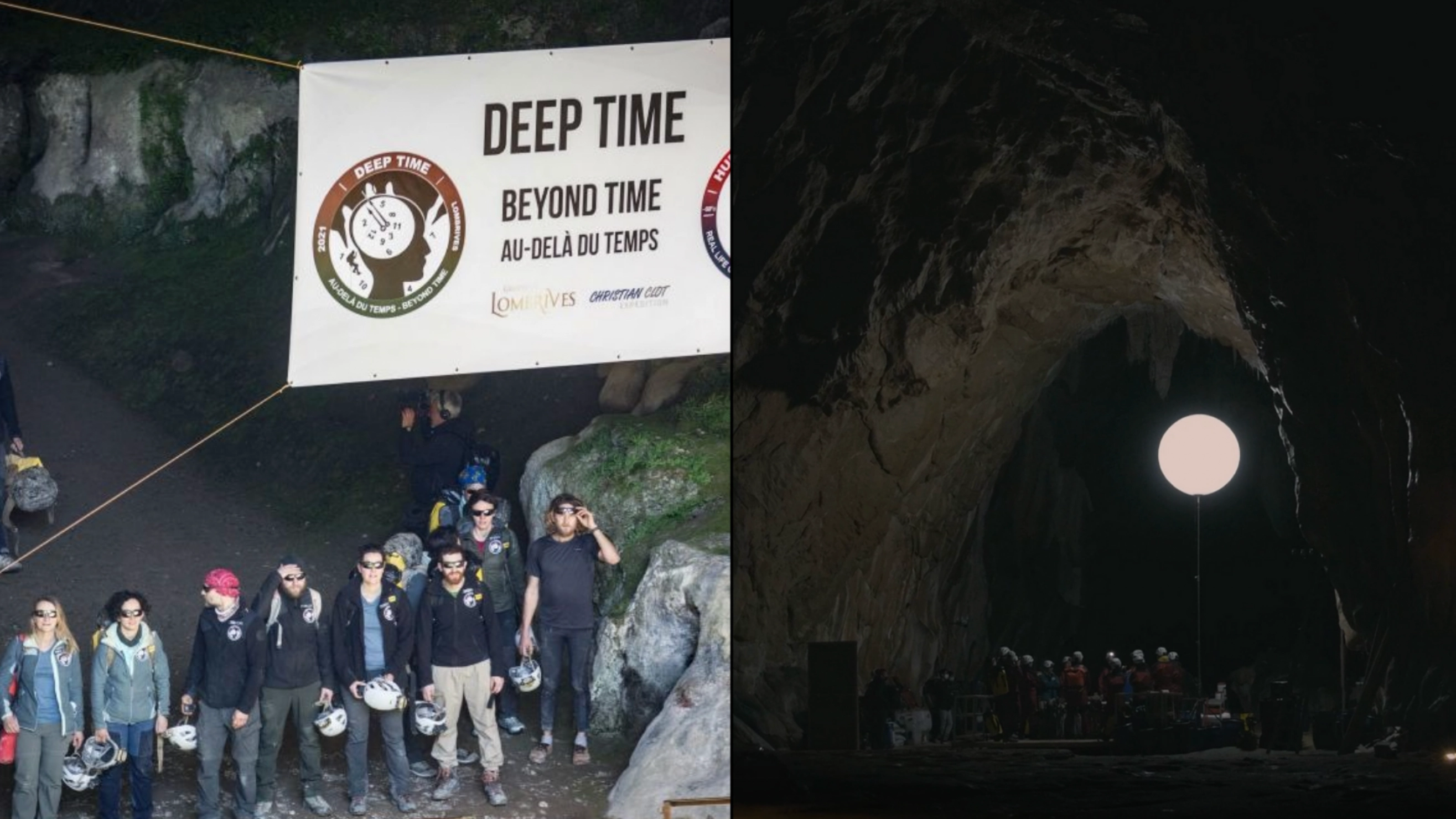
A science experiment saw 15 people live in a cave in south-west France for 40 days underground to see how having no daylight, clocks, watches, or any contact with the outside world would change how they view time.

If you had no clock or way of changing the time, could you really tell what time it is? (Pexels)

Advert

The results are surprising, and obviously after the 40 days were up the group saw the world in a different light, with some explaining it felt like 'pressing pause'.

Christian Clot, the project director for the experiment, explained how emerging for the cave and discovering they had been away for 40 days was 'a real surprise'.

He asked one of his cave pals how long she felt their stay had been, and she revealed she felt it was 23 days.
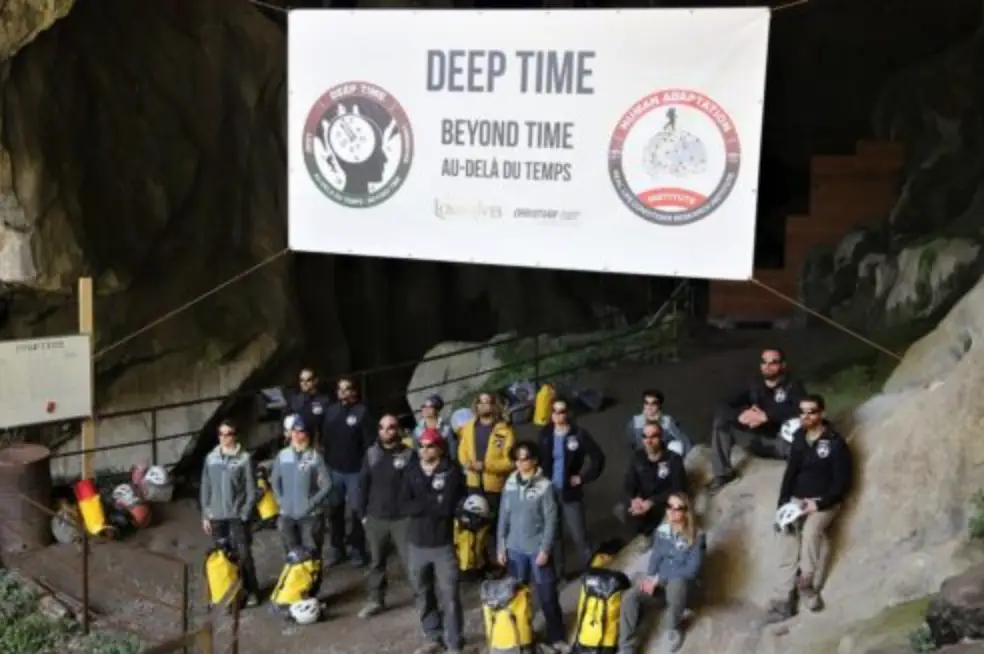
15 people lived in the cave in France for 40 days without clocks, daylight or external communication. (Human Adaptation Institute)

He added: "For the majority of the team it was around 30 days. So in our heads, we walked into the save 30 days ago."

The experiment was part of a Deep Time project Clot both directed and participated in.

Fourteen other participants with varying backgrounds and ages joined him. Whilst living in the cave, the 15 participants had no contact with the outside world and instead relied on their own biological clocks to tell them when to wake up, when to eat and when to sleep.

The project, which might sound bizarre, was part of an overall investigation by scientists to see how humans adapt to drastic changes in living conditions.
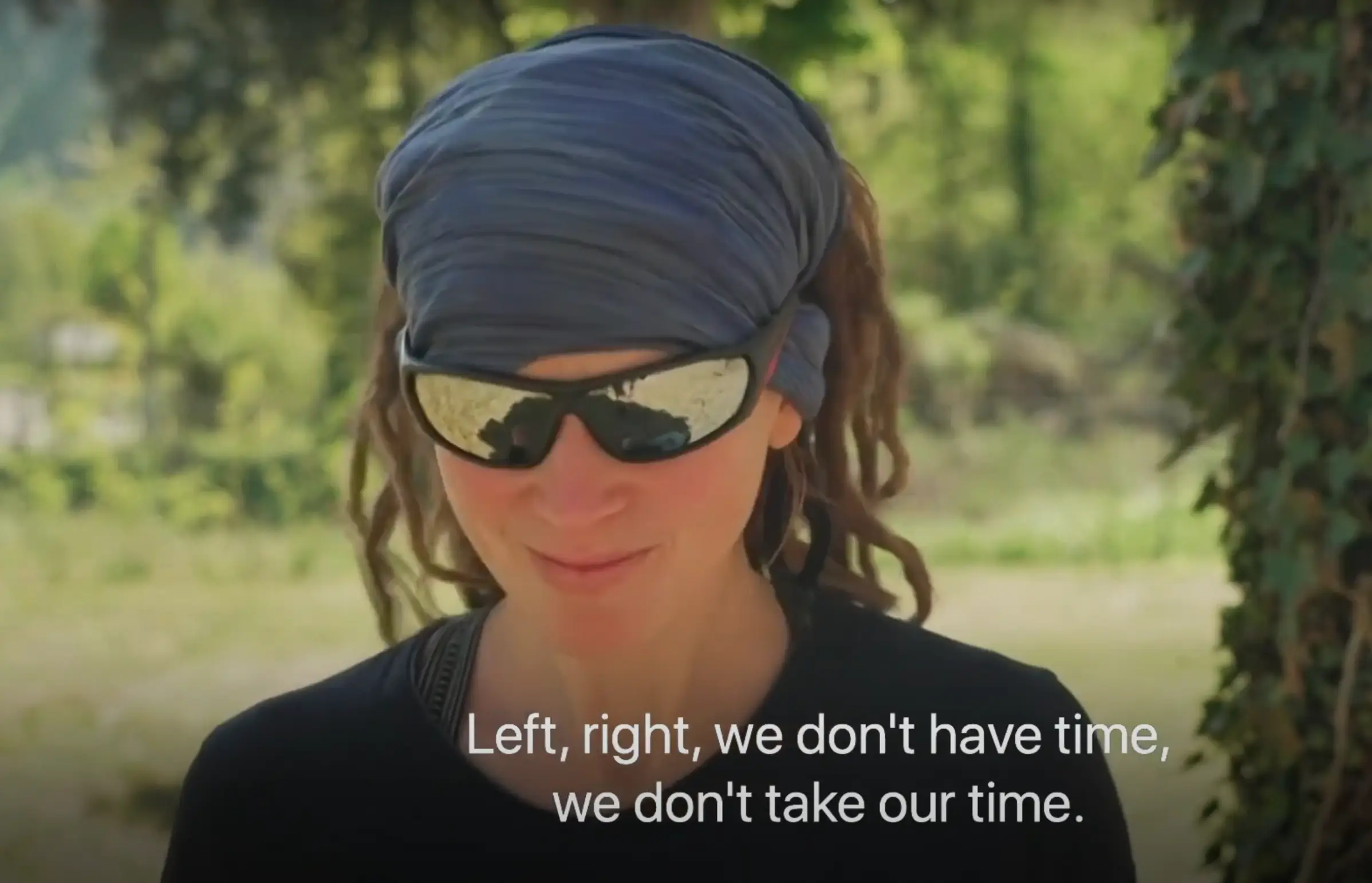
Many of the 15 found the experiment a positive experience. (YouTube/Human Adaptation Institute)

One person in the experiment revealed: "For once in our lives, it was as if we could press pause.

"We are always in a rush in our lives. Left, right, if we don't have time, we don't take our time.

"For once in our lives, we had time and could stop to live and do our tasks. It was great."

Another person shared their view as they added: "I feel a little sad to leave this world [the cave], in which we have lived for so long, to have to leave everything we created as a group.

"But it is a real pleasure to see blue skies, greenery and loved ones again."

Featured Image Credit: Human Adaptation Institute Fred Scheiber/Getty

Topics: Science, World News

Niamh Spence
Niamh Spence

Journalist.

X

@missnspence

Recommended reads

Rosie O’Donnell says Mounjaro 'saved' her life in heartbreaking admissionPaula Lobo/NBC via Getty ImagesMichael J. Fox opens up on impact his Parkinson’s diagnosis had on wife Tracy PollanADRIAN DENNIS/AFP via Getty ImagesTwo strangers who met at work realised they were siblings after becoming best friendsBBC/PA WireKiller whales filmed smashing huge fish to smithereens with torpedo headbutt before eating itDr Kathryn Ayres

Advert

Choose your content:

10 hours ago
11 hours ago
12 hours ago
  • BBC/PA Wire
    10 hours ago

    Two strangers who met at work realised they were siblings after becoming best friends

    They both took their tea the same way and loved tomato sauce butties, what more proof do you need?

    News
  • Dr Kathryn Ayres
    10 hours ago

    Killer whales filmed smashing huge fish to smithereens with torpedo headbutt before eating it

    Experts think the behaviour could possibly be a form of entertainment for younger whales

    News
  • GoFundMe
    11 hours ago

    Dad issues statement after 'happy and healthy' son, 5, dies after developing rare disease on holiday

    His son died from a very rare disease and he wanted to raise awareness

    News
  • Thananuwat Srirasant/Getty Images
    12 hours ago

    Tyson Fury wins comeback fight that wasn’t shown on TV

    Tyson Fury has won his comeback fight against Mariusz Wach in Thailand

    News

    breaking

  • Man spent 100 days living underwater in Atlantic Ocean and it had huge impact on him
  • Astronaut who spent 178 days in space reveals what it taught him about humanity
  • What happened to man who lived in cave with no concept of time
  • Chilling new theory emerges about how five divers died inside ‘shark cave’