• iconNews
  • videos
  • entertainment
  • Home
  • News
    • UK News
    • US News
    • Australia
    • Ireland
    • World News
    • Weird News
    • Viral News
    • Sport
    • Technology
    • Science
    • True Crime
    • Travel
  • Entertainment
    • Celebrity
    • TV & Film
    • Netflix
    • Music
    • Gaming
    • TikTok
  • LAD Originals
    • FFS PRODUCTIONS
    • Say Maaate to a Mate
    • Daily Ladness
    • UOKM8?
    • FreeToBe
    • Citizen Reef
  • Advertise
  • Terms
  • Privacy & Cookies
  • LADbible Group
  • UNILAD
  • SPORTbible
  • GAMINGbible
  • Tyla
  • UNILAD Tech
  • FOODbible
  • License Our Content
  • About Us & Contact
  • Jobs
  • Latest
  • Topics A-Z
  • Authors
Facebook
Instagram
X
Threads
Snapchat
TikTok
YouTube

LAD Entertainment

YouTube

LAD Stories

Submit Your Content
227-year-old law last used in WW2 explained as Donald Trump allowed to reintroduce it under one condition

Home> News> US News

Updated 15:42 8 Apr 2025 GMT+1Published 14:50 8 Apr 2025 GMT+1

227-year-old law last used in WW2 explained as Donald Trump allowed to reintroduce it under one condition

What is the Alien Enemies Act and how could Donald Trump use it?

Brenna Cooper

Brenna Cooper

The US Supreme Court has cleared the way for Donald Trump to invoke the rarely used Alien Enemies Act — here is what it means.

It's fair to say that President Trump's first couple of months in the White House have been pretty turbulent. Since his inauguration in January, the 78-year-old was seen in a public bust-up with Volodymyr Zelenskyy, paused, then restarted military aid to Ukraine and speculated about the possibility of annexing Greenland.

And this isn't even counting his 'Liberation Day' tariffs, which have tanked global stock markets, encouraged a trade war with China and caused several billionaires to suffer a major drop in net worth.

However, the US president has moved onto his next big idea - deterring immigration by implementing the Alien Enemies Act, a 227-year-old law last used in WW2.

Advert
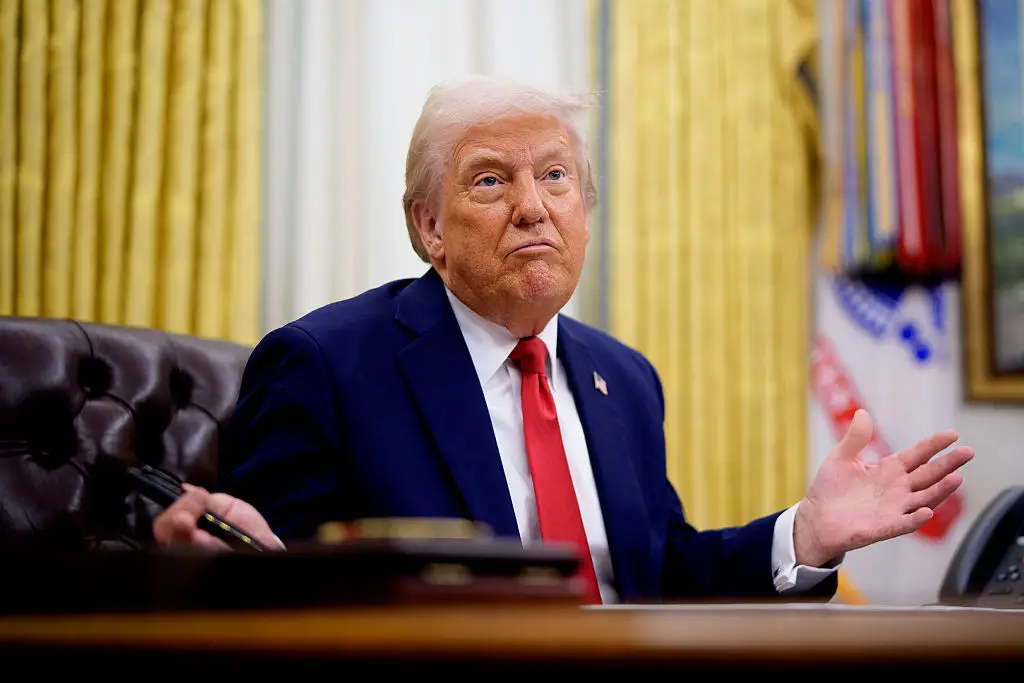
Donald Trump's second term has gone off to a chaotic start (Andrew Harnik/Getty Images)

What is the Alien Enemies Act?

Passed in 1798, the Alien Enemies Act gives a US president power during wartime to detain and deport the citizens of an enemy nation.

The law was brought in by the now defunct Federalist Party and, according to the Brennan Centre, it allows a sitting president the power to go after nationals of countries considered hostile without a hearing.

There isn't a clear consensus on what the meaning of the invasion and predatory incursion is, although it has historically meant invasions in the literal sense.

However, this doesn't mean a president couldn't use it against a 'symbolic' invasion.

How has the Alien Enemies Act been used in past?

The law has been used numerous times in the past, most recently by President Roosevelt to detain and deport of German, Italian and Japanese immigrants during WW2.

This would include the internment of hundreds of thousands of people with Japanese ancestry after the December 1941 attack on Pearl Harbour, as well as those with German and Italian nationality.

How Trump could use the Alien Enemies Act?

Given the fact that the USA is not officially at war with anyone, Trump's decision to invoke the act may seem a strange.

However, the reason for the Republican leader implementing the act is due to his stance on organised crime and drug smuggling.

Since coming into office Trump has deported at least 137 people who are alleged members of Venezuelan drug gangs, allowing them to be incarcerated in a notorious prison in El Salvador.

Alleged members of drug gangs have already been deported to El Salvador's notorious prison (YouTube/CNN)

Are there limitations on how Trump could use the Alien Enemies Act?

Trump's use of the law was temporarily blocked by the lower court, before being overturned by the Supreme Court on Monday (8 April).

According to the BBC, anyone who risks being deported should be granted the chance to chance to 'challenge their removal' before a judge.

"The notice must be afforded within a reasonable time and in such a manner as will allow them to actually seek habeas relief in the proper venue before such removal occurs," a statement from justices added.

Featured Image Credit: Rebecca Noble/Getty Images

Topics: Donald Trump, US News

Brenna Cooper
Brenna Cooper

Brenna Cooper is a journalist at LADbible. She graduated from the University of Sheffield with a degree in History, followed by an NCTJ accredited masters in Journalism. She began her career as a freelance writer for Digital Spy, where she wrote about all things TV, film and showbiz. Her favourite topics to cover are music, travel and any bizarre pop culture.

X

@_brencoco

Advert

Advert

Advert

Choose your content:

10 hours ago
11 hours ago
12 hours ago
  • Tarabishi Family
    10 hours ago

    Disabled man dies after his primary caregiver is detained by ICE

    His family claim his body could no longer handle the stress

    News
  • Getty Stock
    11 hours ago

    New research makes huge findings about impact of eating chia seeds

    The superfood is often added to improve people's diets

    News
  • NBC
    12 hours ago

    Two Border Patrol agents placed on leave over Alex Pretti killing

    Alex Pretti, a US citizen, was shot and killed on Saturday (24 January)

    News

    breaking

  • Supplied
    12 hours ago

    Where man who spent 13 years ‘locked in his own body’ is now more than decade later

    Martin Pistorius was stuck in a 'locked-in' state for over a decade

    News
  • Trump claims he has new 'secret weapon' he is not allowed to talk about
  • US responds to World Cup fears after Donald Trump banned 15 countries
  • Donald Trump makes major U-turn as 'future deal' over Greenland made following meeting with Nato leader
  • Donald Trump hits out at UK’s ‘great stupidity’ in Greenland debate