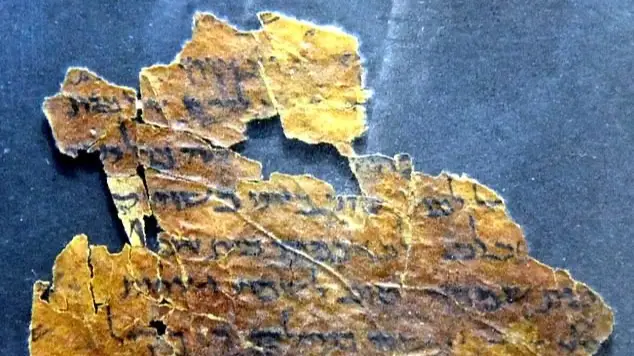
‘Impossible’ Dead Sea Scrolls code finally cracked revealing 2,000-year-old message

A scientist has managed to decode one of the last Dead Sea Scrolls manuscripts after more than 70 years.
The Dead Sea Scrolls are a collection of ancient Jewish manuscripts from the approximately 2,000 to 2,300 years ago.
They were discovered in caves near the Dead Sea back in 1946, and contain some of the oldest known biblical texts and religious documents, revealing insights into Judaism and early Christianity.
Located in 11 caves near Qumran and Jordan, the writings were found on parchment, papyrus, and copper, are are said to include nearly every book of the Hebrew Bible.
Advert
They provide an insight into early Jewish life just before and during the time of Jesus.
Researcher Emmanuel Oliveiro of the University of Groningen in the Netherlands found important information on the Cryptic B manuscripts.
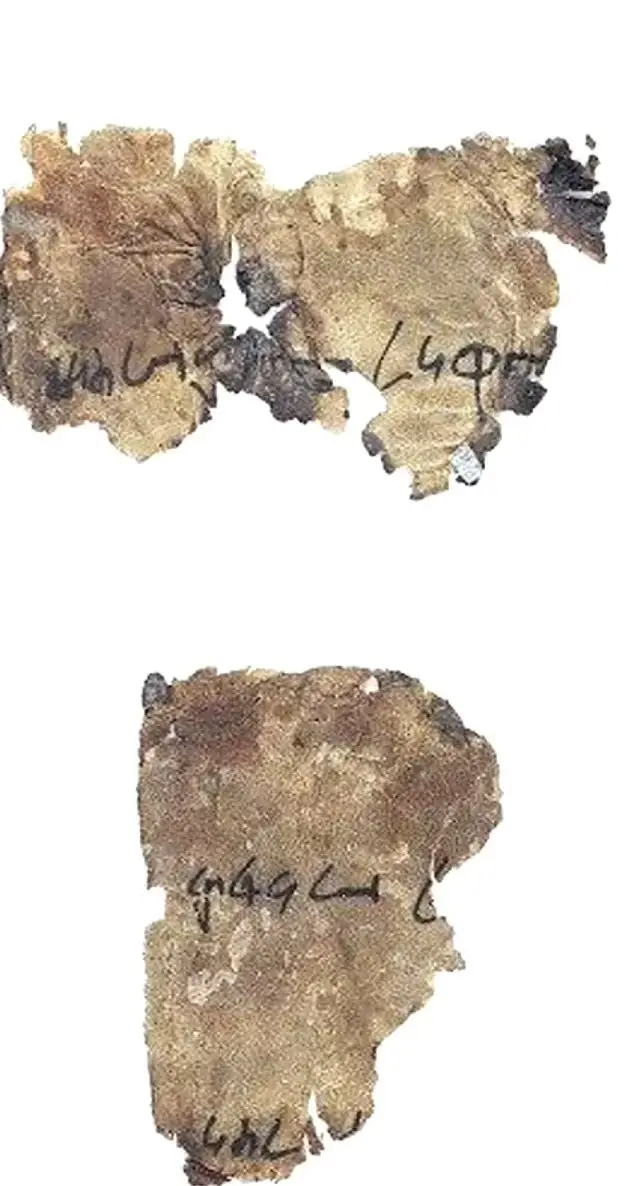
Two of the damaged fragments (4Q362 and 4Q363) have been considered 'impossible' to read because of the unfamiliar alphabet.
Oliveiro, however, was able to determine that the cryptic symbol matched letters in Hebrew about familiar biblical phrases.
There were phases like Yisrael, meaning Israel, as well as Judah, Jacob, and Elohim, that all refer to God.
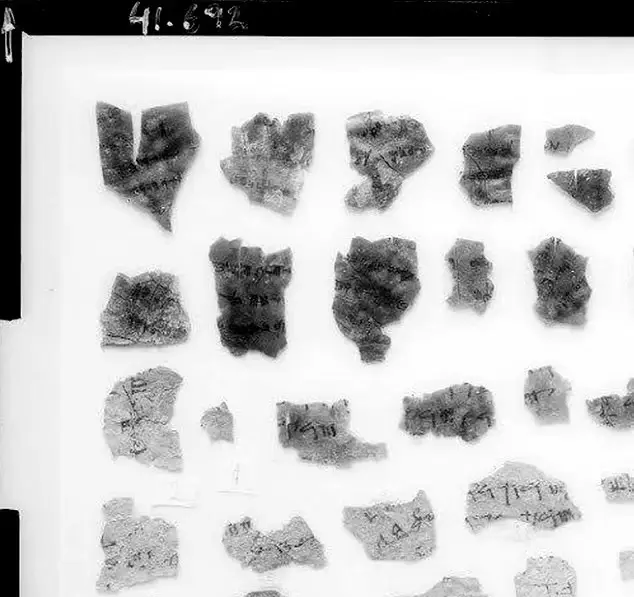
"A handful of manuscripts was written completely in paleo-Hebrew, and paleo-Hebrew also appears in a number of manuscripts written in standard script, particularly the name of YHWH (we have no idea why they did this)," Olveiro said, as reported by Haaretz.
Fragment 21 also mentions 'Elohim' and 'your glory,' while fragment 18 states 'the tents of Jacob' - phrases found in Jeremiah 30:18 and Malachi 2:12.
Oliveiro suggests that the findings since the late 40s were purposely coded so only those with a true understanding of the ancient texts could crack it.
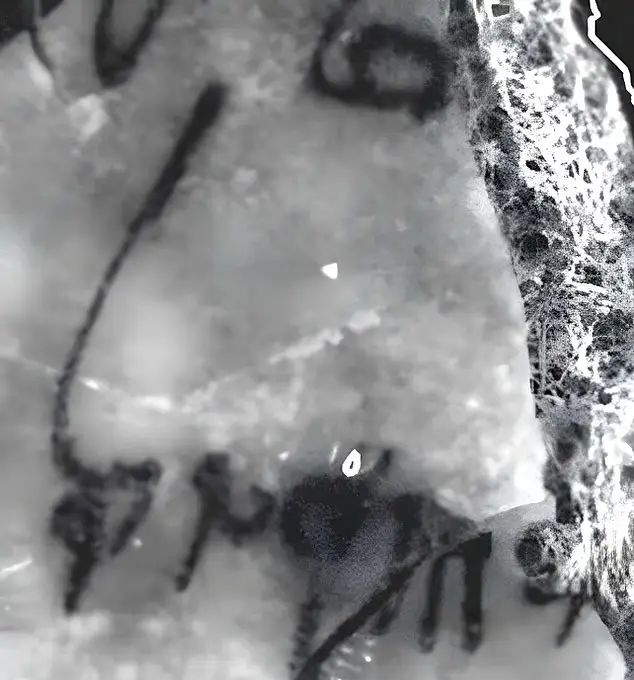
"Not to achieve encryption in the modern sense but rather to convey a prestige to a text," he adds.
"If you could read it, you had access to these manuscripts and were probably of a certain class or ranking within this pious community.
"Mono-substitution is very powerful but the weakness of single substitution is that a language has patterns, so if you find the pattern, you can crack the substitution code – which is what I did here,"
On how it only took him two months, Oliveiro noted: "I told my friends and wife that I am going to try this and they're like, you could be stuck here for 40 years and never crack the code.
"And what do you hope to find anyway, a secret falafel recipe? But once I saw it – I think it was quite fast."
Topics: News, World News, History
 Anish Vij