ladbible homepage
ladbible homepage
  • Home
  • News
    • UK
    • US
    • World
    • Ireland
    • Australia
    • Science
    • Crime
    • Weather
  • Entertainment
    • Celebrity
    • TV
    • Film
    • Music
    • Gaming
    • Netflix
    • Disney
  • Sport
  • Technology
  • Travel
  • Lifestyle
  • Money
  • Originals
    • FFS PRODUCTIONS
    • Say Maaate to a Mate
    • Daily Ladness
    • UOKM8?
    • FreeToBe
    • Citizen Reef
  • Videos
  • Advertise
  • Terms
  • Privacy & Cookies
  • License Our Content
  • About Us & Contact
  • Jobs
  • Latest
  • Archive
  • Topics A-Z
  • Authors
Facebook
Instagram
X
Threads
Snapchat
TikTok
YouTube
Submit Your Content Here
  • GAMINGbible
  • LADbible Group
  • UNILAD
  • SPORTbible
  • Tyla
  • FOODbible
  • UNILAD Tech
Scientist says we're in ‘uncharted territory’ after world's hottest week on record
Home>News
Published 21:12 10 Jul 2023 GMT+1

Scientist says we're in ‘uncharted territory’ after world's hottest week on record

An expert has warned we're in ‘uncharted territory’ after world's hottest week on record

Dominic Smithers

Dominic Smithers

google discoverFollow us on Google Discover

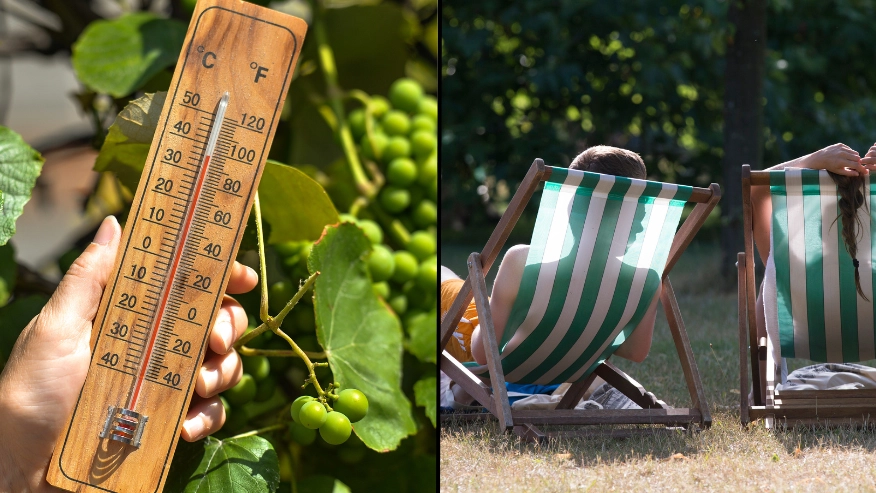
A scientists says we're in 'uncharted territory' following the hottest week on record.

While many may assume it's great to have a long hot summer, the truth is that recent record breaking trends do not bode well for the environment, as experts have warned.

And figures released by the World Meteorological Organization have revealed that the last week was the hottest on record for the planet. Yikes.

According to analysis, the global average temperature on 7 July was 17.24C, which is 0.3C higher than the previous record, which was set on 16 August 2016.

Advert

In a post to Twitter, the WMO said: "The world just had the hottest week on record, according to preliminary data.

"It follows the hottest June on record, with unprecedented sea surface temperatures and record-low Antarctic sea ice extent. #StateOfClimate."
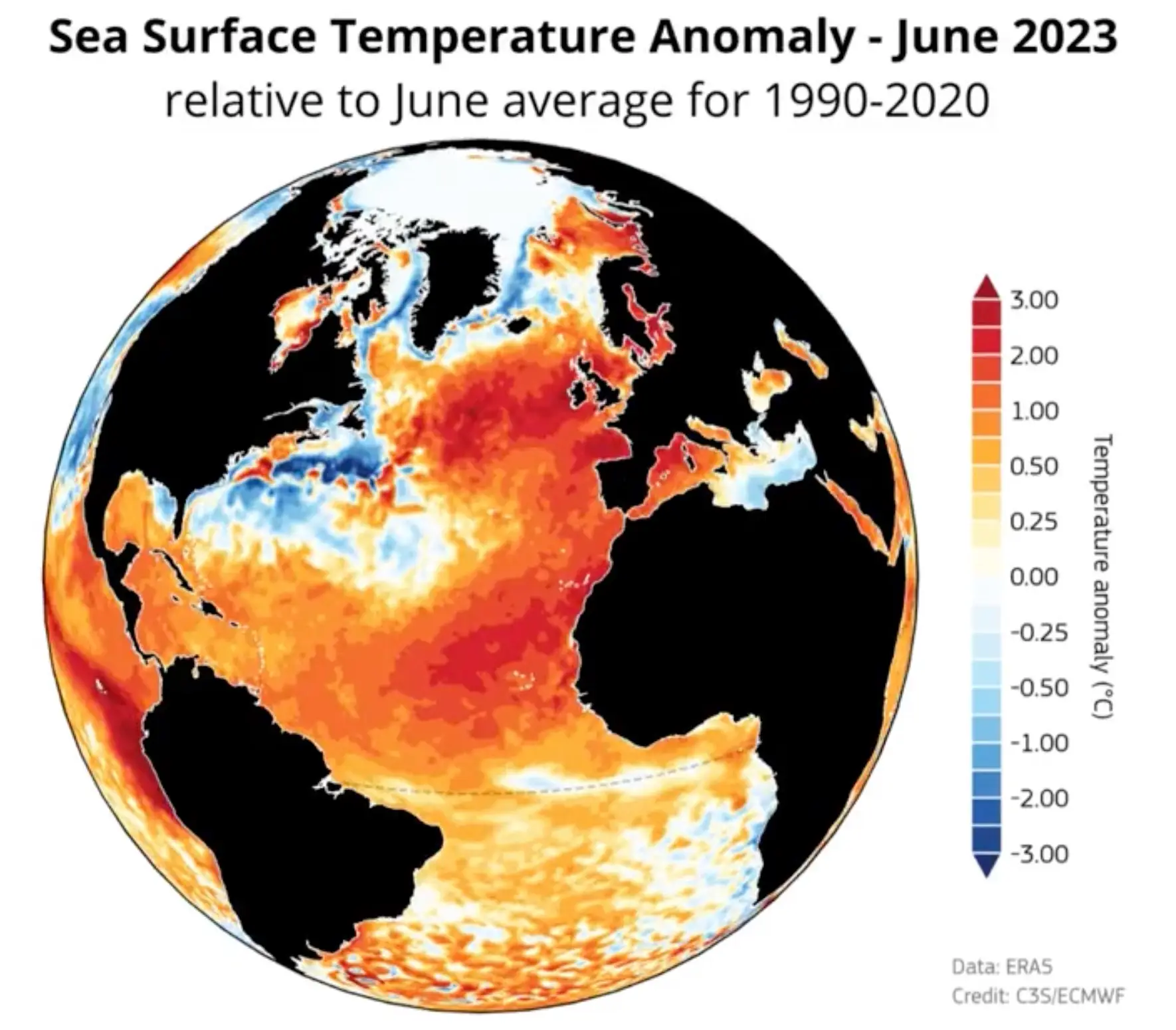
The WMO revealed that it as the hottest June and week on record.
Twitter/WMO

Reacting to the stark warning, Professor Christopher Hewitt - the WMO director of climate services - said that the planet was in the midst of a meteorological phenomenon called El Niño.

This is when a band of warmer water develops in the central and east-central equatorial Pacific.

Prof Hewitt said: "The exceptional warmth in June and at the start of July occurred at the onset of the development of El Nino, which is expected to further fuel the heat both on land and in the oceans and lead to more extreme temperatures and marine heatwaves.

"We are in uncharted territory and we can expect more records to fall as El Nino develops further and these impacts will extend into 2024.

"This is worrying news for the planet."

The news comes as it was revealed that extreme heat led to more than 61,000 deaths in Europe last year.

Figures from the French National Institute For Health showed that Italy suffered the highest number of heat-attributable deaths with 18,010 fatalities.
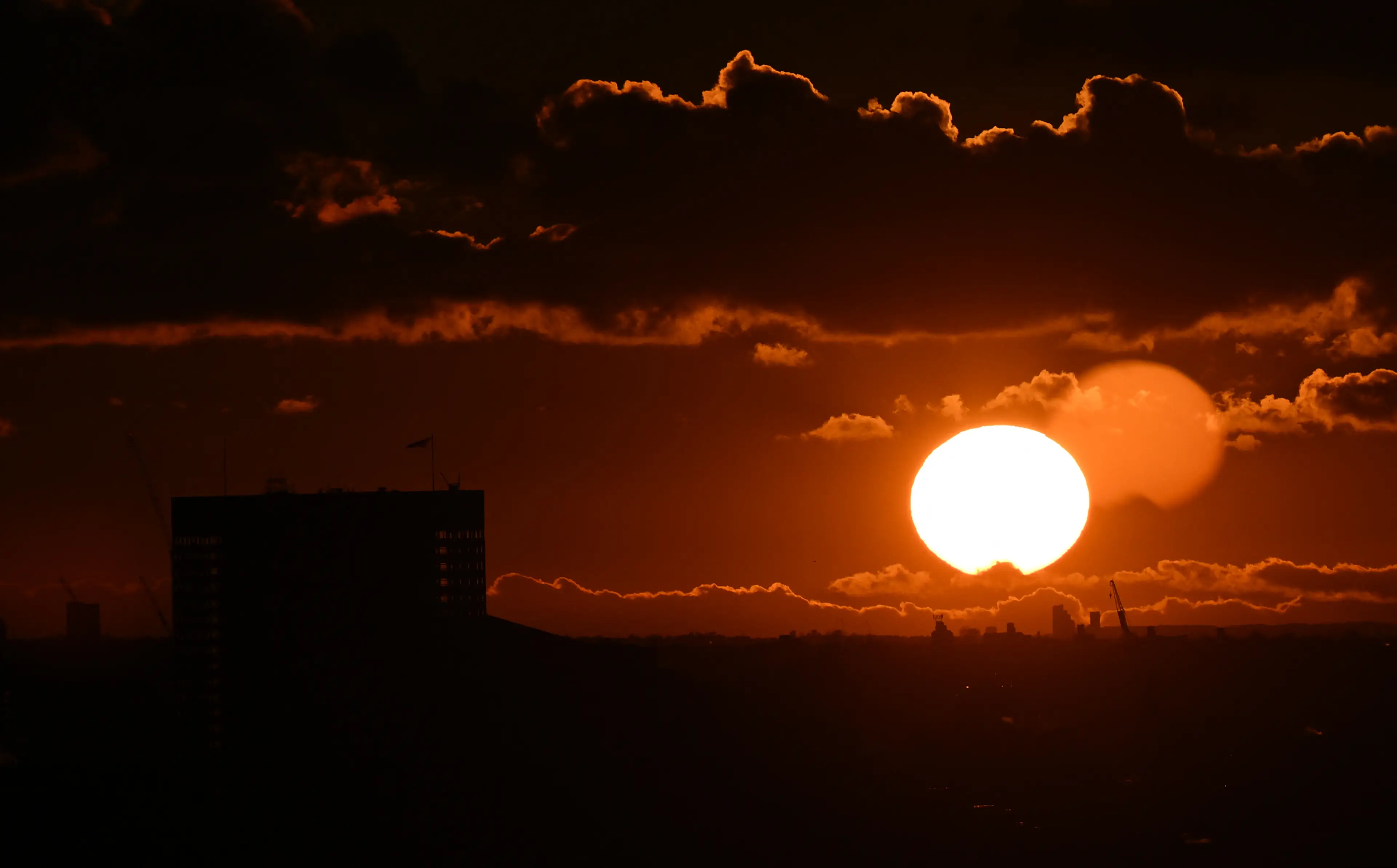
Experts have warned about the impact of climate change.
PAUL ELLIS/AFP via Getty Images

This was followed by Spain, which recorded 11,324 deaths, and Germany with 8,173.

It also found that 3,469 people died in the UK as a result.

The piece of research, which was published in Nature Medicine, centred on the period of 20 May to 4 September 2022.

But while the figures are deeply troubling, they are still some way off the record of 70,000 deaths, which was set in 2003.

Study author, Joan Ballester Claramunt, said: "The summer of 2003 was an exceptionally rare phenomenon, even when taking into account the anthropogenic warming observed until then.

"This exceptional nature highlighted the lack of prevention plans and the fragility of health systems to cope with climate-related emergencies, something that was to some extent addressed in subsequent years.

"In contrast, the temperatures recorded in the summer of 2022 cannot be considered exceptional, in the sense that they could have been predicted by following the temperature series of previous years, and that they show that warming has accelerated over the last decade."

Featured Image Credit: Artur Widak/NurPhoto via Getty Images / Oli Scarff/Getty Images

Topics: Science, World News, UK News, Weather

Dominic Smithers
Dominic Smithers

Dominic Smithers is LADbible's Editorial Lead. After graduating from the University of Leeds with a degree in French and History, he went on to write for the Manchester Evening News, the Accrington Observer and the Macclesfield Express. So as you can imagine, he’s spent many a night wondering just how useful that second language has been. But c'est la vie.

X

@SmithersDom

Recommended reads

Chaos erupts outside World Cup opener in Mexico as protesters clash with riot policeClaudia Rosel/Getty ImagesMobLand star Helen Mirren dropped an f-bomb when asked if she'd ever work with Tom Hardy againLoredana Sangiuliano/Anadolu via Getty ImagesMillie Bobby Brown hits back at claims husband Jake Bongiovi doesn't help herAxelle/Bauer-Griffin/FilmMagicTwo lucky football fans being paid $50,000 to watch every single World Cup match in a glass cubeInstagram/@FoxOne

Advert

Choose your content:

an hour ago
5 hours ago
8 hours ago
  • Claudia Rosel/Getty Images
    an hour ago

    Chaos erupts outside World Cup opener in Mexico as protesters clash with riot police

    The World Cup opener in had plenty of drama both inside and outside the stadium, with protests, police clashes and three players sent off

    News
    Live
  • Instagram/@FoxOne
    5 hours ago

    Two lucky football fans being paid $50,000 to watch every single World Cup match in a glass cube

    The phrase 'dream job' gets thrown around a lot...

    News
  • Proceedings of the Prehistoric Society
    8 hours ago

    Discovery of ancient 'headless' burial site could finally solve 7,000-year-old mystery

    A bunch of headless skeletons have raised questions

    News
  • Photo by David McNew/Getty Images
    8 hours ago

    Meteorologist explains most dangerous US cities to be in as El Niño begins

    The El Niño could last until 2027 as Paul Pastelok talks about its global impact

    News
  • UN issue new warning over Super El Niño that will be 'devastating' for the next 18 months
  • Man stays on banned 'world's deadliest island' in UK that 'kills if you breathe'
  • Massive underwater volcano on brink of eruption after experiencing 2,000 earthquakes in one day
  • Woman told brother drowned on Thai beach says ‘key clue’ proves it wasn’t accident