
Art seller bursts into tears as she’s told valuation of item after finding mosquito inside

A woman was left speechless after hearing the eye-watering valuation of a family heirloom that she inherited from her grandmother.
During what's been dubbed one of the most 'charming' appraisals ever on the US version of Antiques Roadshow, she discovered she'd been sitting on something of a gold mine.
So next time your nana offers you one of her old trinkets, consider this as your sign to take her up on the offer.
Advert
Art expert Meredith Hilferty had the pleasure of informing the woman that the painting which had been passed down in her family for generations had quite the impressive price tag.
Take a look at this:
During the episode of Antiques Roadshow which originally aired in 2018, the woman explained that her great-grandfather had first acquired the artwork in the 1940s.
It then spent the majority of its life 'hung right above' her late grandmother's bed, before it came into her possession when her relative passed away.
But at some point, a mosquito managed to infiltrate the frame it was encased in.
"When I got it, there was a mosquito underneath the glass," the guest told paintings and drawings appraiser Hilferty. "I took it out to the front yard and I opened it up to get the mosquito out, so I could take it with me to college.
"And then it kind of scared me a little... I closed it back up immediately, because it looked like it might be real."
It turns out her intuition was spot on, as the Antiques Roadshow expert confirmed that the painting of Native Americans on horseback was an authentic piece created by the famous Henry Farny.
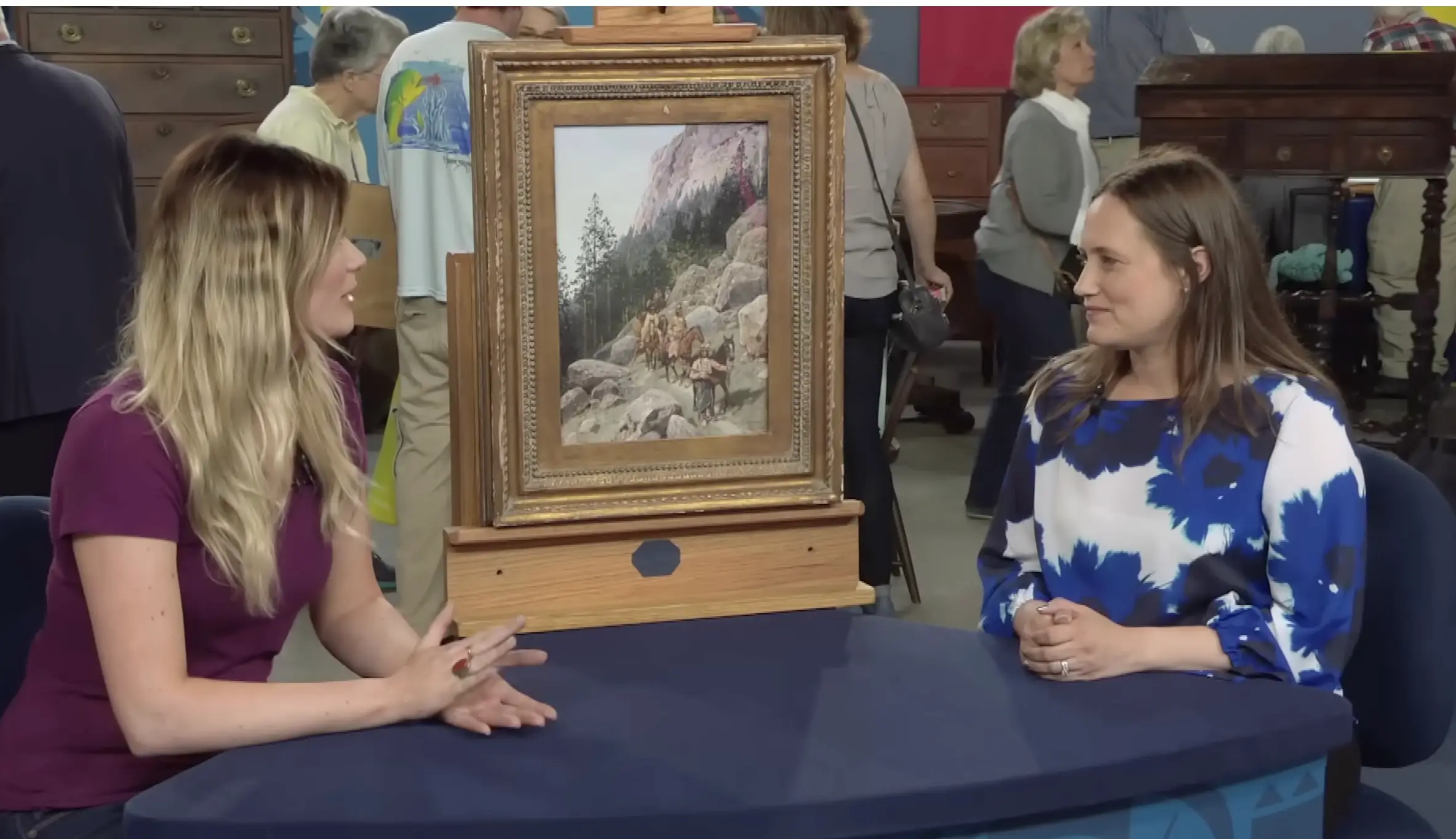
His creations, which regularly fetch hundreds of thousands at auction, are renowned for depicting the everyday rituals of different tribes in their natural environments.
France-born Farny moved to Pennsylvania when he was around six years old, according to Hilferty, and his new surroundings vastly influenced his artwork.
She explained: "When he was living in Pennsylvania, he began a relationship with the Seneca Indians, and that's really where his fascination with the different tribes began.
"This piece is really interesting because it's a dense group of figures, which is very desirable in his work. He did, eventually, spend a lot of time with the Sioux Indians, and they did adopt and gave him the name 'Long Boots'.
"This is really his most prolific time. 1890 is about when we start to see some of his very best paintings."
The guest explained she had found out some of this information while conducting her own research, explaining that the 'little circle' underneath Farny's signature on the painting was a 'cipher' for his nickname Long Boots.
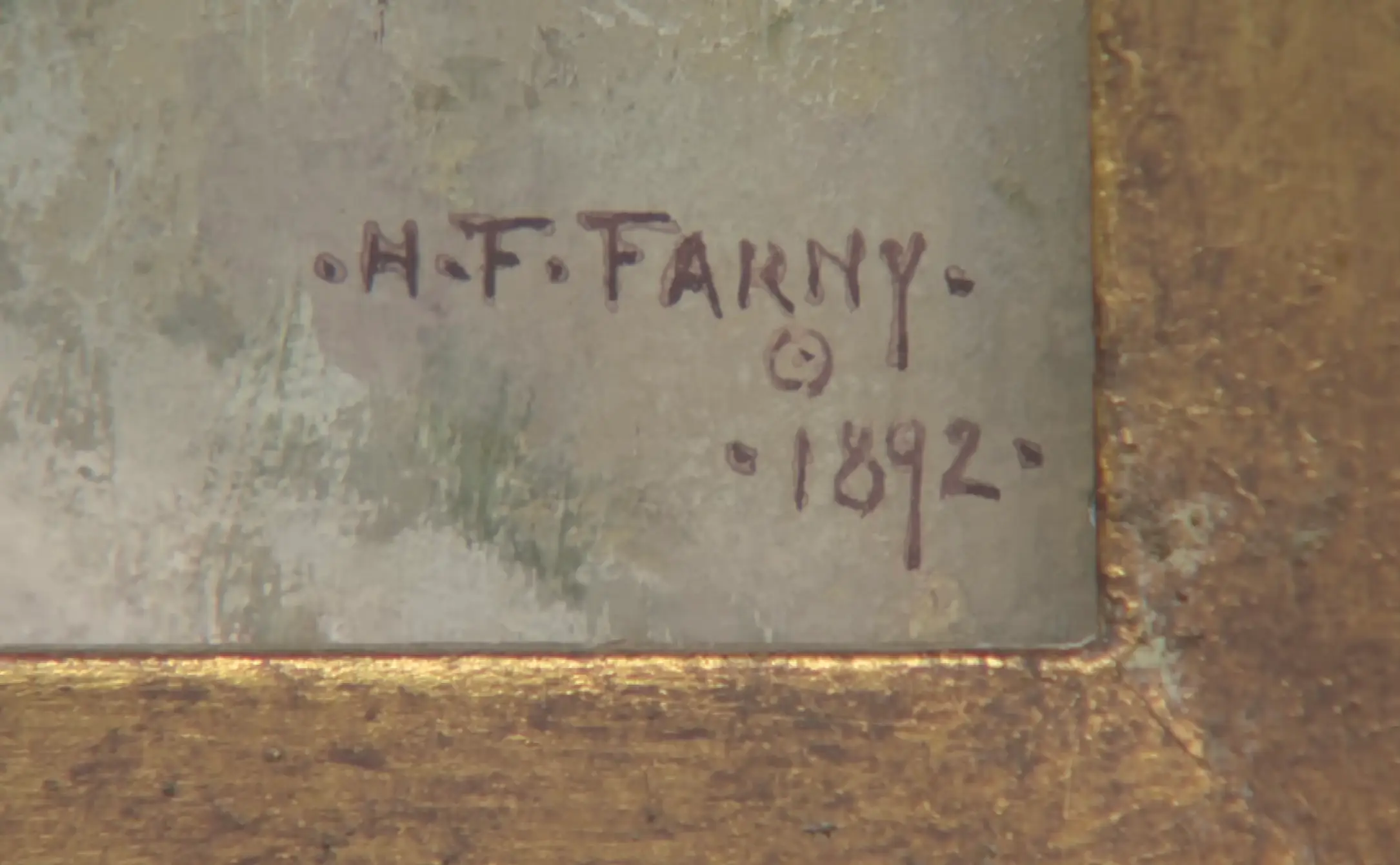
In 1998, the artwork had been valued at a measly $200 (£151) and $250 (£189) in 2004 - but according to Hilferty, these appraisers missed more than a few zeros off.
"If we were going to put this in an auction today, I would suggest an estimate of $200,000 (£151,400) to $300,000 ($227,200)," she told the Antiques Roadshow guest.
The woman was left visibly stunned after discovering the price tag on the painting, seeing her burst into tears as Hilferty shared the news.
She told the art expert: "Oh, my God. That's so much! I don't even know what to say... Should I have left the mosquito in the back?"
Hilferty explained that in an ideal world, an art conservator - who preserves and restores artworks - would have been better off removing the insect.
However, she explained that as the 'bug could've continued to decay', it could have stained or damaged the painting, so all in all it was a 'good' job that she got rid of the mozzy.
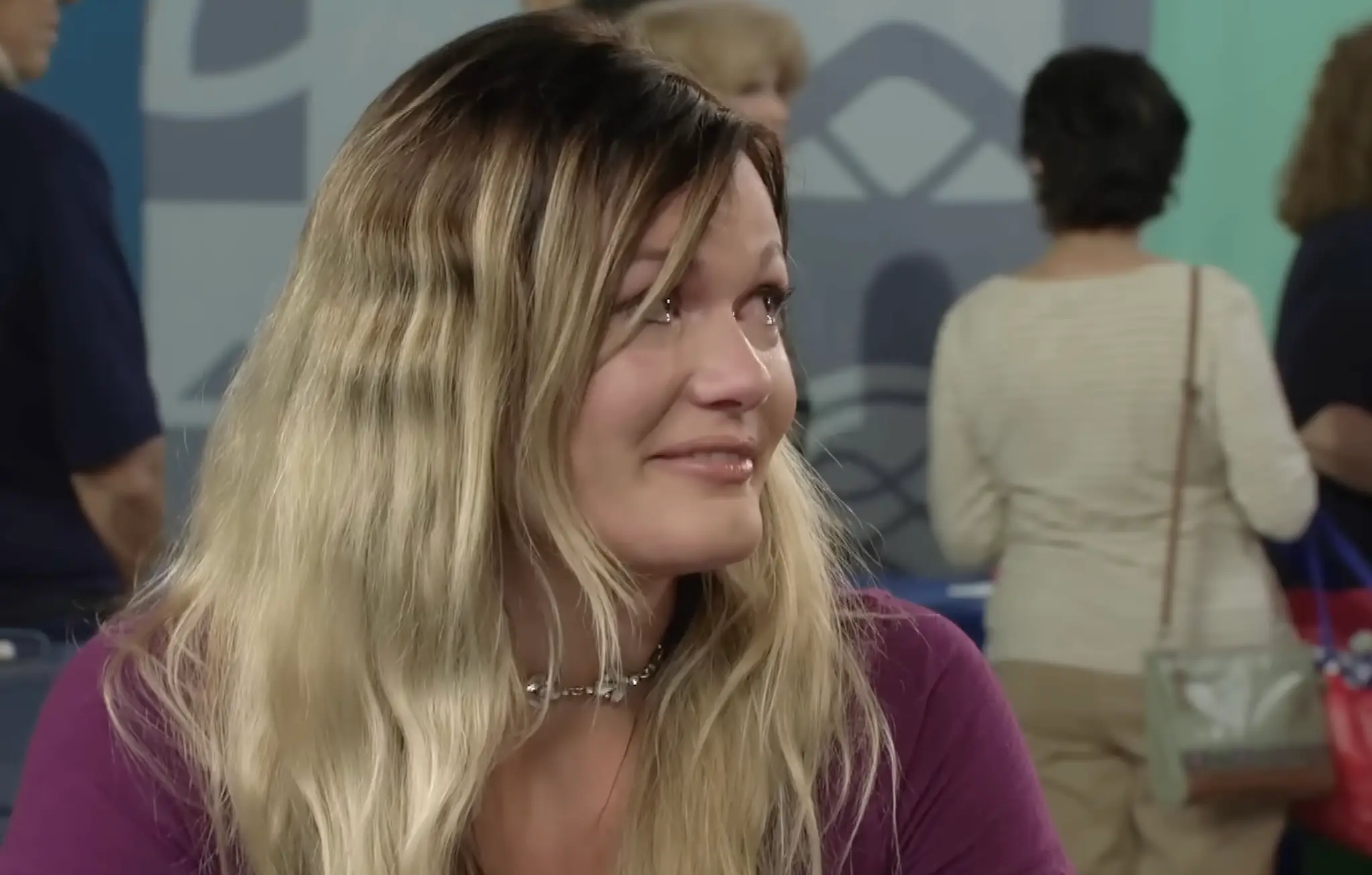
The woman said she would be keeping the painting as far away as possible from flies - and her pet dog - in future, since she found out how much it was worth.
The valuation of the piece, which is known as the '1892 H. F. Farny Watercolor & Gouache Painting', also brought a tear to the eye of viewers.
One person said: "This is one of the most charming Roadshow appraisals in their history. I think her response has so much to do with her relationship and love for her grandmother. So sweet."
Another added: "Painting may be worth a ton, but the reaction was priceless."
And a third wrote: "It's always moving to see the reaction of people getting life-altering news for the better."
Isn't it just?
 Olivia Burke