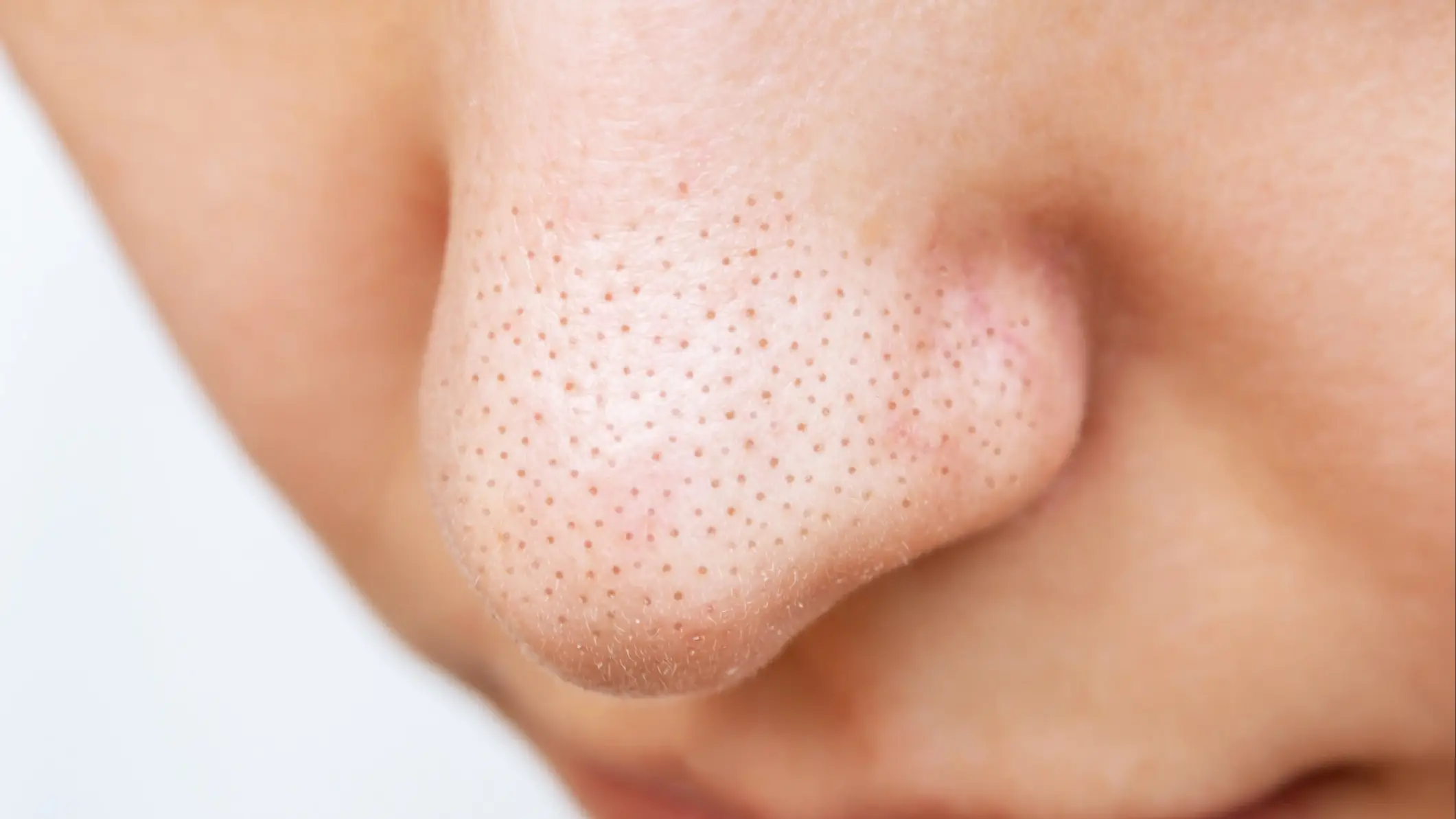
Differences between blackheads and black spots on nose as dermatologist warns people not to squeeze them

As a dermatologist warns against squeezing the little black spots on your nose, you might be left wondering about what makes them so different to the regular blackheads.
Or if we’re being more honest – confused that they aren’t the same as blackheads.
Yeah, that’s right, those little dots often found in the T-zone of your face aren’t the same as the blackheads you see satisfyingly (or stomach-churningly, depending on your social media algorithm) being relieved in viral videos.
They’re actually called ‘sebaceous filaments’ and are particularly different to the spots and are caused by different things.
Advert
And it’s quite important to know about this if caring for your skin health is important for you – especially bearing in mind the infamous ‘triangle of death’ on your face.
To help with that, an expert has issued some advice.
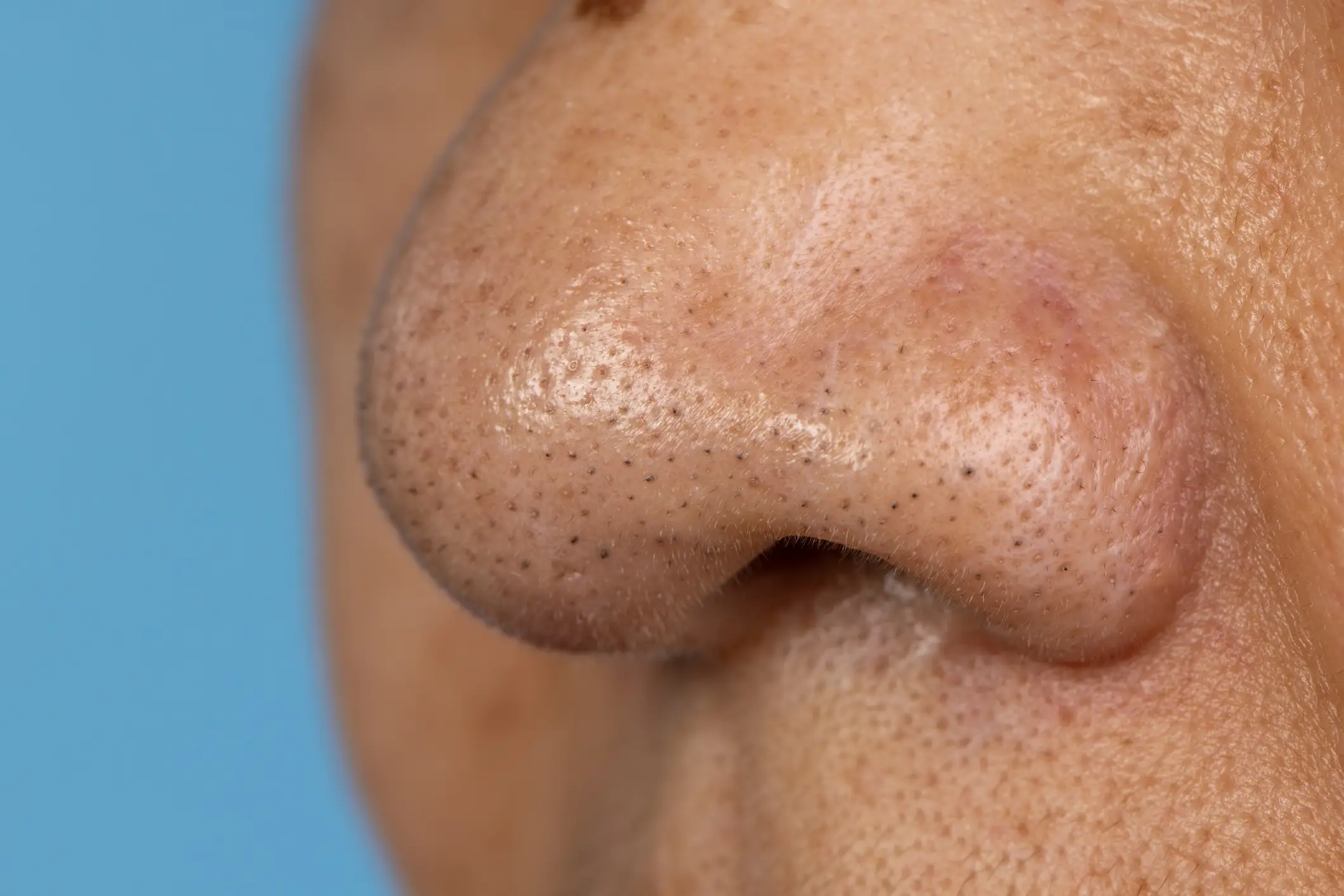
Difference between sebaceous filaments and blackheads
It’s fair to say these two things are easily confused, with them often found in similar places on the face and looking relatively the same at first glance.
Put simply, blackheads are a type of acne that present as open, dark-coloured bumps on the skin’s surface.
They form when the pores become clogged up with excess sebum, dead skin cells, oil and, in some cases, even bacteria.
They don’t swell up like most pimples, but just remain flat with the distinct ‘blackhead’ and can be quite a recurring problem for lots of people.
Typically, you find blackheads on oily areas such as the nose, forehead, and chin, and they can also appear on your chest, back, or shoulders.
Sebaceous filaments, however, are different for a number of reasons, primarily because they aren’t actually a type of acne.
Instead, they’re small, naturally occurring structures which are important for keeping your skin balanced. They line your sebaceous (oil) glands and help move sebum (an oily lubricant) from these glands to your skin's surface.
And they become more noticeable (and often resemble a blackhead) when your glands overproduce the sebum. Usually, they’re pretty flat and light in colour.

Expert’s warning
Over on YouTube, TheDailyDerm channel (produced by dermatologists in collaboration with skincare brand Cerave) explained why sebaceous filaments often become more apparent.
The experts explained that if they do start overproducing serum, you can do something to remove them. But that’s not by squeezing them; if you do this, you’ll just get a thread-like substance coming out.
It’s said you should use a chemical exfoliant like salicylic acid to dissolve the oil and dead skin cells to clean it out fully – the same as a blackhead.
Meanwhile, Dermalogica’s Education Manager, Victoria, explained on the company’s website that there’s nothing wrong with having these little dots.
She said: “It’s important to note that this is a normal function of the skin. Pores aren’t blocked or clogged in the same way as when you have a blackhead. Sebaceous filaments do vary in colour and may appear as a grey, light brown or yellow ‘spot’.”
But if they bother you, adapting your daily skincare regimen can help.
Victoria explained that acid-based washes and exfoliants work a treat, and she also suggested using clay-based masks to ‘draw out excess oil’.
Topics: Health
 Jess Battison