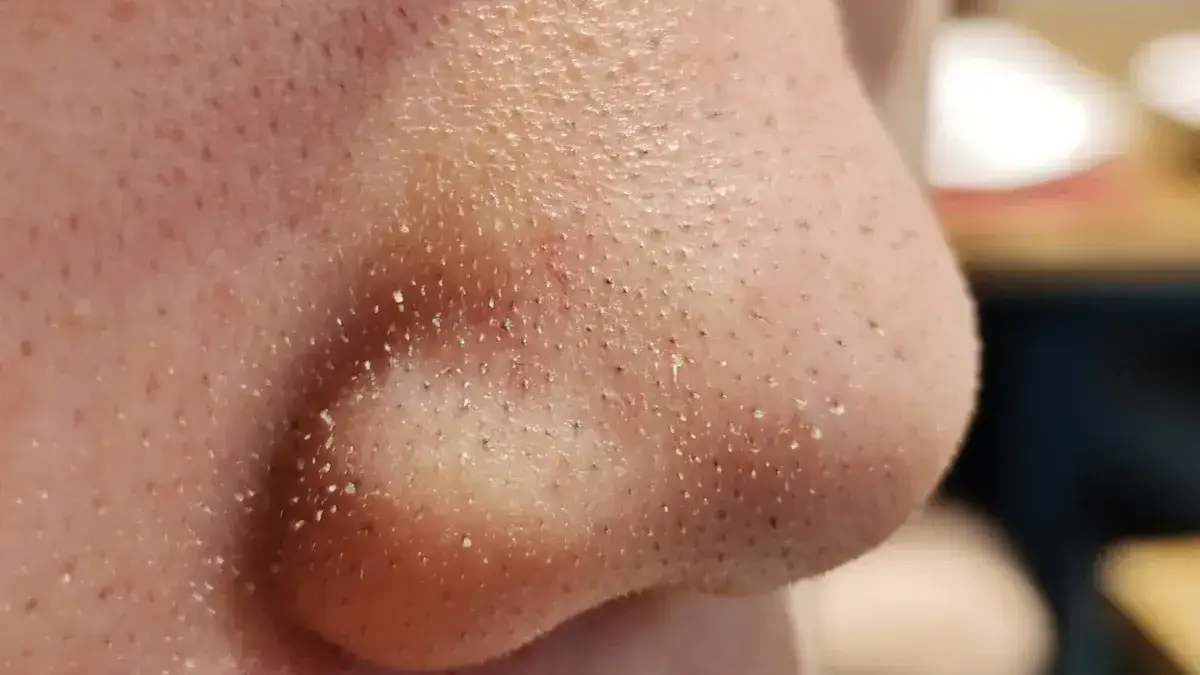
Dermatologist warns people not to squeeze black spots on nose because they're not what you think

We spend our entire lives trying not to give into temptation but when it comes to popping spots, some of us simply can't stop ourselves.
Although it can be painful at times, there's no denying the satisfaction that comes with getting rid of a particularly pesky spot, but it seems as if the black spots that sometimes appear on your nose are a no go when it comes to DIY popping, and that also means that your partners can't offer to do it for you.
Much like pulling out an ingrown hair can lead to some health issues, it's also not the best idea to pop these particular spots, since they're not actually blackhead spots at all.
For all the money in the world of skincare, it can sometimes be difficult to keep your face completely blemish-free, particularly with spots in the so-called triangle of death, and popping them or picking at them isn't going to help.
Advert
According to TheDailyDerm YouTube channel, which is produced by dermatologists in collaboration with skincare brand CeraVe.
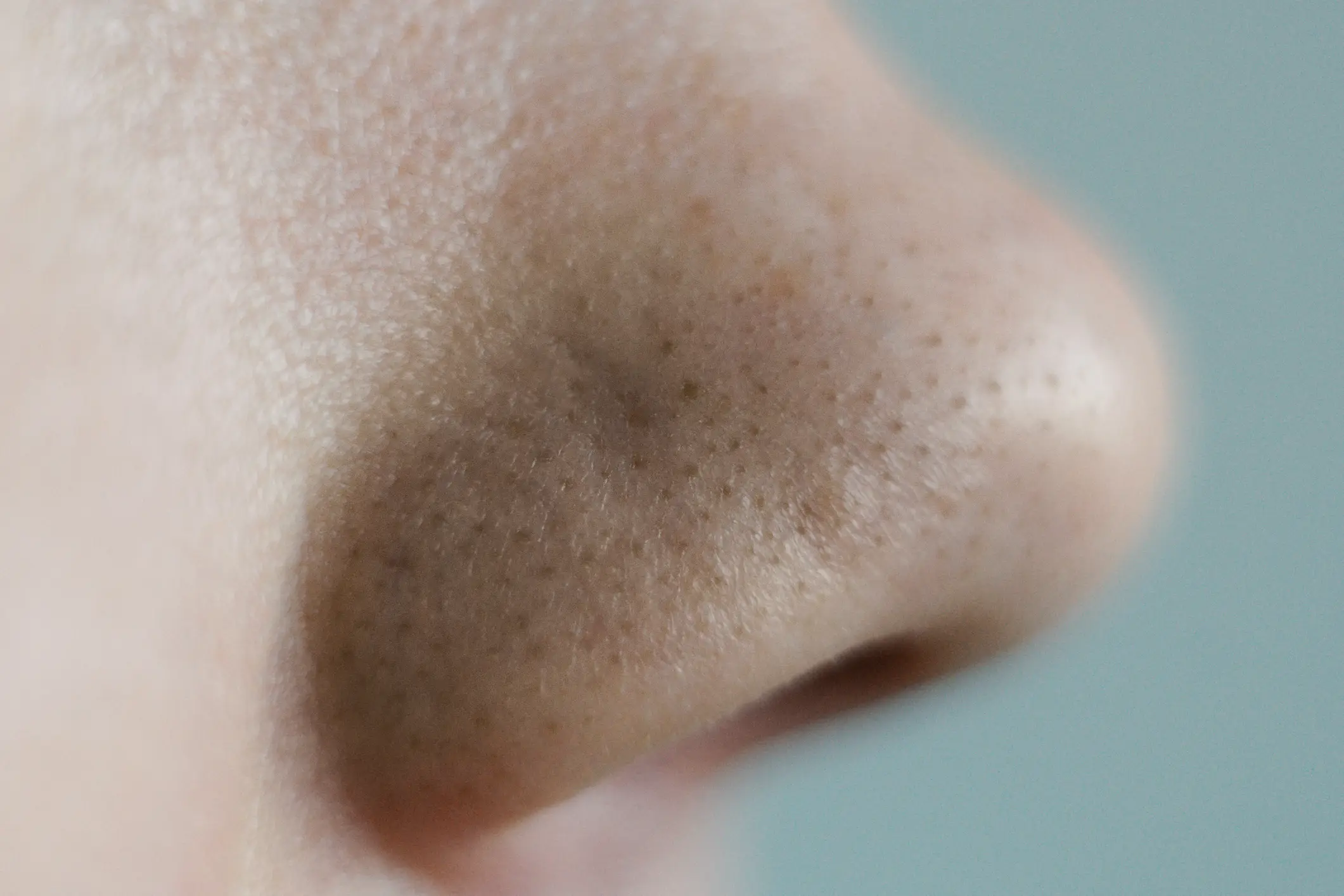
In a YouTube short, a dermatologist explains that these dots are caused by excess oil, dead skin cells, and bacteria that build up inside the pores on your nose.
When it reaches the surface, it 'oxidises', turning black, which gives it the appearance of a blackhead. But, while that may sound like just a blackhead, there is a difference.
They are called ‘sebaceous filaments’, which are hair-like structures that push natural oils, or sebum, to the skin’s surface.
According to the Cleveland Clinic, blackheads are a type of acne that forms when a 'plug of sebum' blocks the oil from travelling through your pores.
In comparison, sebaceous filaments allow oil to reach the surface, hence why, when squeezed, only a long thread may come out, compared to a 'waxy' substance produced from a blackhead.
Because of this difference, separate methods are needed to remove them.
TheDailyDerm explains that using pore strips, as you would with blackheads, or picking and popping them, only removes the top layer of the oil and will still leave the pore filled with the gunk at the base.
So, what can you do?
The expert explained that you need a ‘chemical’ exfoliant like ‘salicylic acid’ that will dissolve the oil and dead skin cells within to clean it out fully. Or, she said, you can book an appointment with a dermatologist who can use a specialised tool to empty them manually.
She also recommended using retinoid oil, similar to retinol but less harsh, as retinoids help smooth pores and, for some, minimise the appearance of wrinkles.
Dermalogica’s Education Manager, Victoria, explained on the company’s website that there’s nothing inherently wrong with having these dots, as it’s just how the body works.
She said: “It’s important to note that this is a normal function of the skin. Pores aren’t blocked or clogged in the same way as when you have a blackhead. Sebaceous filaments do vary in colour and may appear as a grey, light brown or yellow ‘spot’.”
But if they bother you, adapting your daily skincare regimen can help.
Victoria explained that acid-based washes and exfoliants work a treat, and she also suggested using clay-based masks to ‘draw out excess oil’.
So, the next time some of these spots appear on your face, you now know what to do.
 Britt Jones