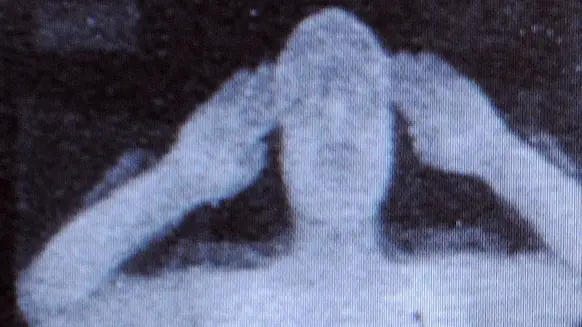
'Invasive' airport x-ray scanners removed after it was revealed shocking amount staff could see

Maintaining a safe and secure airport is in everyone's best interests, however, some of the methods previously used have overstepped some boundaries.
Full body scanners are used to confirm that passengers aren't trying to sneak any contraband onboard a flight, but certain machines offered a far too detailed view of individuals.
Let's just say, they really didn't leave anything to the imagination.
Advert
Security staff are said to have copped quite the eyeful when travellers were screened with Rapiscan's devices - prompting hundreds of them to be withdrawn from airports across the US.
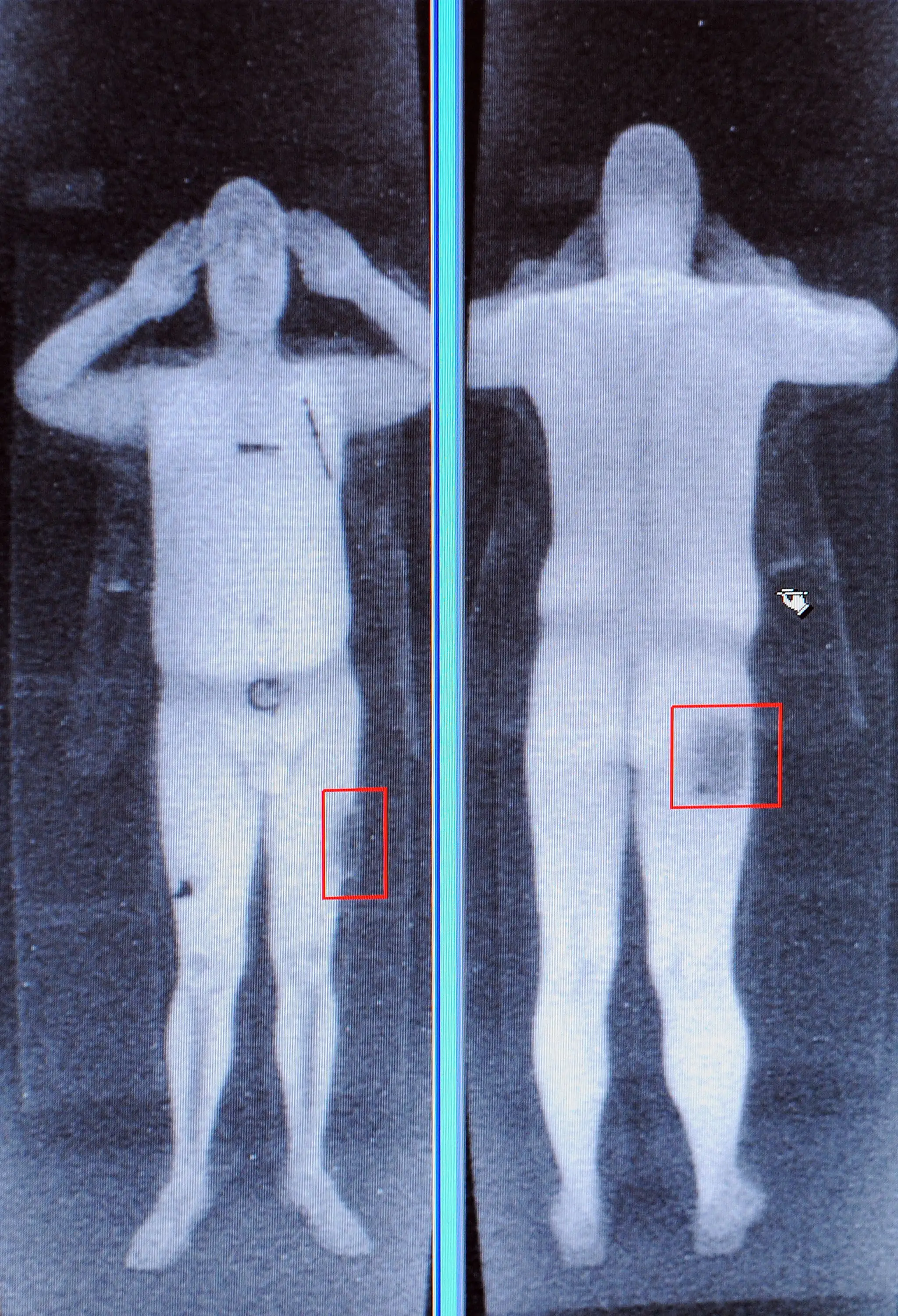
According to the Electronic Privacy Information Center (EPIC), these body scanners showed holidaymakers in 'nude form' and were comparable to a 'digital strip search'.
Take a look at this:
EPIC filed a lawsuit against the Transportation Security Administration (TSA) in 2010, claiming the machines were 'unlawful, invasive, and ineffective'.
Detailing what sort of images the full body scanner produced of passengers, the non-profit organisation said at the time: "The image is of the traveller's nude form.
"The image resolution of the technology is high, so the picture of the body presented to screeners is detailed enough to show genitalia. These images are not necessarily temporary."
Epic's lawsuit to suspend the the Rapiscan scanners from use due to the 'invasive screening capabilities, potential health risks, and traveller complaints' was ultimately successful.
And three years after they made their airport debut, the TSA announced the machines were being axed in the US as they didn't meet privacy standards.
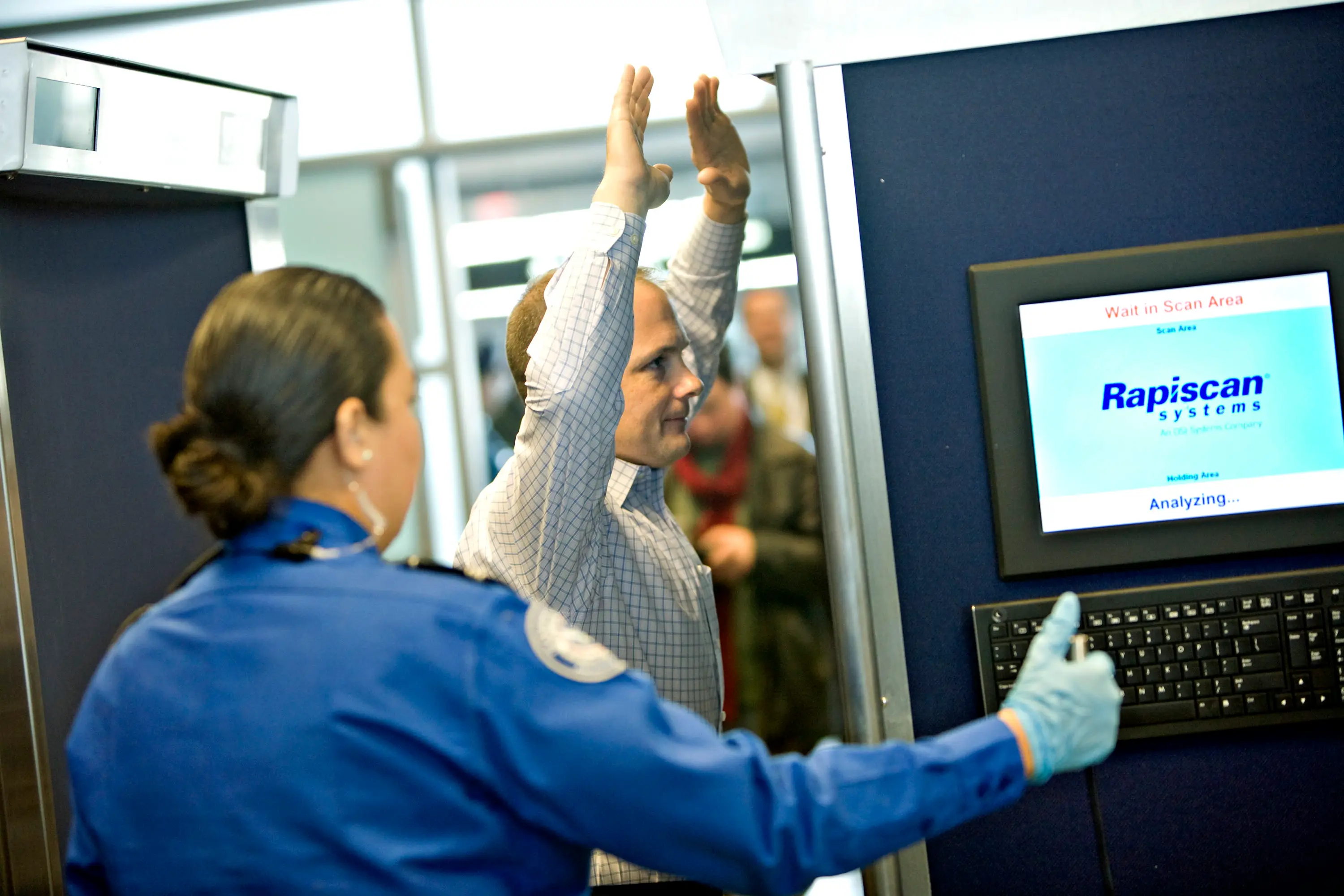
"It became clear to TSA they would be unable to meet our timeline," Karen Shelton Waters TSA's assistant administrator for acquisitions told Bloomberg News in 2013.
"As a result of that, we terminated the contract for the convenience of the government."
Umar Farouk Abdulmutallab - a Nigerian man dubbed the 'Underwear Bomber' - changed the face of airport security forever after attempting to detonate explosives hidden in his underwear during a flight from Amsterdam to Detroit.
His failed suicide mission for al-Qaeda on Christmas Day in 2009 landed him with a life sentence, and plane passengers with a whole new security process to abide by.
The US agreed to roll out full-body scanners in wake of the close call, as normal metal detectors couldn't have flagged the explosives carried by Abdulmutallab.
But Rapiscan went a bit too far with their efforts to make scanners that conducted a very thorough assessment of passengers and ended up tanking their contract with TSA.
The scanner maker was ordered to tweak its software to stop it producing such detailed depictions of flyers, however, Rapiscan failed to meet the deadline set.
As a result, the machines were hauled out of airports in America at the firm's own expense. Its parent company, OSI Systems, said ending the deal with TSA would cost it about $2.7 million (£1.7 million) at the time.
US airports now largely rely on millimetre-wave body scanning units to screen passengers as they go through security.
Unlike their predecessors, these scanners don't reveal a passenger's unique body image and instead rely on non-intrusive, generic outlines to flag potential threats.
According to the Centre for Disease Control and Prevention (CDC), millimetre-wave technology 'uses non-ionising radiation in the form of low-level radio waves to scan a person's body'.
It explains: "A millimetre-wave body scanner uses two antennas that rotate around a person's body. The scanner constructs a 3-D image that resembles a fuzzy photo negative. The image is sent to a remote monitor.
"Millimetre-wave technology does not use x-rays and does not add to a person's ionising radiation dose."
Topics: Travel, Technology, US News
 Olivia Burke