Students dropped baited camera into Atlantic Ocean to see what was really lurking

A group of university students couldn't believe what they captured after they lowered a camera into the Atlantic Ocean.
When it comes to an undergrad student project, you'd probably expect some group work and a bit of extra graft after hours to play your part.
But very rarely do we see budding scientists at this level help to uncover rare footage, which leaves the marine biology community shocked.
Advert
A group of undergrads over at the University of Exeter planned to drop a baited camera while on a field trip to the Azores in the hope of seeing local predatory fish, but they were treated to a lot more.
The Azores is a remote archipelago located in the Atlantic Ocean, and it's known for its diverse, exotic marine life.
In under 10 minutes, they were treated to the sight of at least one shark and a pod of dolphins. Check it out here:
The students used what's known as a BRUV, and no, it's nothing to do with the popular slang term - it's a high-tech piece of scientific equipment.
Known professionally as the baited remote underwater video camera, they weren't disappointed after deploying it, with several sea creatures getting up close and personal with the lens in no time.
Phil Doherty, a marine conservation science lecturer at the University of Exeter, Penryn Campus, described it as a 'really special deployment' when reflecting on the field trip.
"There was a huge amount of activity and life on the days we were deploying the cameras,” he admitted to Discover Wildlife.
“We could hear their clicks and whistles first before they appeared on camera in pretty large numbers,” he said of the Atlantic spotted dolphins, which they captured before any other species.
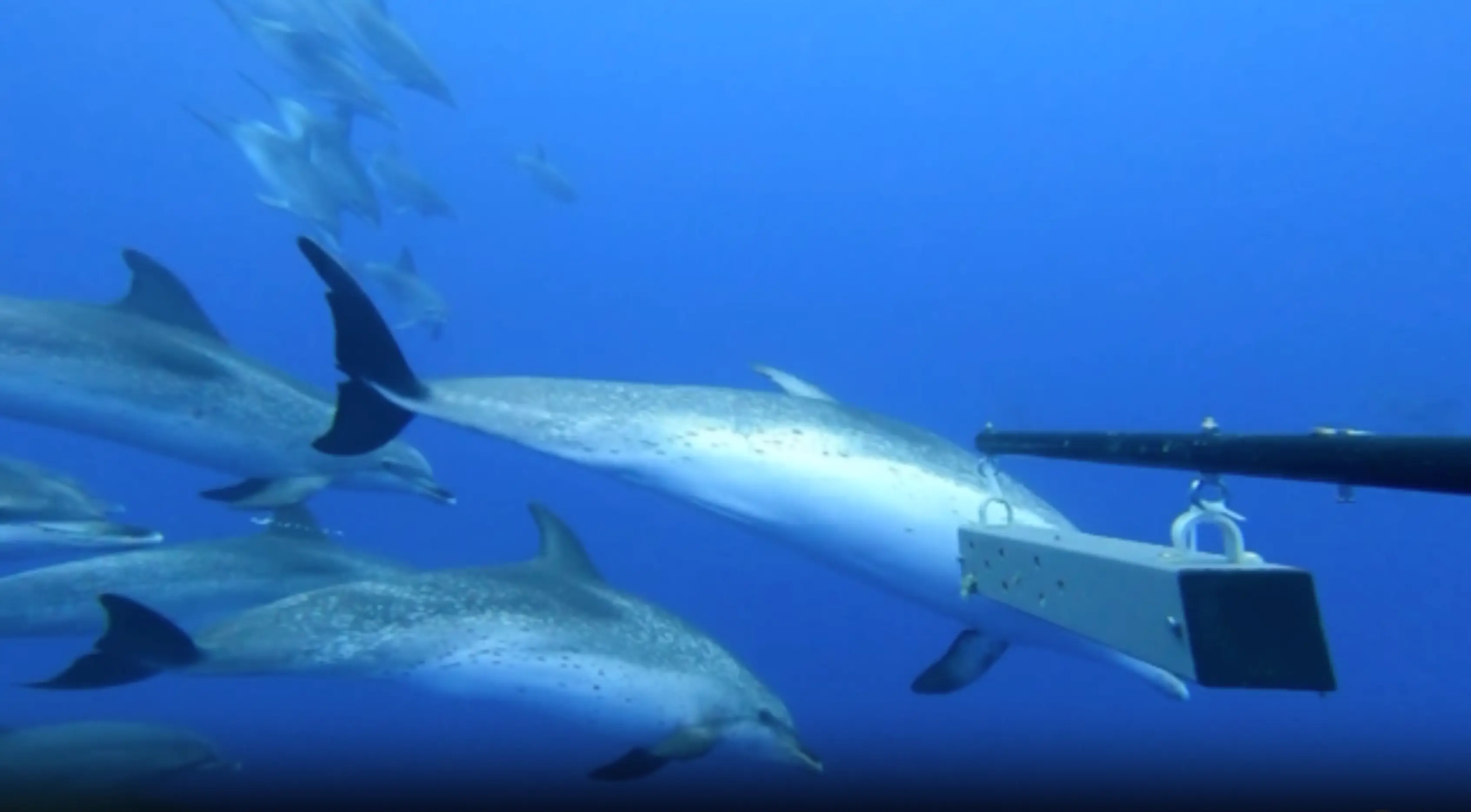
After they were done playing, the mammals went out of shot.
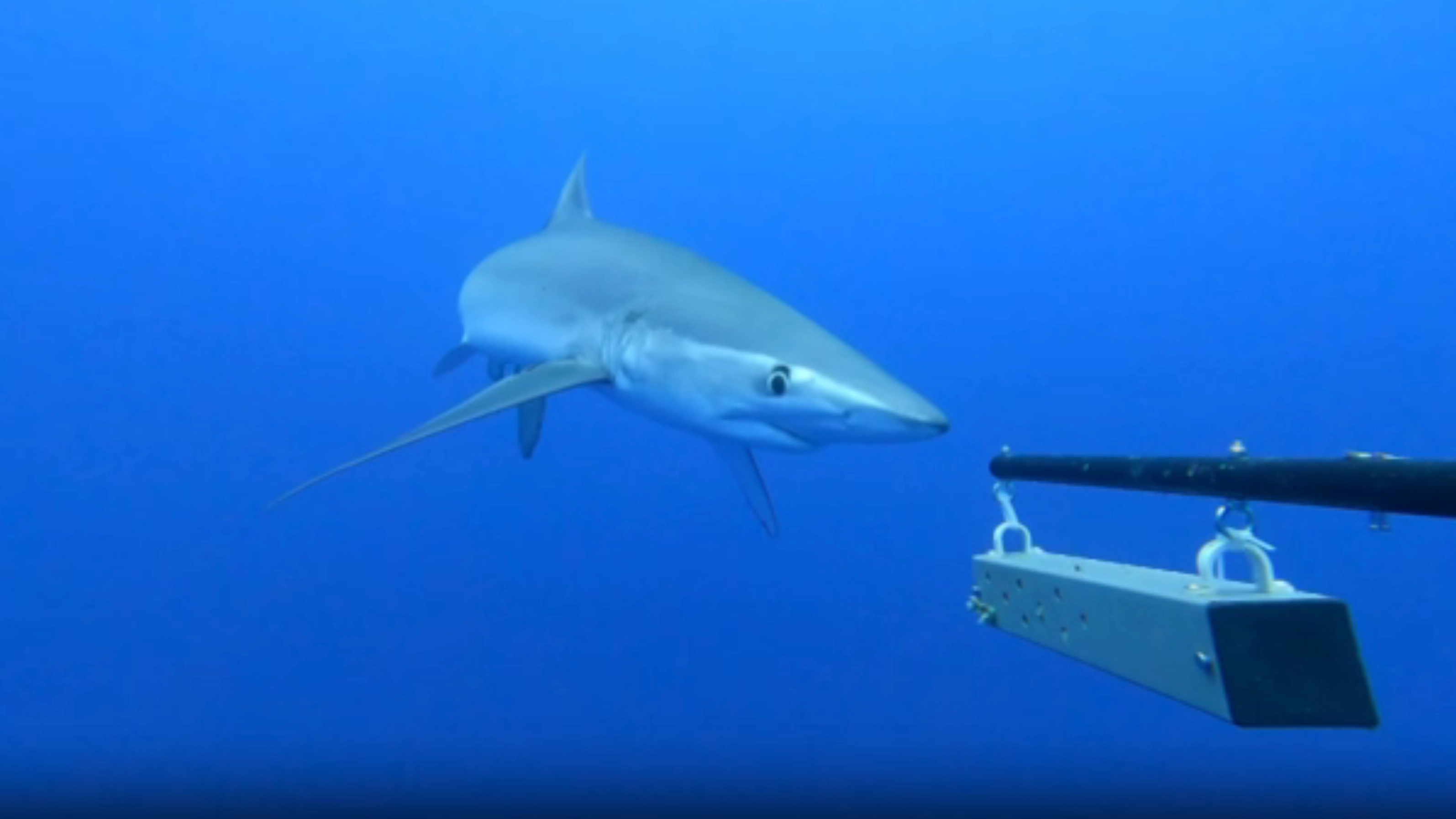
Though this disappointment for the students didn't last, as they were shocked by the sight of one the sea predators which they set out to find - a shark.
Doherty recalled: “All went quiet,” before the researchers noticed that 'a large blue shark appeared out of the blue and scratched itself on the rig and checked out the bait.'
The findings were eye-opening, but it's no surprise that this range of species were found in the region, according to Doherty.
"The Azores is situated in incredibly deep water but has a high density of seamounts that create biodiversity hotspots, attracting large, migratory species," he explained.
The professor said that due to the mix of different ocean currents in the area, the Azores becomes ' hub of activity for large marine vertebrates', singling out whales and dolphins.
 Joshua Nair