Mystery behind blood clot ‘side effect’ after taking COVID vaccine finally solved

Scientists now know why certain COVID vaccines rolled out earlier in the pandemic caused rare blood clots to some patients.
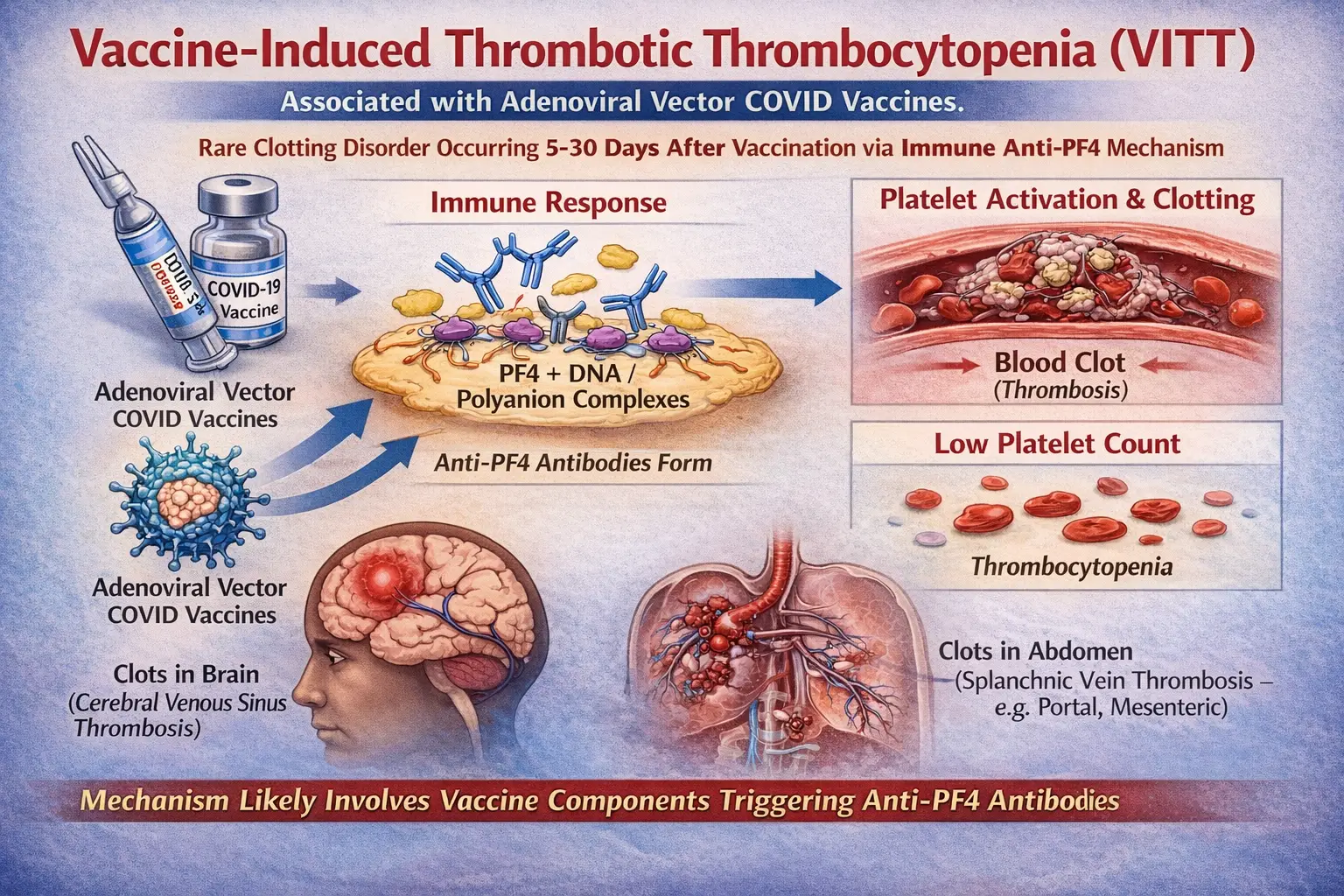
Because the Coronavirus vaccines were developed so quickly, there is often a higher risk of side effects, such as vaccine-induced immune thrombocytopenia and thrombosis (VITT).
VITT is driven by antibodies that activate platelets. These antibodies mistakenly target a platelet protein called platelet factor 4 (PF4), which can trigger dangerous clot formation.
However, before this new study, the exact trigger and mechanism behind VITT were unclear with it happening mainly after COVID-19 vaccines that use adenoviral vectors.
Advert
A team of scientists at Flinders University in Australia have now understood in their study that VITT can happen when a person has a specific antibody gene variant (IGLV3-2102 or 03).
Having a specific gene could explain post-vaccine VITT
So, an immune system which makes antibodies against an adenovirus protein may explain why only a small number of people seem biologically prone to making the specific kind of antibody response that can 'misfire'.
This is what triggers VITT, the researchers say.
“By modifying or removing this specific adenovirus protein, future vaccines can avoid this extremely rare reaction while continuing to provide strong protection against disease,” Flinders University researcher, Dr Jing Jing Wang, said.
“A novel aspect of the paper was our use of powerful mass spectrometry sequencing to identify molecular mimicry between the adenovirus vector protein and the PF4 culprit target,” she says.
“This was the missing link that explains how a normal immune response can, in very rare cases, become harmful.”

Landmark study
Immunologist Professor, James McCluskey, from the University of Melbourne called it 'a brilliant piece of molecular sleuthing'.
"The culmination of a body of work that unravels the genetic and structural basis for how a normal immune response to a virus protein leads to pathogenic autoimmunity," he added.
Professor Tom Gordon says that the new research published in the New England Journal of Medicine represents a 'fascinating journey with an outstanding international team of collaborators to complete a trilogy of publications in the New England Journal of Medicine to solve the mystery of this new group of blood clotting disorders, and potentially translate our discoveries into safer vaccines'.
Notably, this research still doesn't 100 percent prove this is the only pathway for VITT.
It also can’t fully predict who will get VITT or why only some people do and most people don't.
Topics: Health, Coronavirus
 Anish Vij