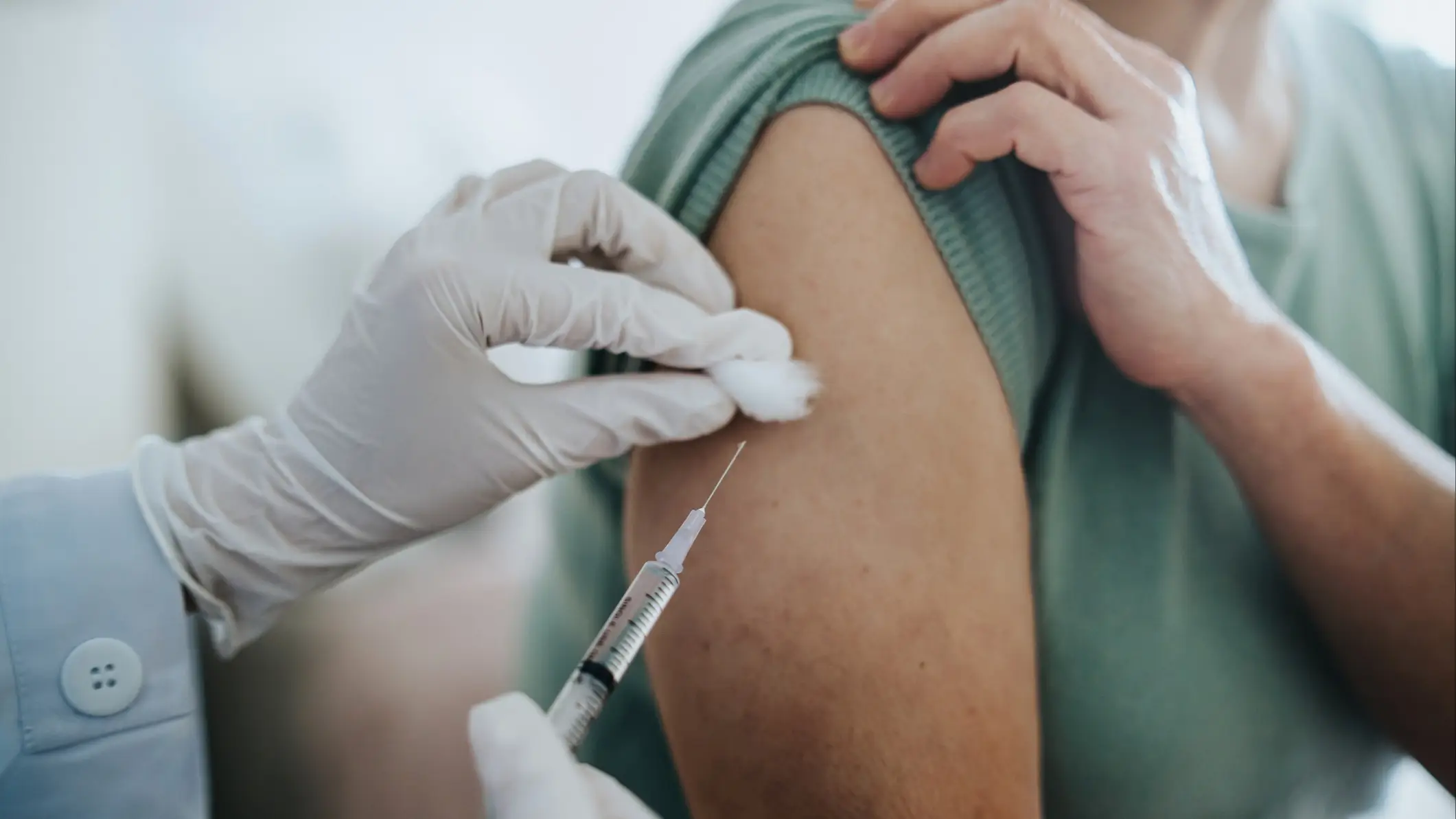
Real risk from Covid vaccine after study revealed outcome for people who took the jab

A new study has identified one risk from taking the mRNA-based Covid-19 vaccines that have now been administered several billion times.
It's been almost six years since the pandemic, and while normalcy has returned somewhat, Covid is still a thing. During the initial pandemic, there was a desperate need for a vaccine rollout, which we soon got in, and by 2023, an estimated 67 per cent of the world's population had the vaccine (via The World Health Organisation).
These Covid vaccines essentially use a small piece of genetic material called messenger RNA (mRNA) to teach your body how to protect itself against Covid, and a recent study revealed a huge outcome for those who'd been vaccinated.
Researchers at Stanford Medicine have credited the drugs with saving millions of lives.
Advert
“The mRNA vaccines have done a tremendous job mitigating the Covid pandemic,” Joseph Wu, the director of the Stanford Cardiovascular Institute, said. “Without these vaccines, more people would have gotten sick, more people would have had severe effects, and more people would have died.”
However, the recent study has revealed that mRNA-based Covid vaccines can potentially cause heart damage in some young men and children.

They estimated that vaccine-related myocarditis, which is inflammation of heart tissue, is apparent in 1 in every 140,000 people after a first dose, rising to 1 in 32,000 after a second dose.
Myocarditis can weaken the heart’s ability to pump blood, causing chest pain, shortness of breath, or an irregular heartbeat. Symptoms range from mild to life-threatening and appear within one to three days after a jab.
People most likely to be affected are those who already have high levels of cardiac troponin, a substance in the blood which indicates heart-muscle injury.
Thankfully, Wu says that most individuals recover quickly from the symptoms.
“It’s not a heart attack in the traditional sense,” he said. “There’s no blockage of blood vessels as found in most common heart attacks. “When symptoms are mild, and the inflammation hasn’t caused structural damage to the heart, we just observe these patients to make sure they recover.”
Wu also says that Covid is '10 times more likely to cause myocarditis as an mRNA-based Covid-19 vaccine'.
“Medical scientists are quite aware that Covid itself can cause myocarditis,” he added. “To a lesser extent, so can the mRNA vaccines. The question is, why?”

Wu's team discovered that two proteins, CXCL10 and IFN-gamma, 'popped up', which they suspect 'are the major drivers of myocarditis', adding that they are part of the protein group known as cytokines that signal immune cells secrete to each other.
After generating human immune cells, researchers injected them with mRNA and found that it created vast amounts of CXCL10 in response.
However, Wu says that 'other vaccines can cause myocarditis and inflammatory problems, but the symptoms tend to be more diffuse', adding that anyone who experiences chest pains after a Covid vaccine should seek medical help immediately.
According to the NHS, more common symptoms of the vaccine include 'a sore arm from the injection, feeling tired, a headache, feeling achy and mild flu-like symptoms'
It comes after two sources told CNN that the US Food and Drug Administration (FDA) is planning to add a 'black box' warning on the mRNA jabs.
While reports have speculated that the plans could be officially announced by the end of the year, things aren't set in stone.
"Unless the FDA announces it, any claim about what it will do is pure speculation," US Department of Health and Human Services spokesperson Andrew Nixon said
LADbible has previously contacted the U.S. Department of Health and Human Services, Pfizer, and Moderna for comment.
Topics: Coronavirus, Health, UK News
 Anish Vij