ladbible homepage
ladbible homepage
  • Home
  • News
    • UK
    • US
    • World
    • Ireland
    • Australia
    • Science
    • Crime
    • Weather
  • Entertainment
    • Celebrity
    • TV
    • Film
    • Music
    • Gaming
    • Netflix
    • Disney
  • Sport
  • Technology
  • Travel
  • Lifestyle
  • Money
  • Originals
    • FFS PRODUCTIONS
    • Say Maaate to a Mate
    • Daily Ladness
    • UOKM8?
    • FreeToBe
    • Citizen Reef
  • Videos
  • Advertise
  • Terms
  • Privacy & Cookies
  • License Our Content
  • About Us & Contact
  • Jobs
  • Latest
  • Archive
  • Topics A-Z
  • Authors
Facebook
Instagram
X
Threads
Snapchat
TikTok
YouTube
Submit Your Content Here
  • GAMINGbible
  • LADbible Group
  • UNILAD
  • SPORTbible
  • Tyla
  • FOODbible
  • UNILAD Tech
Optical illusion can help identify people with autistic traits within seconds
Home>News>Health
Published 16:45 12 Sep 2023 GMT+1

Optical illusion can help identify people with autistic traits within seconds

In a 2018 study, it was found that a simple optical illusion can help identify whether someone is displaying autistic traits.

Callum Jones

Callum Jones

google discoverFollow us on Google Discover

An optical illusion can apparently help identify people with autistic traits in just seconds - though how reliable is it?

Diagnosing someone with autism spectrum disorder (ASD) requires an awful lot of tests and visits to the doctors/medical professionals.

Typically, the path to be diagnosed with autism comes under two stages: screening and a comprehensive diagnostic evaluation.

A throughly conducted screening process will determine if more evaluation is needed in the form of a comprehensive diagnostic evaluation, while it will also rule out any other conditions.

Advert

Part of the process may include consolations with the likes of neurologists, child psychologists, neuropsychologists, psychiatrists, developmental pediatricians, and speech-language pathologists.

However, all of that could potentially be skipped using a simple test: looking at an optical illusion.
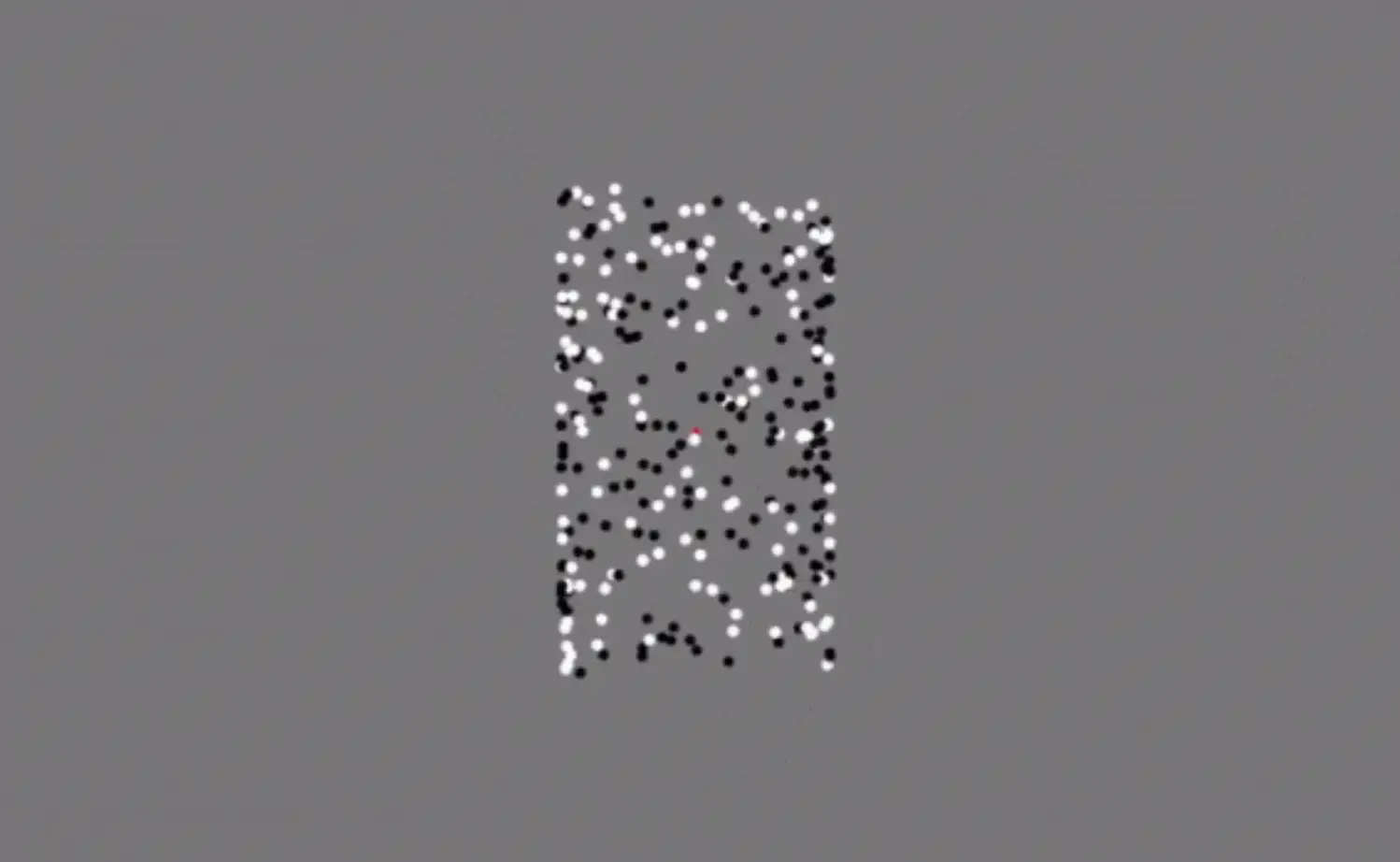
The optical illusion used in the study.
Turi et al. 2018

All was detailed in a 2018 study in the journal eLife, which found that the changes in a patient's pupils as they watch the optical illusion of a three-dimensional cylinder spinning correlates with the probability of them displaying autistic traits.

It is certainly worth noting that the optical illusion can't make a full-on diagnosis, though the whole point of the study was that the illusion could potentially feed into evaluations for those undergoing an autism screening.

So how does it work?

Well, the optical illusion takes advantage of how the pupils change size depending on whether a person is looking at light or dark images.

Subsequently, this can attract someone's attention by giving those in the study a rough idea on what part of the screen the individual is focusing on.

The optical illusion used in this remarkable study involved a GIF consisting of white dots moving in one direction, with a sheet of black dots moving in the other side.

For the majority of people, this gives the illusion of a three-dimensional rotating cylinder - but how you see the cylinder really differs from person to person.

Those who tend to be more focused on that extra detail will tend to look at just one colour at a time, flicking between the black and white on the illusion.

Before participants were shown the optical illusion, they were asked to complete a questionnaire.

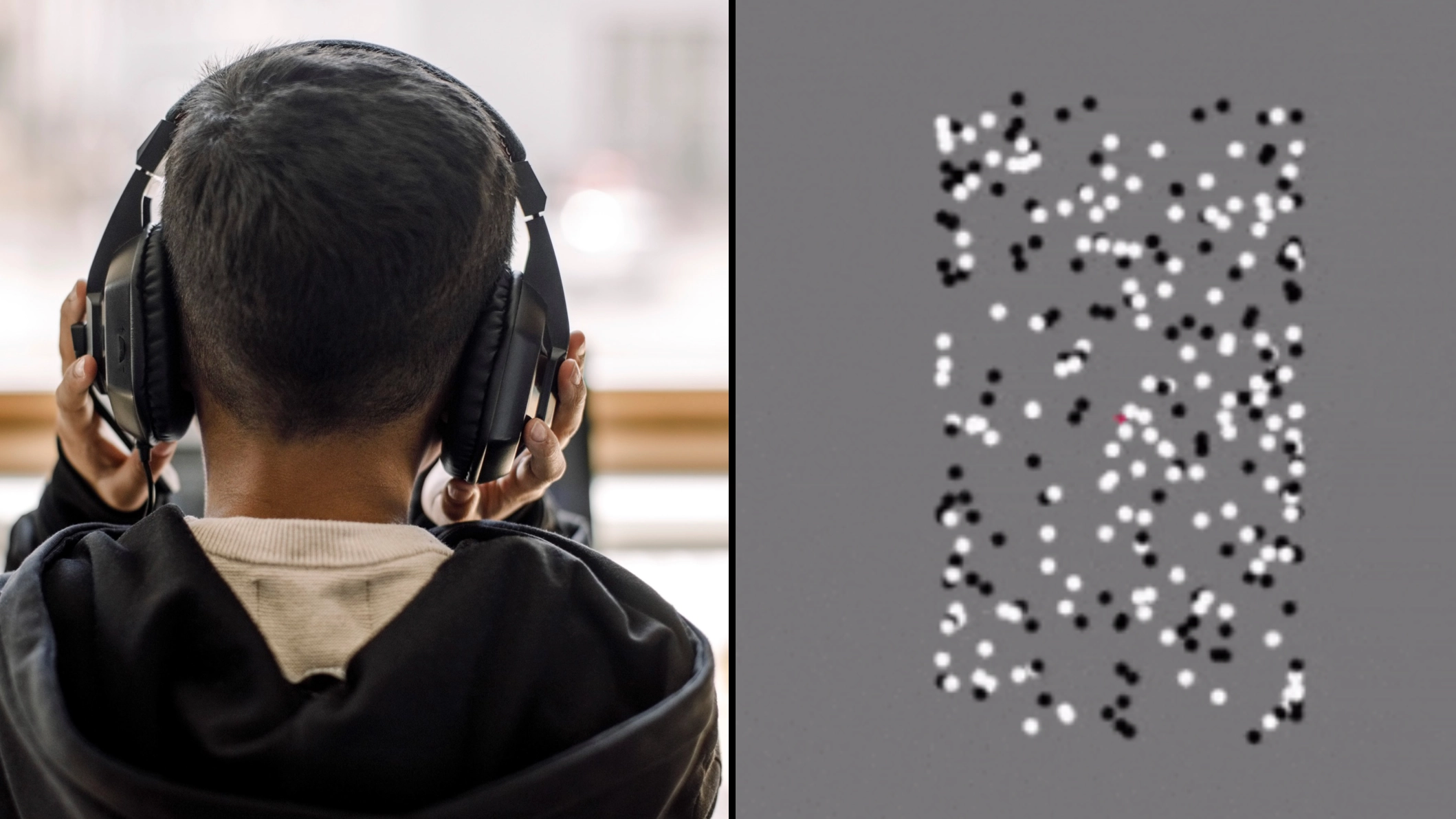
More than one in 100 people in the UK are on the autism spectrum.
Getty Stock Photo

Those who scored higher on the test were more likely to display autistic traits, following that the group were asked to look at the illusion, when their pupil responses were measured.

The results to come out of that - as detailed in the study - found that those who pupils oscillated when they watched the optical illusion would often score higher on the questionnaire.

Why is that you ask?

Well, people involved with the study believe that autistic people or those who display autistic traits tend to be more focused on the individual details.

Subsequently paying more attention to the individual dots rather than overall image.

Featured Image Credit: Getty Stock Photo/Turi et al. 2018

Topics: Health, Optical Illusion

Callum Jones
Callum Jones

Recommended reads

Concern grows among tourists as toxic fish with razor sharp teeth are invading holiday hotspotGetty Stock ImageDoctor shares five early warning signs of stomach cancer that most people missGetty stockMan who suffers from vicious hair pulling condition shares first sign he knew something was wrongSuppliedFIFA slammed after banning entire country from all football in 'unfair' and 'flawed' decisionTasos Katopodis - FIFA/FIFA via Getty Images

Advert

Choose your content:

2 hours ago
3 hours ago
4 hours ago
  • Getty stock
    2 hours ago

    Doctor shares five early warning signs of stomach cancer that most people miss

    Dr Yoga Andredi, a UK trained gastroenterologist, explained his major signs of stomach cancer

    News
  • Tasos Katopodis - FIFA/FIFA via Getty Images
    3 hours ago

    FIFA slammed after banning entire country from all football in 'unfair' and 'flawed' decision

    The entire country's international teams and clubs have been suspended from all football by FIFA

    News
  • INAH
    3 hours ago

    Lost Mayan city with sinister carvings discovered deep in jungle after 1,000 years

    Minanbé was discovered by researchers who said it was strangely well preserved despite being so old

    News
  • St Johns County Sheriff Office
    4 hours ago

    Footage exposes woman slapping crying child's face as she delivered package

    Kiah Lowery was arrested in May for the alleged assault

    News
  • Optical Illusion Of Sitting Women Leaves People Baffled
  • Woman shares hilarious X-Rated optical illusion in beach snap
  • Optical illusion showing seven horses has people baffled as most can only see five
  • Optical Illusion Shows Hidden Number Which Everyone Is Seeing Differently