
Twins went on separate meat and vegan diets to see the real effect on their bodies

A set of identical twins decided to explore what would happen if they consumed separate meat and vegan diets for three months.
Hugo and Ross Turner, known for their athletic and adventurous pursuits, teamed up with researchers from King’s College London in 2019 to compare the effects of a different diet.
For the next 12 weeks, Hugo followed a fully vegan diet while Ross would continue to eat meat, fish and dairy.
To keep things as fair as possible, the twins consumed the same number of calories and followed identical gym routines.
Advert
That way, any differences could be linked mainly to what they were eating.
Hugo initially struggled with the switch to plant-based eating, swapping chicken, eggs and cheese for tofu, beans and lentils.
“I definitely missed cheese at the beginning,” Hugo admitted to the BBC. “That was the hardest thing to give up.”

After a few weeks, however, he started to notice that he had lost weight and saw a reduction in body fat.
His cholesterol also dropped and his energy levels remained high throughout the day.
“My energy levels were much more stable and I didn’t get those big afternoon dips,” he said.
Ross, meanwhile, had a different experience.
Although he continued to perform well in the gym, his body fat increased slightly and his cholesterol didn't change as much.
“Some days I’d feel really good, but other days my energy would dip,” he explained.
After three months, Hugo lost four pounds and had a drop in body fat from 13 percent to 12 percent.
Ross gained about 10 pounds with body fat rising from 13 percent to 15 percent.
His cholesterol remained unchanged, but his glucose control worsened with afternoon energy dips.
Hugo told Business Insider: "I just never felt good. I was eating at least six times a day and never felt full or satisfied, hence I was constantly hungry.
"But equally, I didn't have the crashes that I would probably associate with a higher-carb diet."
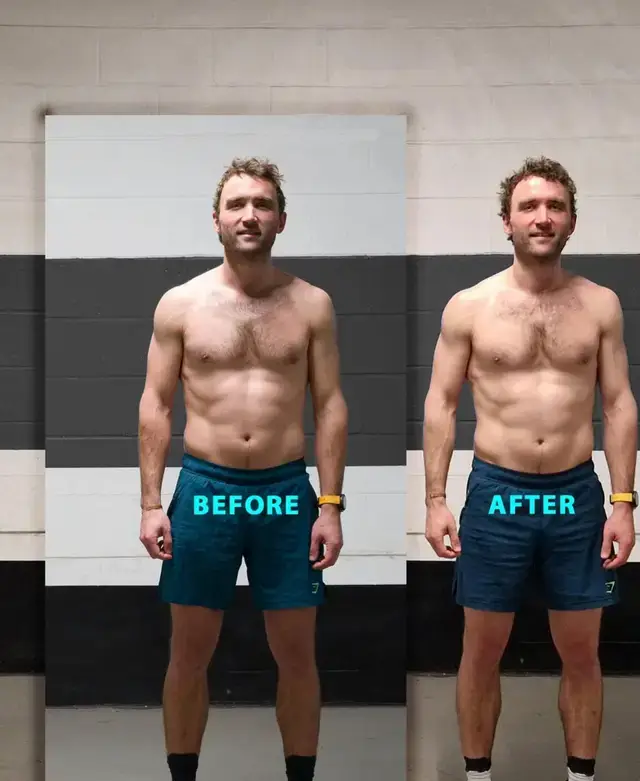
Despite the massive difference in results, experts argued that the the experiment was 'hardly conclusive'.
Elizabeth Ko, MD and Eve Glazier, MD, explained to UCLA Health: "It’s important to note that results of a 12-week experiment with just two subjects are hardly conclusive.
"However, the findings are in line with larger and more rigorous studies.
"Nutritional research continues to point to the benefits of a balanced diet made up of lean proteins, including fish and other seafood, healthful fats, fermented foods and a wide variety of colorful fruits and vegetables.
"It’s good for the heart, improved blood-sugar control, gut microbiome diversity and better health overall."
Topics: Lifestyle, Food And Drink, Health
 Anish Vij