ladbible homepage
ladbible homepage
  • Home
  • News
    • UK
    • US
    • World
    • Ireland
    • Australia
    • Science
    • Crime
    • Weather
  • Entertainment
    • Celebrity
    • TV
    • Film
    • Music
    • Gaming
    • Netflix
    • Disney
  • Sport
  • Technology
  • Travel
  • Lifestyle
  • Money
  • Originals
    • FFS PRODUCTIONS
    • Say Maaate to a Mate
    • Daily Ladness
    • UOKM8?
    • FreeToBe
    • Citizen Reef
  • Videos
  • Advertise
  • Terms
  • Privacy & Cookies
  • License Our Content
  • About Us & Contact
  • Jobs
  • Latest
  • Archive
  • Topics A-Z
  • Authors
Facebook
Instagram
X
Threads
Snapchat
TikTok
YouTube
Submit Your Content Here
  • GAMINGbible
  • LADbible Group
  • UNILAD
  • SPORTbible
  • Tyla
  • FOODbible
  • UNILAD Tech
What happens inside your body when you take too much caffeine
Home>News>Health
Published 17:34 11 Jun 2024 GMT+1

What happens inside your body when you take too much caffeine

This is what happens when your body takes in too much caffeine - something many of us are all likely guilty of

Mia Williams

Mia Williams

google discoverFollow us on Google Discover

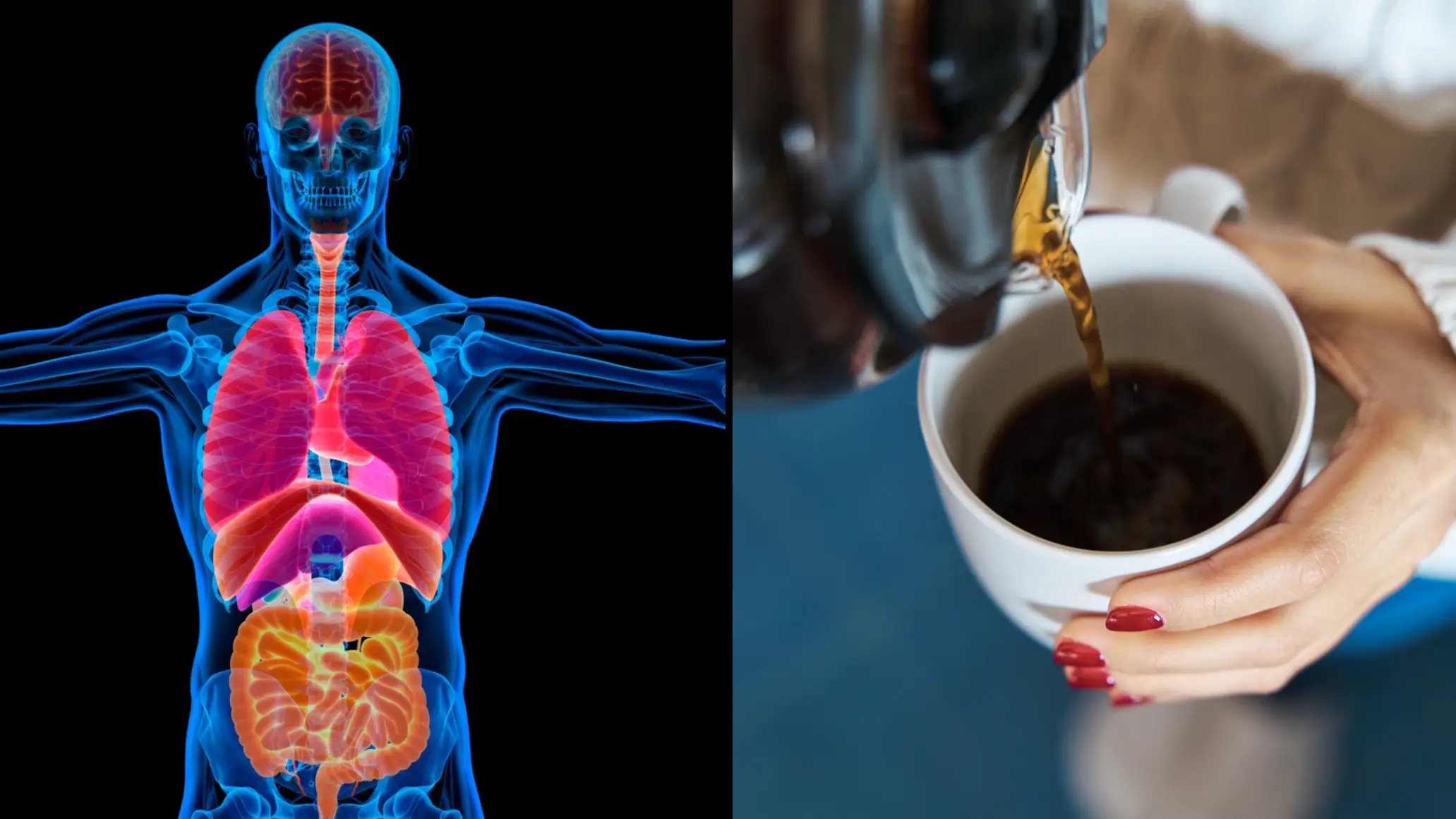
Experts have given an insight into what exactly happens inside your body when you take too much caffeine.

Caffeine is something that most Brits consume every single day religiously.

Whether it's in the form of a morning coffee, tea, or a can of your favourite fizzy drink, it’s in a lot of our most-loved beverages.

Too much caffeine?

But a brand of lemonade in the US has recently been banned amid accusations that the amount of caffeine in the drink was too high.

This is despite being within the countries recommended daily intake guidelines.

Advert

This has raised questions about how much caffeine is too much, and whether guidelines should be changed.

The majority of Brits consume caffeine every single day. (Getty Stock Image)

How does caffeine affect the body?

Some of the most crucial functions at play in our body include heart rate, blood flow, and sleep cycles - which are all affected by a chemical called adenosine.

This occurs naturally in the body, and it’s the job of this chemical to make us tired at the end of the day.

However, when we consume caffeine, it’s absorbed into the bloodstream quickly, where it out-competes adenosine.

It does this by preventing it from connecting to receptors and doing its job - making us feel more awake and alert.

Caffeine can also boost the levels of dopamine and adrenaline, which help make you feel more stimulated.

Effects on the brain

Talking to BBC Future, Damian Bailey, professor of physiology, said: “The brain is like a big muscle. It needs to perform things, and dopamine, adrenaline and caffeine all stimulate it.”

Caffeine stimulates the brain, whether that's in the form of a cup of tea or an energy drink. (Getty Stock Image)

As one of the biggest contributors of caffeine in the world, there is a lot of evidence about the effects of coffee on our health.

A study found that drinking three to four cups of coffee a day was more often linked to health benefits rather than harm - which is good news for all you coffee addicts out there!

One area where things get a bit tricky is heart health

A study of almost 19,000 people found that, while drinking more than two cups of coffee a day was linked to higher risk of death among people who had high blood pressure, this wasn’t the case among those with healthy blood pressure.

And in review of that evidence, scientists have concluded that while moderate coffee consumption can actually lower the risk of death, high blood pressure and heart failure, there was no clear cut correlation found on heart disease risk.

So, it looks as though your coffee addiction might not be as detrimental as you first thought!

Featured Image Credit: Getty Stock Images

Topics: Health, Food And Drink

Mia Williams
Mia Williams

Mia is a freelance writer for LADBible, and an award-winning trainee journalist at the UK’s No.1 journalism school, News Associates.

X

@mia_francessca

Recommended reads

World Cup referee issues statement after being accused of making 'white power' gestureITVExtreme athlete who once performed with Madonna dies in tragic base jumping accident PORNCHAI KITTIWONGSAKUL/AFP via Getty ImagesBruce Willis' wife reveals first symptoms she noticed before dementia diagnosisTheo Wargo/Getty Images for Film at Lincoln CenterDoctor explains two important questions Brits should ask their GP before going on omeprazole(Getty Stock Images)

Advert

Choose your content:

2 hours ago
3 hours ago
6 hours ago
8 hours ago
  • ITV
    2 hours ago

    World Cup referee issues statement after being accused of making 'white power' gesture

    The official has responded publicly after a clip from Germany's World Cup match against Curaçao drew criticism

    News
  • PORNCHAI KITTIWONGSAKUL/AFP via Getty Images
    3 hours ago

    Extreme athlete who once performed with Madonna dies in tragic base jumping accident

    Record-breaking slackliner Andy Lewis died alongside another man in the accident in Utah

    News
  • (Getty Stock Images)
    6 hours ago

    Doctor explains two important questions Brits should ask their GP before going on omeprazole

    Omeprazole is one of the most prescribed drugs in the UK – but do you need to be taking it?

    News
  • Matthew Huang/Icon Sportswire via Getty Images
    8 hours ago

    Bizarre FIFA rule explained as Levi’s forced to change stadium name for World Cup

    It's caught a few people off guard

    News
  • Simulation shows exactly what happens to your body when you stop eating sugar for two weeks
  • Simulation shows what happens to your body when you take weight loss drugs
  • This is exactly what happens to your body when you stop eating meat
  • Timeline of what happens to your body when you stop taking creatine