ladbible homepage
ladbible homepage
  • iconNews
  • videos
  • entertainment
  • Home
  • News
    • UK
    • US
    • World
    • Ireland
    • Australia
    • Science
    • Crime
    • Weather
  • Entertainment
    • Celebrity
    • TV
    • Film
    • Music
    • Gaming
    • Netflix
    • Disney
  • Sport
  • Technology
  • Travel
  • Lifestyle
  • Money
  • Originals
    • FFS PRODUCTIONS
    • Say Maaate to a Mate
    • Daily Ladness
    • UOKM8?
    • FreeToBe
    • Citizen Reef
  • Advertise
  • Terms
  • Privacy & Cookies
  • License Our Content
  • About Us & Contact
  • Jobs
  • Latest
  • Archive
  • Topics A-Z
  • Authors
Facebook
Instagram
X
Threads
Snapchat
TikTok
YouTube
Submit Your Content Here
  • SPORTbible
  • Tyla
  • GAMINGbible
  • LADbible Group
  • UNILAD
  • FOODbible
  • UNILAD Tech
Man's Parkinson's Disease Symptoms Massively Reduced Thanks To Small Brain Implant

Home> News

Updated 05:02 10 May 2022 GMT+1Published 09:42 9 May 2022 GMT+1

Man's Parkinson's Disease Symptoms Massively Reduced Thanks To Small Brain Implant

A United Kingdom hospital is utilising tiny deep brain stimulation devices to obstruct and brain-cell patterns caused by Parkinson’s.

Jayden Collins

Jayden Collins

google discoverFollow us on Google Discover

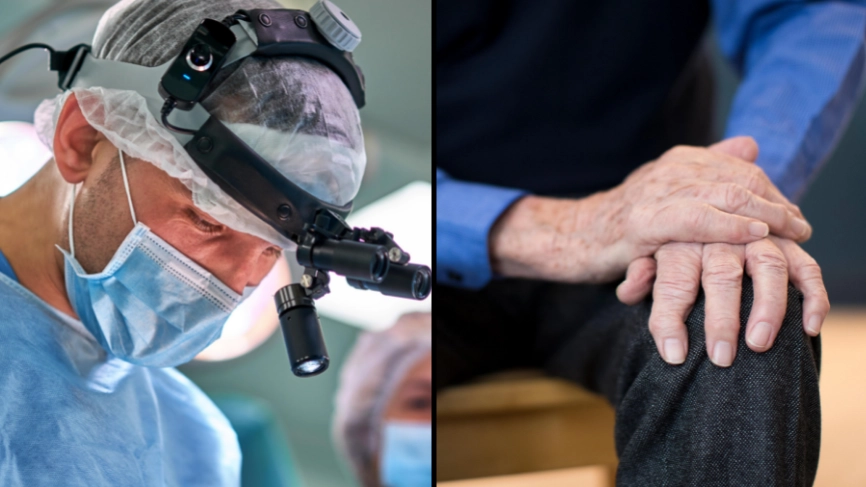
A breakthrough in the treatment of Parkinson’s disease has been discovered by a hospital in the United Kingdom, with doctors able to reverse the symptoms of the disease.

Southmead Hospital in Bristol has conducted a trial utilising tiny deep brain stimulation (DBS) devices to obstruct and overturn brain-cell patterns caused by Parkinson’s.

Twenty-five patients were selected for the trial, which concludes next year, with Tony Howells the first to receive the treatment as part of the trial.

Howells had the operation in 2019 and spoke to BBC about the transformation, saying he couldn’t even walk 180 metres from the car before the surgery. 

He said: "Then after the operation, which was 12 months later, I went on Boxing Day again and we went for 2.5 miles (4km) and we could've went further.”

Advert

Howells called the operation ‘amazing’. 

There is no current cure for Parkinson’s disease, which sees parts of the brain become damaged over time, leading to an involuntary shaking of body parts, slow movement, and stiff muscles.

While most cases come in people aged over 50, about 5 per cent of cases first experience symptoms when they are under 40. 

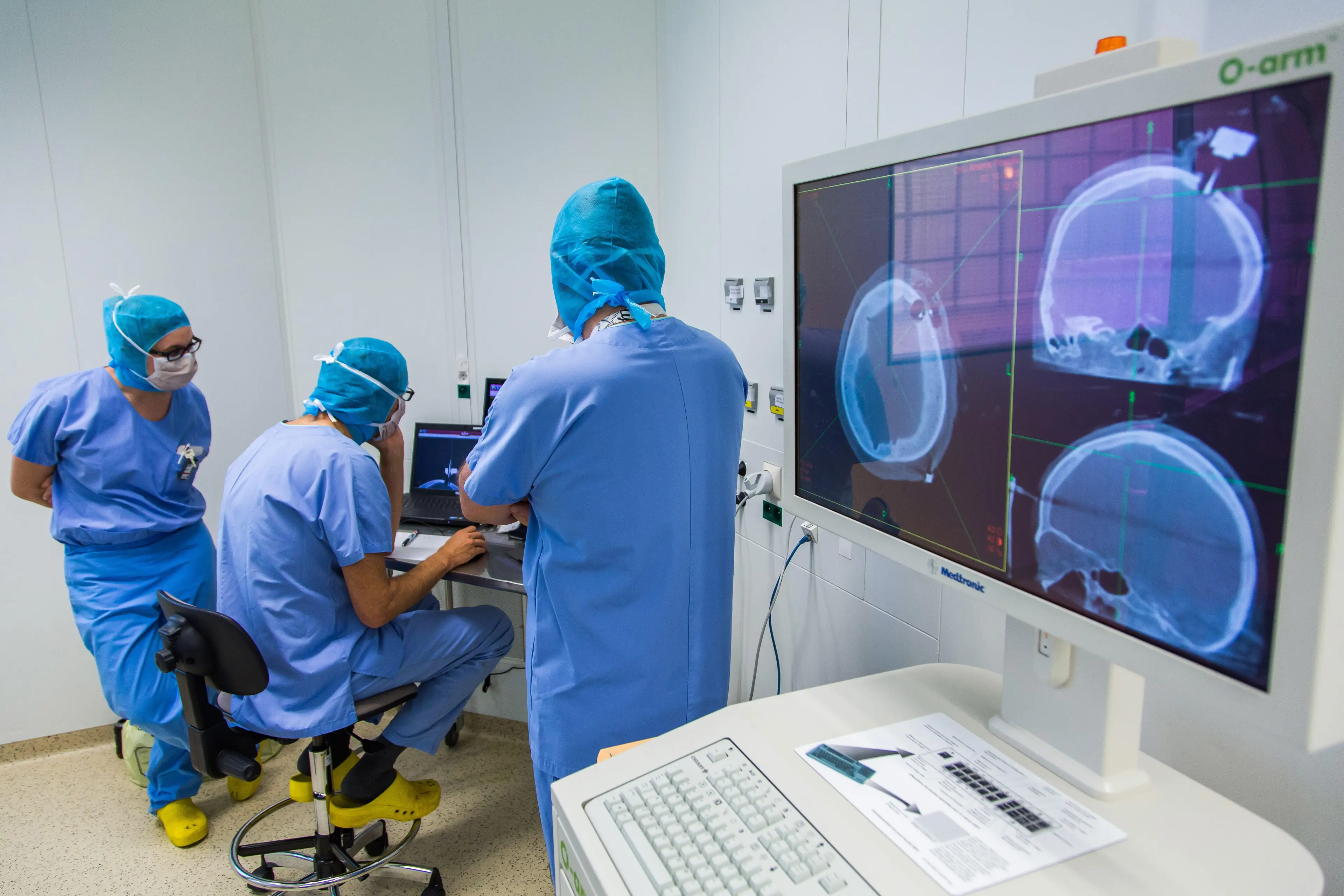
DBS surgery currently involves a large battery implanted into the chest or stomach which is connected to wires underneath the skin into the brain.

This new system is much smaller and the battery system gets implanted into the skull, which uses electrical impulses to target damaged areas of the brain. 

The operation also takes half the time of the traditional method as it's carried out in just three hours. 

Mr Howells continued: “You can't understand how frustrating [Parkinson's] is until it happens to you.

"Just doing your shoelaces up is a major operation... it affects your every day life no end."
Phanie / Alamy

He noted that he was looking forward to being able to play golf again. 

Neurologist Dr Alan Whorne noted that this sort of surgery would be more applicable to a much younger patient.

According to the Better Health Channel, 80,000 Australians are currently living with Parkinson’s disease, with approximately four per 1,000 directly impacted by the disease. 

In the United Kingdom, there are about 140,000 people impacted by the disease, with Dr Whorne believing about 14,000 could benefit from the device. 

Recently, comedian Billy Connolly opened up about living with Parkinson’s disease.

The 79-year-old said: “It's really important to work, to draw, to write, to walk silly for your grandchildren. Doing the same thing you've always done is good for you.

"I don't let the Parkinson's dictate who I am – I just get on with it. I've had a very successful career and I have no regrets at all."

Featured Image Credit: Aleksandr Lupin / Alamy. Daisy-Daisy / Alamy.

Topics: Good News, Science, Technology, Health

Jayden Collins
Jayden Collins

Jayden Collins is a Journalist at LADbible. He has worked across multiple media platforms in areas such as sport, music, pop culture, entertainment and politics. He is part of the editorial team for LADbible Australia.

Recommended reads

Blue Ivy breaks Met Gala rule as she makes debut with Beyoncé and Jay-ZJamie McCarthy/Getty ImagesProfessor Green has tumours behind eye and spine as he reveals 'rare' and painful conditionInstgram/Professor GreenBritish 'drug mule' couple arrested within minutes of landing at Istanbul airport as friends issue desperate pleaFacebook/Holly CooperKaty Perry’s bizarre faceless look at the Met Gala has been explainedJulian Hamilton/Getty Images)

Advert

Choose your content:

an hour ago
13 hours ago
15 hours ago
  • Facebook/Holly Cooper
    an hour ago

    British 'drug mule' couple arrested within minutes of landing at Istanbul airport as friends issue desperate plea

    If convicted, they could face between 10 and 30 years behind bars

    News
  • (YouTube/Barny Dillarstone)
    13 hours ago

    Man drops night vision camera into deep ocean for first time ever and finds stuff he ‘can’t explain’

    YouTuber Barny Dillarstone dropped cameras in various locations off the coast of Indonesia

    News
  • Instagram/ana_obregon_oficial
    15 hours ago

    Actress who used dead son’s sperm to have his baby opens up about unique situation

    Ana Obregón has issued an update on how life as a 'grandmother-mother' is

    News
  • SWNS
    15 hours ago

    Locals of world’s largest nudist village hit out after it’s ‘overrun by swingers’

    A lot of illicit action has been unfolding on the beach, according to one local

    News
  • Terry Crews' wife Rebecca shares first symptoms of Parkinson's disease dismissed as 'anxiety'
  • Man, 30, who will develop dementia symptoms in 40s running London marathon with fridge on back
  • Breakthrough as cruel disease that kills brain cells treated for first time ever
  • Fully paralysed woman shares major effects of Elon Musk’s Neuralink implant