Magic Mushrooms Psychedelic Frees Up Depressed Brain, Study Shows

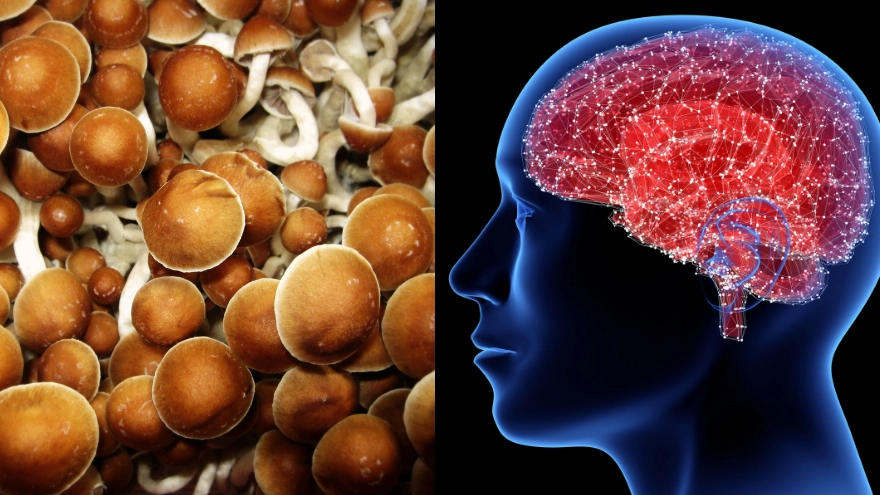
Researchers at the Imperial Centre for Psychedelic Research have suggested the psychedelic component of magic mushrooms helps to free up the brains of people suffering from depression.
The claim is based on results of two combined studies which analysed brain scans of around 60 patients receiving treatment for depression.
People experiencing depression can have rigid and restrained patterns of brain activity, according to the researchers, however it has been suggested psilocybin could help break the brain out of this rut.
Advert
The researchers found those who responded to psilocybin-assisted therapy showed increased brain connectivity during their treatment and for up to three weeks afterwards, with the freeing up effect associated with those reporting improvements in their depression.
In the findings, published in the journal Nature Medicine, the researchers noted patients being treated with a conventional antidepressant, named escitalopram, did not display similar changes in brain connectivity. This suggests the psychedelic works differently in treating depression.
Professor David Nutt, head of the Imperial Centre for Psychedelic Research, noted the significance of the findings as he commented: "These findings are important because for the first time we find that psilocybin works differently from conventional antidepressants - making the brain more flexible and fluid, and less entrenched in the negative thinking patterns associated with depression.
"This supports our initial predictions and confirms psilocybin could be a real alternative approach to depression treatments," he continued.
Professor Robin Carhart-Harris, the paper's senior author and former head of the Imperial Centre for Psychedelic Research, pointed out the effect of psilocybin is consistent across two studies and 'was not seen with a conventional antidepressant'.
He continued: "In previous studies we had seen a similar effect in the brain when people were scanned whilst on a psychedelic, but here we're seeing it weeks after treatment for depression, which suggests a 'carry over' of the acute drug action."
Though the study may pave the way for advancements in psilocybin therapy, the researchers have stressed patients with depression should not attempt to self-medicate with psilocybin.
The component is currently listed as one of the most tightly controlled drugs in the UK, and while there was success in the trial taking magic mushrooms or psilocybin in the absence of controlled conditions may not have a positive outcome. Taking magic mushrooms can make the world appear distorted and can cause mild hallucinations.
Psilocybin is one of a number of psychedelics currently being explored as a potential therapy to treat psychiatric disorders.
Topics: Drugs, Science, UK News, Mental Health
 Emily Brown