ladbible homepage
ladbible homepage
  • iconNews
  • videos
  • entertainment
  • Home
  • News
    • UK
    • US
    • World
    • Ireland
    • Australia
    • Science
    • Crime
    • Weather
  • Entertainment
    • Celebrity
    • TV
    • Film
    • Music
    • Gaming
    • Netflix
    • Disney
  • Sport
  • Technology
  • Travel
  • Lifestyle
  • Money
  • Originals
    • FFS PRODUCTIONS
    • Say Maaate to a Mate
    • Daily Ladness
    • UOKM8?
    • FreeToBe
    • Citizen Reef
  • Advertise
  • Terms
  • Privacy & Cookies
  • License Our Content
  • About Us & Contact
  • Jobs
  • Latest
  • Archive
  • Topics A-Z
  • Authors
Facebook
Instagram
X
Threads
Snapchat
TikTok
YouTube
Submit Your Content Here
  • SPORTbible
  • Tyla
  • GAMINGbible
  • LADbible Group
  • UNILAD
  • FOODbible
  • UNILAD Tech
‘Devil’ comet three times as big as Mount Everest is hurtling towards Earth

Home> News> Science

Published 17:59 20 Oct 2023 GMT+1

‘Devil’ comet three times as big as Mount Everest is hurtling towards Earth

The two horned terror has exploded in space and is now making its way towards our planet

Olivia Burke

Olivia Burke

google discoverFollow us on Google Discover

Scientists have warned that a so-called 'devil' comet has exploded in the skies and is hurtling towards Earth.

Yep, you read that right - a two horned terror that is three times the size of Mount Everest is inbound for our planet.

With an estimated diameter of 18.6 miles and a satanic silhouette, it is set to be visible to the naked eye when it eventually rocks up.

Advert

Thankfully, we don't need to start climbing into bunkers and saying a Hail Mary just yet, as it won't hit us.

But the comet is set to put on a spectacular show in the skies when it reaches its closest point to Earth next year.

It goes by the name of 12P/Pons-Brooks (or 12P for short), but has been given its devilish nickname because it looks like it has horns.
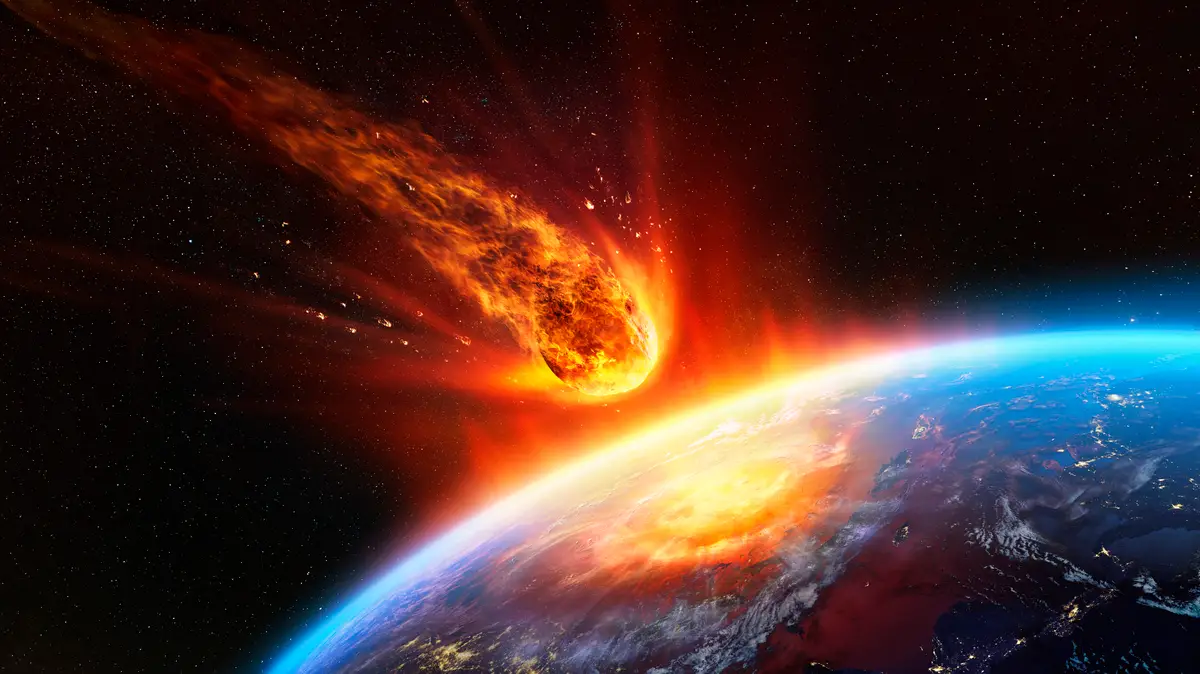
The 'devil' comet is heading for Earth following its latest explosion.
Getty stock images

Astronomers recently spotted that it had exploded in space for the second time in four months.

The nucleus of the city-sized celestial object is filled with a mix of ice, dust and gas, known as cryomagma.

Its centre is also surrounded by a cloud of gas known as its coma, which began to shine even brighter than usual after the latest blast.

When solar radiation warms up its internal components, the pressure begins to build up and eventually triggers an explosion.

The icy elements then shoot out into space through cracks in the nucleus' shell, which gives the comet its horn-like features.

Scientists have also pointed out its unusual shape gives it a strange resemblance to the Millennium Falcon spaceship from Star Wars.

The British Astronomical Association (BAA) has been keeping a close eye on the comet, which was last seen by humans in 1954.

Space boffin Richard Miles, from the BAA, explained: "The two ‘horns’ may be caused by a peculiarly-shaped cryovolcanic vent with some sort of blockage causing material to be expelled with a weird flow pattern."
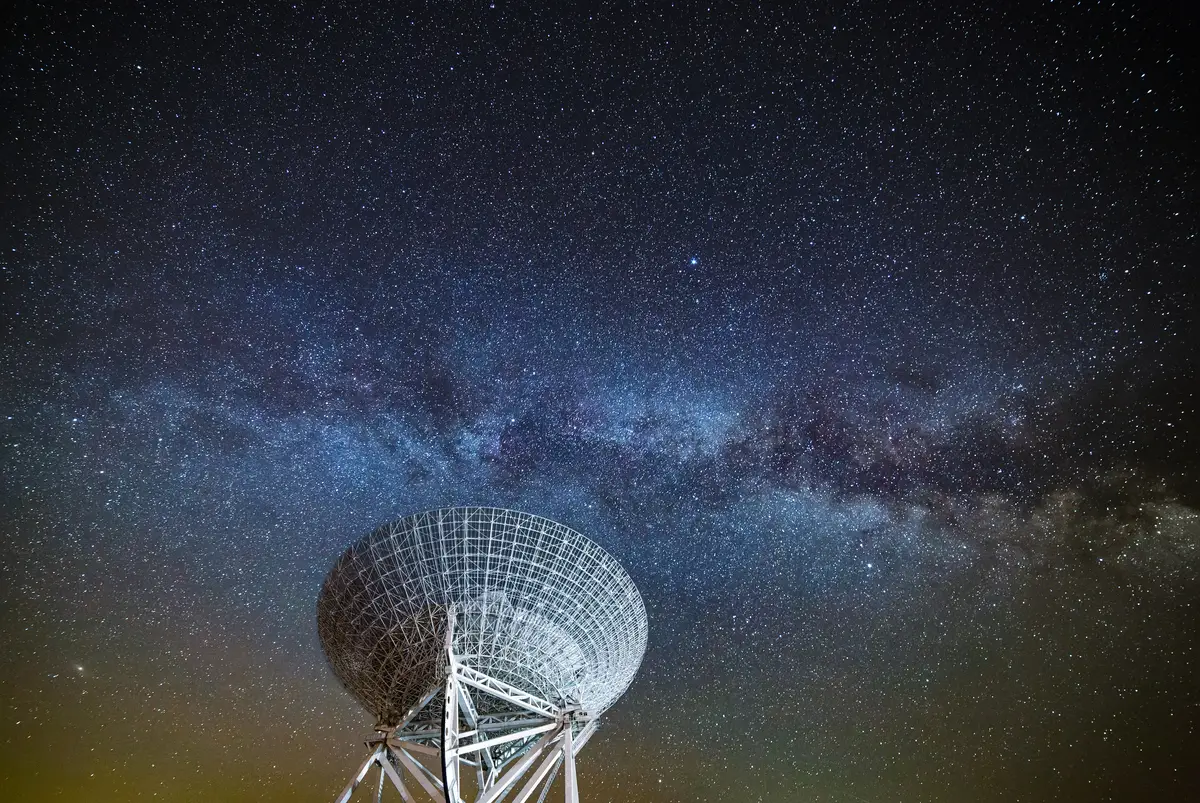
Scientists say it may be visible to the naked eye when it eventually nears our planet.
Getty stock images

Scientists detected the second explosion on October 5, after noticing 12P had became a dozen times brighter.

This was because of the extra light reflecting from its expanded coma, according to the BAA.

Over the next few days, its 'peculiar horns' sprouted as the gas continued to expand away from the comet.

Miles says it is one of 20 known cryovolcanic comets - which essentially means it has an active ice volcano and spews out things like water, ammonia or methane into extremely cold environments.

Jose Manuel Pérez Redondo managed to take a few snaps of the incredible explosion via a 2.0-m Faulkes Telescope North located on the Hawaiian island of Maui.

Although the comet is currently charging towards Earth, it's still got a long way to go before it reaches its closest point to us.

This is predicted to occur on April 21, 2024, and experts suggest we may be able to spot it soaring through the skies.

Although you might be able to see it without a telescope, it might be an idea to get yours dusted off and ready.

That's because it won't make a return back in our direction until 2095 - and us lot might be long gone by then.

Even at its closest point, the comet will still be a whopping 232 million km away from us.

Featured Image Credit: Getty stock Images

Topics: Science, Space, World News, Technology, News

Olivia Burke
Olivia Burke

Olivia is a journalist at LADbible Group with more than five years of experience and has worked for a number of top publishers, including News UK. She also enjoys writing food reviews (as well as the eating part). She is a stereotypical reality TV addict, but still finds time for a serious documentary.

X

@livburke_

Recommended reads

Ryanair cancels millions of seats on flights to holiday hotspotsSean Gallup/Getty ImagesRalph Fiennes explains why he isn't playing Voldemort again in new Harry Potter seriesWarner BrosBookmaker owes punter £900,000 after huge bet on Grand National winsMichael Steele/Getty ImagesWho will be exempt from US army draft as government 'automatically register' young menRoberto Schmidt/Getty Images

Advert

Choose your content:

12 hours ago
13 hours ago
  • Michael Steele/Getty Images
    12 hours ago

    Bookmaker owes punter £900,000 after huge bet on Grand National wins

    Some very lucky punter bet £100k on the winning horse

    News
  • Roberto Schmidt/Getty Images
    12 hours ago

    Who will be exempt from US army draft as government 'automatically register' young men

    The new rule change should come in from December, but here is who will be exempt

    News
  • Instagram/thedolab
    12 hours ago

    Woman shocked after intimate wardrobe malfunction makes it into Coachella advert

    She had an unfortunate mishap while partying at the festival

    News
  • Catherine De Noire
    13 hours ago

    Legal brothel manager explains important '8 second rule' that they enforce

    It's been keeping staff safe and sound for years

    News
  • Big question asked as NASA releases ‘stunning’ image of Moon from Artemis II crew
  • People have huge question as NASA release 'spectacular' image of Earth from Artemis II crew
  • ‘Devil comet’ three times the size of Mount Everest has ‘sprouted horns’ as it hurtles towards Earth
  • Incredible photos of Mount Everest taken from International Space Station as three astronauts set for return