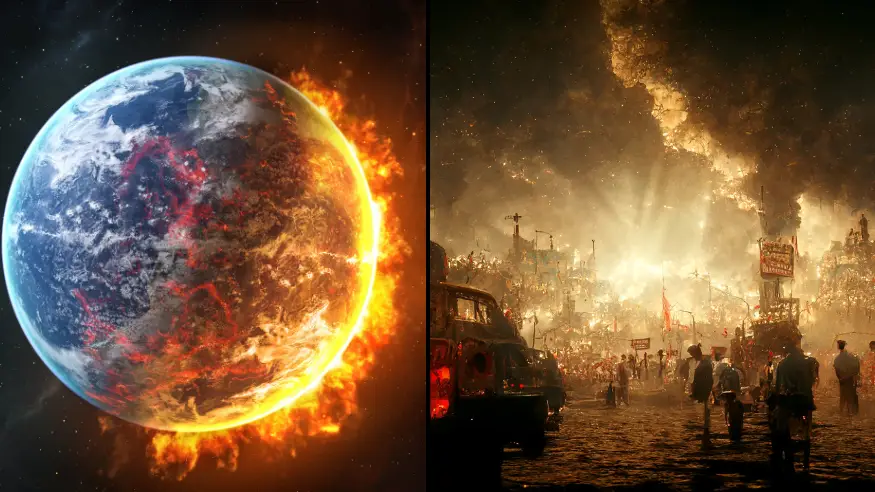
Scientists reveal exact date Earth is set to face 'mass extinction'

It’s nearly 2025, and what better way to celebrate another year on Earth than to find out the exact date it’s all going to end?
There has been so much talk throughout history about how the world will be destroyed, and while nobody has been able to definitively say how it’ll happen, new research believes it holds the key.
Well, according to a study conducted by the University of Bristol, we’ve got a few million years left until it’s over.
The researchers found through their calculations using computer simulations into how all mammals will die found that humans are likely to go extinct in 250 million years, only if we stop doing one thing.
Advert
The report suggests that Earth will cease to have any mammal inhabitants that cannot adjust to living with temperatures of between 104°F to 158°F (40°C to 70°C).
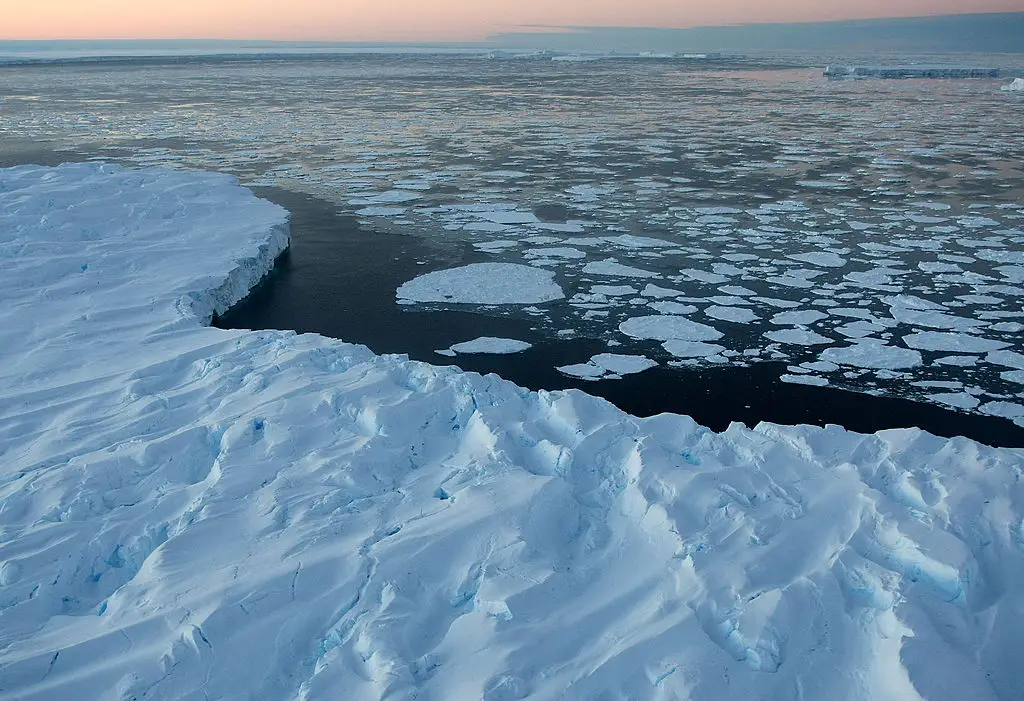
This is because of our fossil fuel burning and greenhouse gas emissions, which researchers say need to stop now.
If not, we’re only quickening the end of times.
As we’ve not had a mass extinction event since the dinosaurs were wiped out 66 million years ago by a massive asteroid, maybe we’ve just started to believe that it’ll never happen.
But hold your horses, matey. We’re actually well overdue one.
Think about it, there have been five mass extinction events in the history of the world, and we’ve been sitting pretty for 66 billion years without triggering one?
Well, this one is different, as it's totally man made and our own fault.
As Earth’s tectonic plates move slightly each year, there are times when they come together to form a supercontinent every 400 to 600 million years, which might trigger some nasty natural disasters too.
But it’ll mostly signify the end of times.
Lead author Dr Alexander Farnsworth, Senior Research Associate with the Cabot Institute for the Environment at University of Bristol, said: “The newly-emerged supercontinent would effectively create a triple whammy, comprising the continentality effect, hotter sun and more CO2 in the atmosphere, of increasing heat for much of the planet. The result is a mostly hostile environment devoid of food and water sources for mammals.

“Widespread temperatures of between 40 to 50 degrees Celsius, and even greater daily extremes, compounded by high levels of humidity would ultimately seal our fate. Humans – along with many other species – would expire due to their inability to shed this heat through sweat, cooling their bodies.”
Co-author Dr Eunice Lo, Caboteer and Research Fellow in Climate Change and Health at the University of Bristol added that we need to be thinking about our fossil fuel, saying: “It is vitally important not to lose sight of our current Climate Crisis, which is a result of human emissions of greenhouse gases. While we are predicting an uninhabitable planet in 250 million years, today we are already experiencing extreme heat that is detrimental to human health. This is why it is crucial to reach net-zero emissions as soon as possible.”
Dr Farnsworth said: “The outlook in the distant future appears very bleak. Carbon dioxide levels could be double current levels. With the Sun also anticipated to emit about 2.5% more radiation and the supercontinent being located primarily in the hot, humid tropics, much of the planet could be facing temperatures of between 40 to 70 °C.
“This work also highlights that a world within the so-called ‘habitable zone’ of a solar system may not be the most hospitable for humans depending on whether the continents are dispersed, as we have today, or in one large supercontinent.”
In 250 million years' time, Earth will form a doughnut-shape with an inland sea in the middle and the Pacific Ocean taking up the majority of Earth's surface.
Topics: Environment, Global Warming, Science
 Britt Jones