
Terrifying simulation shows how deep the ocean actually is

A simulation has shown just terrifying deep the ocean can be at certain points.
The average depth of the ocean varies for each ocean, but if you take those averages and combine them then the average depth overall is a whopping 3,682 metres.
Perhaps not surprisingly the Pacific Ocean has the biggest average depth, with an average depth of a whopping 4,280 metres. The Indian Ocean is next at 3,741 metres average depth, and the Atlantic comes in third at 3,646 metres.
The two shallowest oceans by average depth, at least in relative terms, are the Southern Ocean at 3,270 metres, with the Arctic Ocean as the shallowest with an average depth of 1,204 metres.
Advert
Of course, there are also points in these oceans which are much deeper than their average, and the deepest spot of all is Challenger Deep, which is located in the Mariana Trench in the Pacific Ocean.
This is effectively a giant underwater canyon, plummeting down into the earth to an astonishing depth of 10,911 metres, which the simulation by YouTuber @zackdfilms says means you could stack the tallest building in the world on itself 13 times before it broke the surface.
Only 27 people have descended to Challenger Deep, among them Titanic director James Cameron, as well as Hamish Harding, one of those who died on the Titan submersible when it imploded on the way to see the wreck of the Titanic, which rests around 3,800 metres beneath the surface of the North Atlantic.
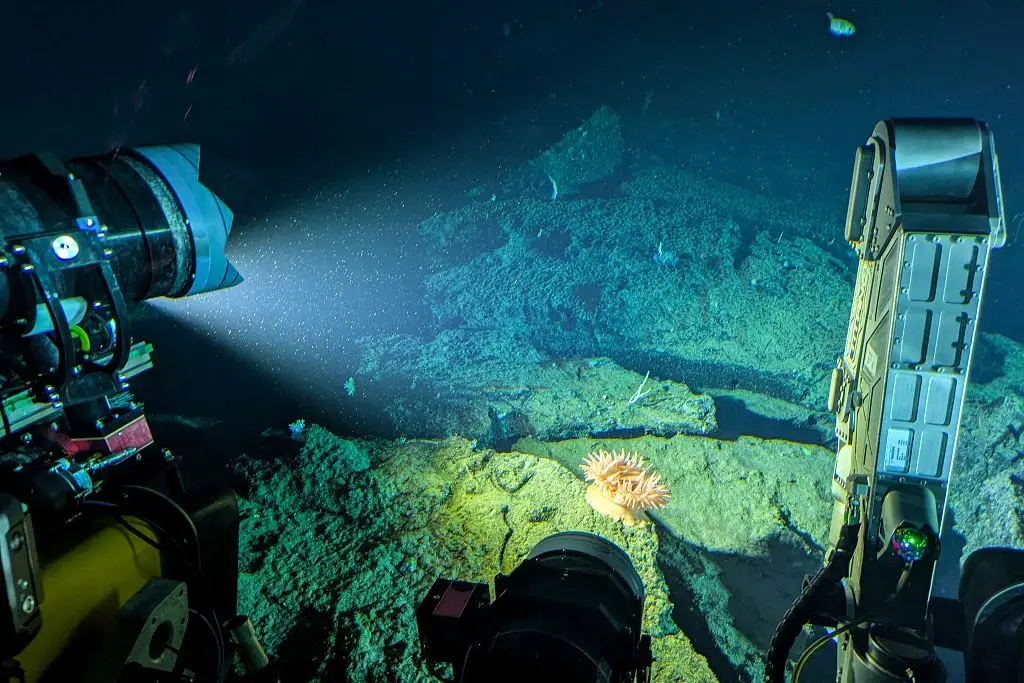
But while the depths of the ocean are marked by great canyons in the trench, there are also points at which the ocean's depth decreases rapidly as well.
This is due to enormous underwater mountain ranges which rise from the sea floor, known as the 'Abyssal Plain', to dizzying heights in the Mid Ocean Ridges.
Some volcanic sea mounts even break the surface, forming volcanic islands, with the mountain's slopes quickly shelving off into the deep ocean surrounding them.
These islands can become hotspots for marine life as the deep ocean currents collide with the sides of the mountain, carrying up nutrients and chemicals from the depths which can draw in animals closer to the surface.
While the deep ocean may be very hostile to humans, it is still filled with a hugely diverse range of life.
Many smaller fish which are vulnerable to predators near to the surface take shelter during the day by hiding in the relative darkness of the deep ocean, before ascending at night under cover of darkness to feed.
Trillions of animals make this journey every single night, with predators following the animals as they ascend. In terms of the amount of biomass involved, this is among the largest migrations of life on the planet.
And the deep ocean is not just one great mass either - there are very distinct layers to it.
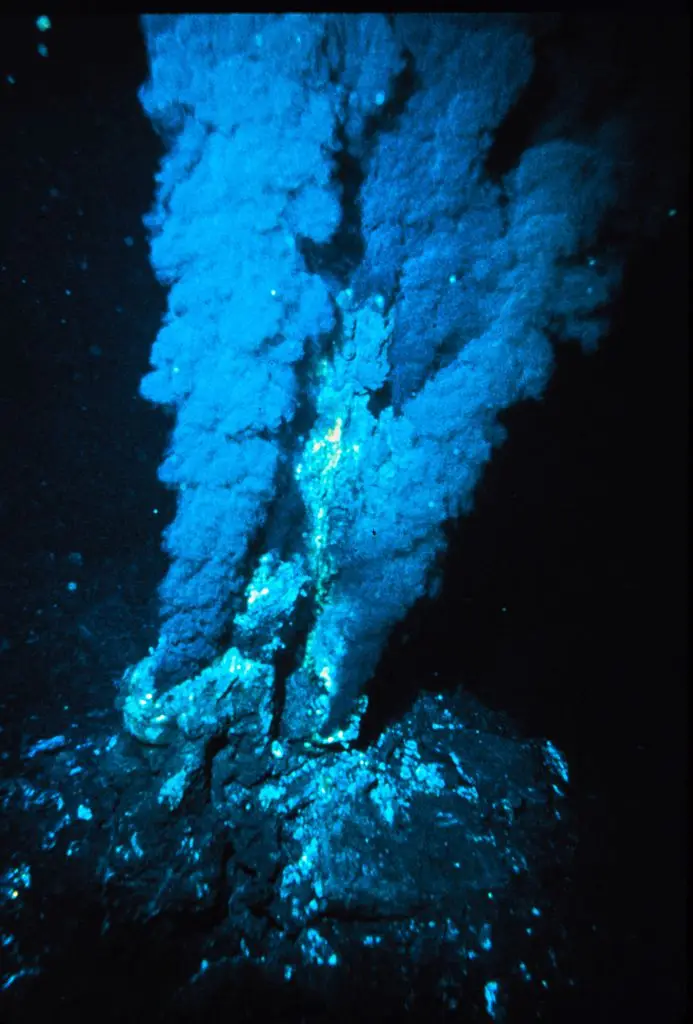
First you have the epipelagic zone, which is the one closest to the surface. Think 'epi' as in 'epidermis', like skin.
At around 200 metres down you enter the twilight zone, or the Mesopelagic Zone, where very little sunlight reaches, sometimes so little that human eyes can't detect it, though creatures that live there have sometimes adapted their eyes to pick up what light is there.
At around 1000 metres you enter the Bathypelagic Zone, where even in clear tropical waters there is no sunlight whatsoever, though there is still bioluminescent light, which is generated by animals such as angler fish.
Next up is the Abyssopelagic Zone, which stretches from 4,000 metres down to 6,000 metres. Around three quarters of the ocean floor is in this zone.
Finally, there is the Hadalpelagic Zone, from 6,000 metres to the very bottom of the deepest parts of the ocean, including the Mariana Trench.
Despite the harsh conditions, bacteria have been found at the very bottom of the deepest trench, and the deepest dwelling fish, called Abyssobrotula galatheae, was found in the Puerto Rico Trench at a depth of a whopping 8,372 metres.
Sadly, even the deepest parts of the ocean aren't safe from humans, with trawling nets dragging across the sea floor ripping up deep sea corals which are hundreds of years old.
 Kit Roberts