
ladbible homepage
ladbible homepage
  • iconNews
  • videos
  • entertainment
  • Home
  • News
    • UK
    • US
    • World
    • Ireland
    • Australia
    • Science
    • Crime
    • Weather
  • Entertainment
    • Celebrity
    • TV
    • Film
    • Music
    • Gaming
    • Netflix
    • Disney
  • Sport
  • Technology
  • Travel
  • Lifestyle
  • Money
  • Originals
    • FFS PRODUCTIONS
    • Say Maaate to a Mate
    • Daily Ladness
    • UOKM8?
    • FreeToBe
    • Citizen Reef
  • Advertise
  • Terms
  • Privacy & Cookies
  • License Our Content
  • About Us & Contact
  • Jobs
  • Latest
  • Archive
  • Topics A-Z
  • Authors
Facebook
Instagram
X
Threads
Snapchat
TikTok
YouTube
Submit Your Content Here
  • SPORTbible
  • Tyla
  • GAMINGbible
  • LADbible Group
  • UNILAD
  • FOODbible
  • UNILAD Tech
Scientists think they've worked out what unknown interstellar object in our solar system is

Home> News> Science

Updated 20:24 11 Jul 2025 GMT+1Published 20:18 11 Jul 2025 GMT+1

Scientists think they've worked out what unknown interstellar object in our solar system is

It came from outside our own solar system

Joe Harker

Joe Harker

google discoverFollow us on Google Discover

Scientists have been studying an interstellar object that's currently moving through our solar system which was first spotted on 1 July.

It has been called 3I/ATLAS because of what spotted it, and this object being the third detected interstellar object in our system.

It's from outside our own solar system, so this thing has travelled quite a long way to get to our locality, and thanks to our many wonderful telescopes, we're able to get a good look at it.

Asteroid Terrestrial-impact Last Alert System (ATLAS) in Rio Hurtado, Chile, spotted 3I/ATLAS as part of planet Earth's early warning system for objects in space which might strike our world.

Advert

Fortunately, this thing is going to miss us to the tune of 150 million miles as it moves through our solar system, and NASA says that on 30 October, it will come within 130 million miles of our sun.

For the time being, we're able to watch the progress made by 3I/ATLAS and will be able to do so until September, at which point it'll be too close to the sun.
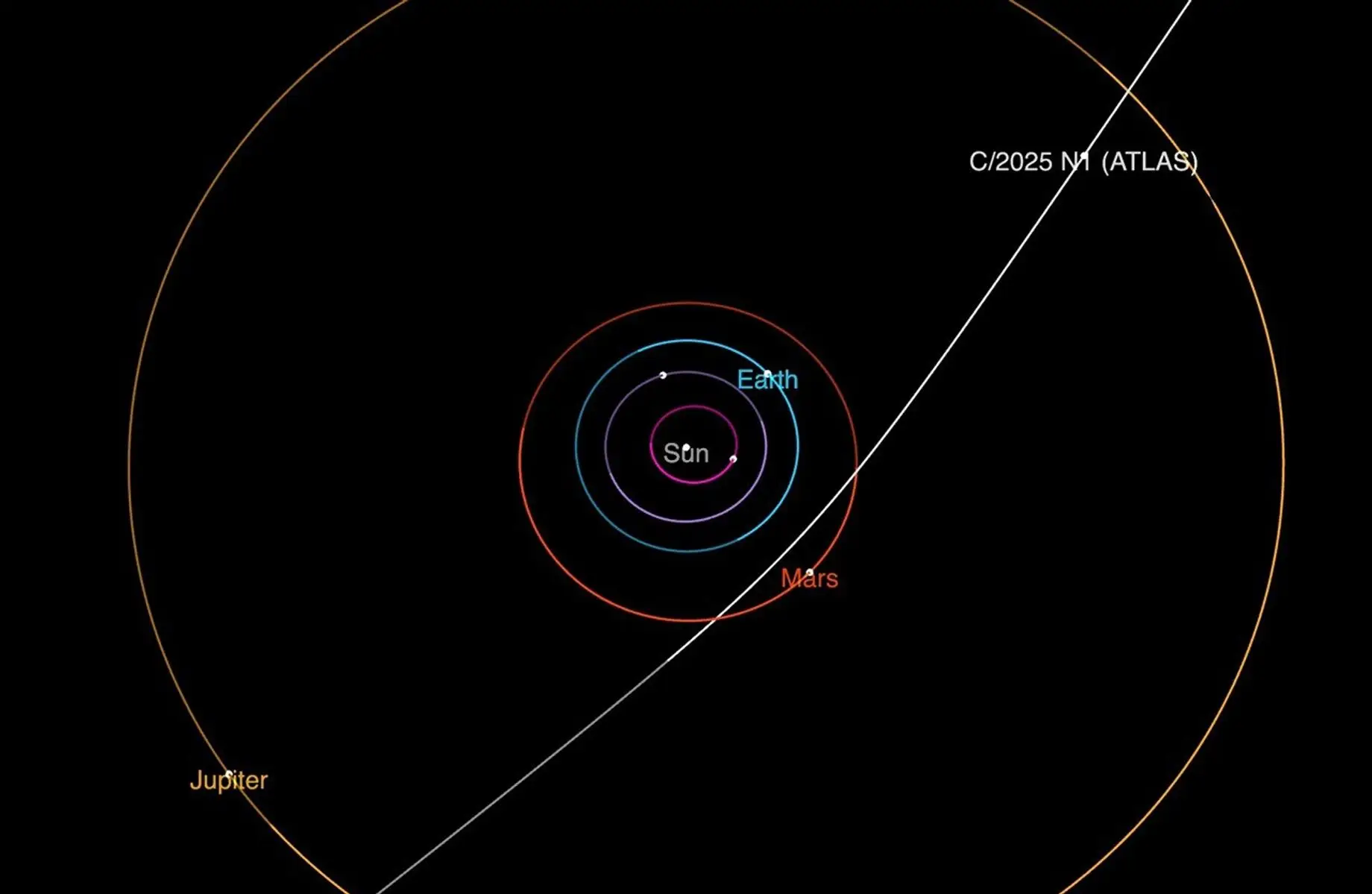
The interstellar object will pass between Earth and Mars as it moves through our Solar System (NASA/JPL-Caltech)

NASA has been calling this thing a comet, but scientists have also been investigating the possibility that it could be something else.

Professor Avi Loeb of Harvard University has written that 3I/ATLAS may be something other than a comet, and said that from observations it appeared to be 'a reflecting surface that is about 20 kilometres in diameter'.

He said that the closer the interstellar object comes to the sun, the more we will learn about it and its true nature, noting that if it is a comet 'then it will get brighter as it comes closer to the sun and its surface gets warmer'.

Not only have scientists been looking for signs that the interstellar object is a comet, but they also think 3I/ATLAS is one of the oldest things we've ever seen, possibly even older than the solar system it is currently travelling through.

According to Space, a team of astronomers reckon that the interstellar object is roughly seven billion years old.
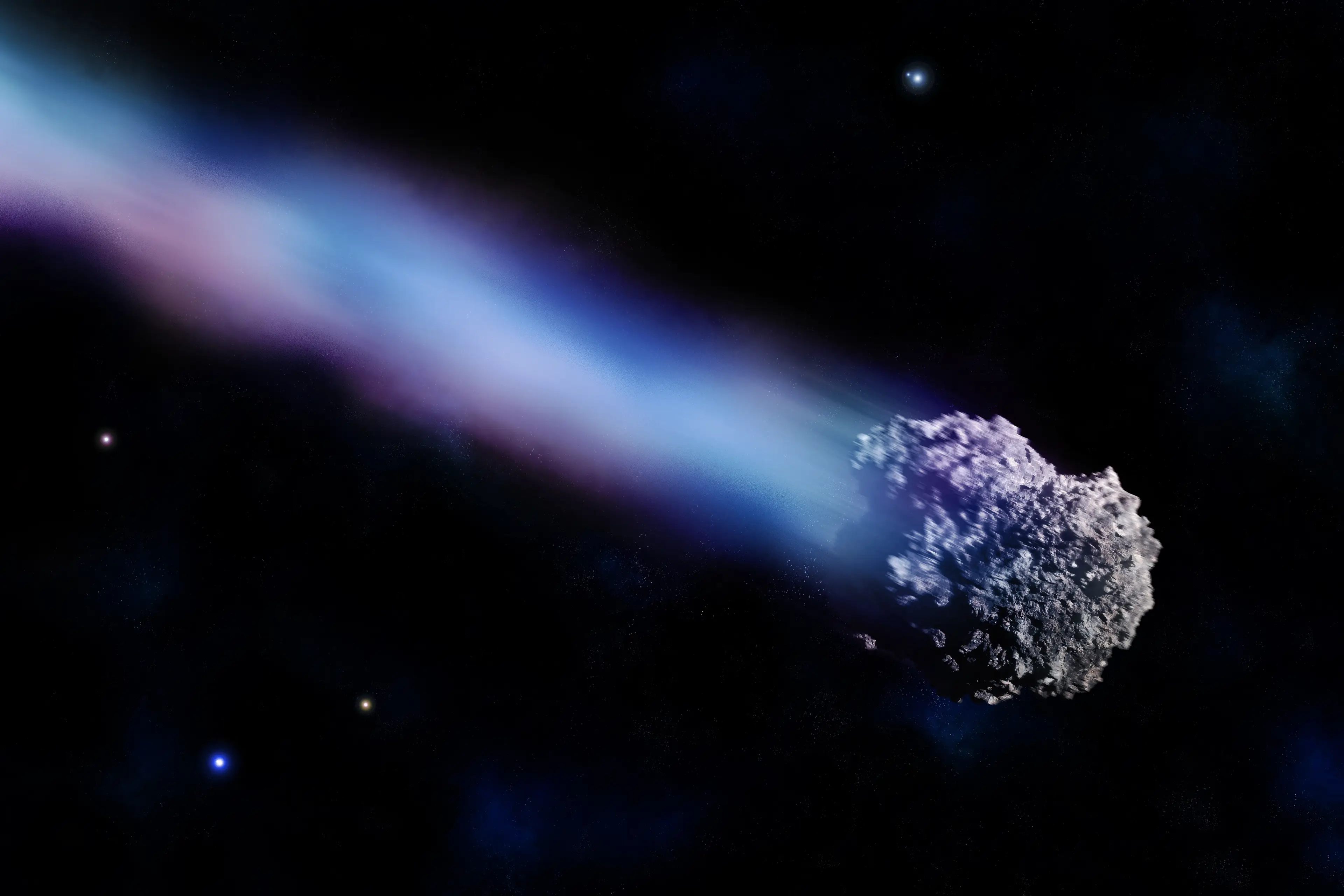
Scientists are working out whether it's a comet or not, and they're sure it's very, very old (Getty Stock Photo)

Matthew Hopkins of the University of Oxford said that all of the non-interstellar objects we see formed at the time our solar system did about 4.5 billion years ago.

He explained: "But interstellar visitors have the potential to be far older, and of those known about so far, our statistical method suggests that 3I/ATLAS is very likely to be the oldest comet we have ever seen."

They've said it seems likely this object came from the 'thick disk' of the Milky Way, which would make it one of the older parts of the galaxy.

This visitor which comes from a long time ago in a part of our galaxy far, far away has got a lot of interest around it.

Featured Image Credit: Getty/rbkomar

Topics: Space, Science, NASA

Joe Harker
Joe Harker

Joe graduated from the University of Salford with a degree in Journalism and worked for Reach before joining the LADbible Group. When not writing he enjoys the nerdier things in life like painting wargaming miniatures and chatting with other nerds on the internet. He's also spent a few years coaching fencing. Contact him via [email protected]

X

@MrJoeHarker

Recommended reads

Do you live in one of Sydney’s earliest rising areas? Suntory BOSS Coffee is giving you free iced coffee and brekky next weekSuntoryKaty Perry shares one of her songs with interesting lyrics after Ruby Rose sexual assault allegationsStefanie Keenan/Getty Images for DVF‘Looksmaxxer’ influencer Clavicular storms out of interview after being asked if he’s an incel(60 Minutes Australia)Little Rascals star Bug Hall who gave away entire earnings for new life has been arrested(Universal Pictures)

Advert

  • Beth England surprises local grassroots team with a new TV thanks to Currys
  • Scientists think they've discovered a new planet in our solar system, 'Planet X'
  • Chances of 'Planet X' having alien life as scientists think they've discovered a new planet in our solar system
  • Scientists think they know how to find ‘hidden’ ninth planet lurking in the solar system

Choose your content:

11 hours ago
12 hours ago
14 hours ago
15 hours ago
  • Michael Siluk/UCG/Universal Images Group via Getty Images)
    11 hours ago

    New triple-strength jab that helps users shed up to 25% of weight coming to UK in weeks

    It's a once-a-week job that'll simplify the process

    News
  • SWNS
    12 hours ago

    Woman who never smoked warns of 'black teeth' vaping side effect caused by £17,000 habit

    Stacey Gardiner now needs some serious dental work

    News
  • Facebook
    14 hours ago

    Storage hunter who uses ChatGPT to identify 'profitable' containers makes £37k from £330 unit

    "My family took my hobby seriously after that"

    News
  • (Getty Stock Images)
    15 hours ago

    Symptoms of MASLD liver disease as cases predicted to rise to 1.8 billion by 2050

    Metabolic-dysfunction-associated steatotic liver disease (MASLD) is on the rise. Here is what you need to know

    News