Mankind has received a mysterious 10-second signal from deep space and no one knows where it came from

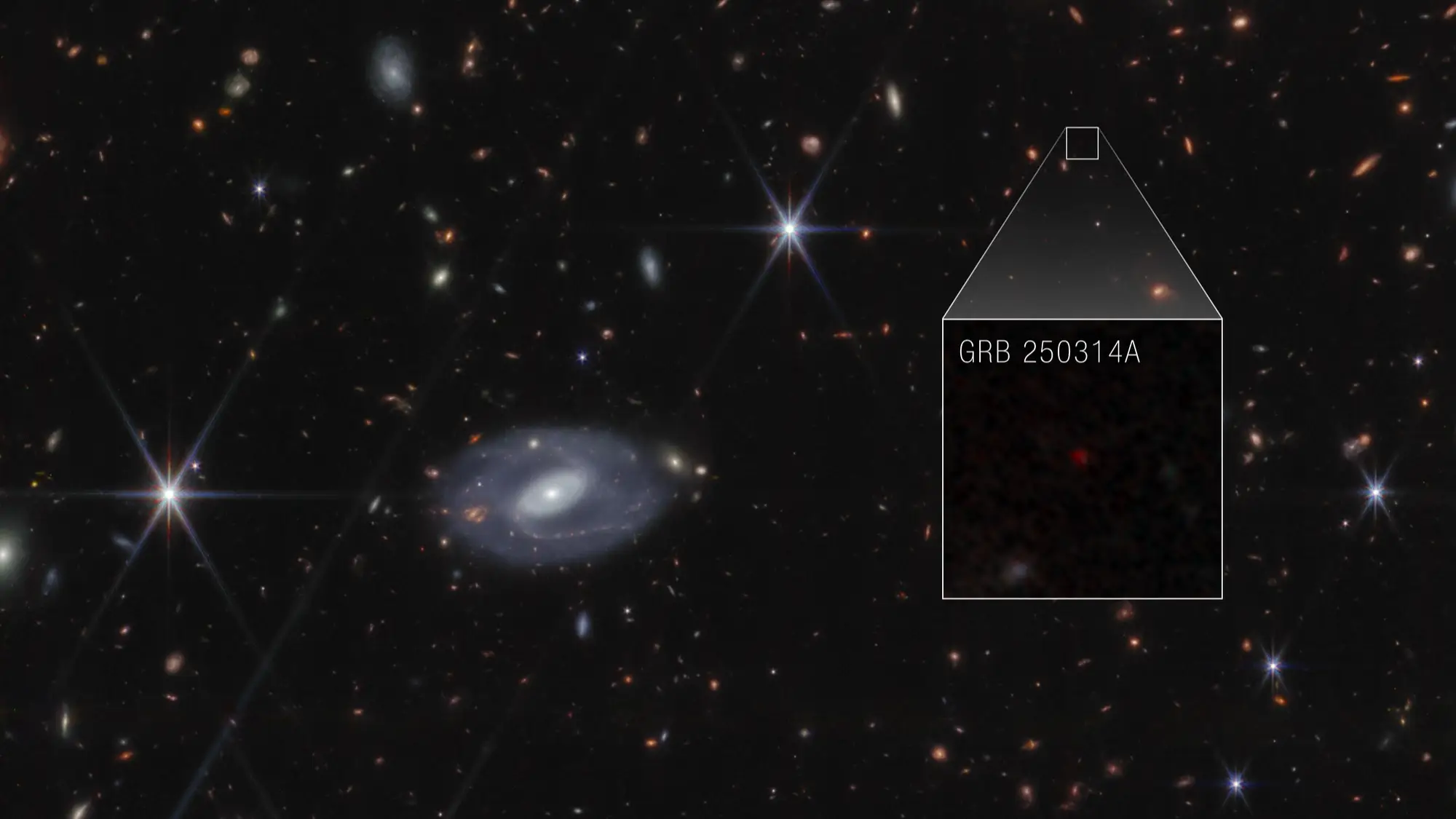
NASA reckon they've come across the earliest supernova ever recorded without truly knowing where it came from.
The mysterious 10-second flash of energy, first detected in March, has been identified thanks to NASA's ever-impressive James Webb Space Telescope.
Astrologers believe that it came from a time when the universe was just 730 million years old, which is around five percent of its current age.
On 14 March, the first alert was issued by the SVOM space mission, designed to detect brief and powerful cosmic events.
Advert
And no, not aliens.
Within an hour and a half, NASA’s Swift Observatory locked onto the source in X-rays, allowing astronomers to point ground-based telescopes towards it.
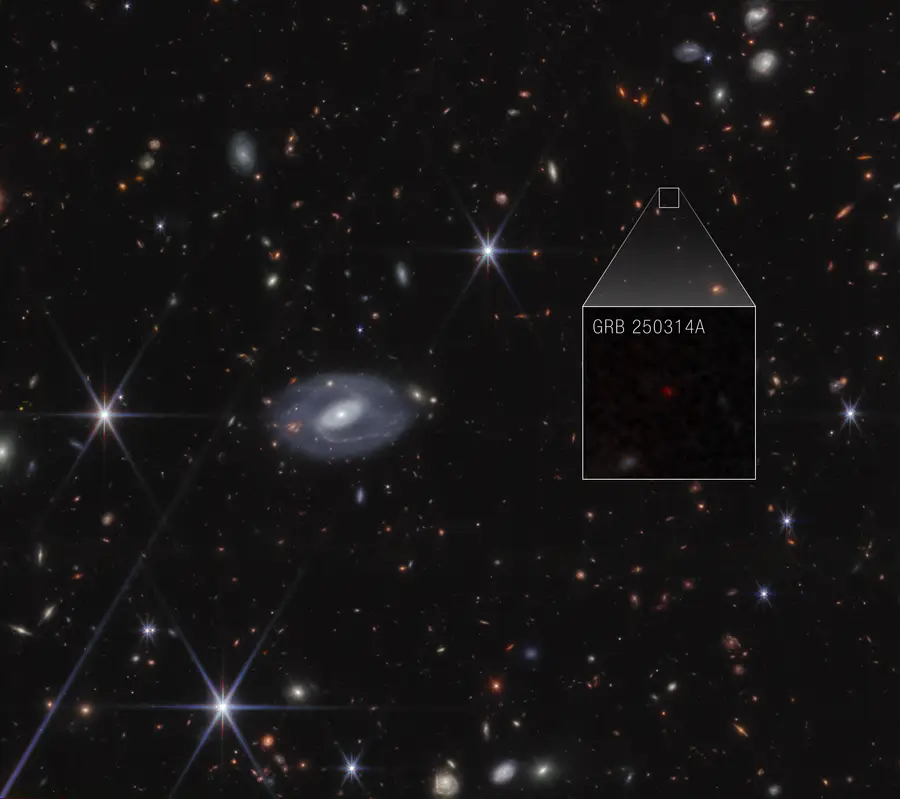
Observatories in the Canary Islands and Chile soon confirmed that the gamma-ray burst - named GRB 250314A - originated from the very early universe, placing it among a tiny group of gamma-ray bursts ever seen from the first billion years after the Big Bang.
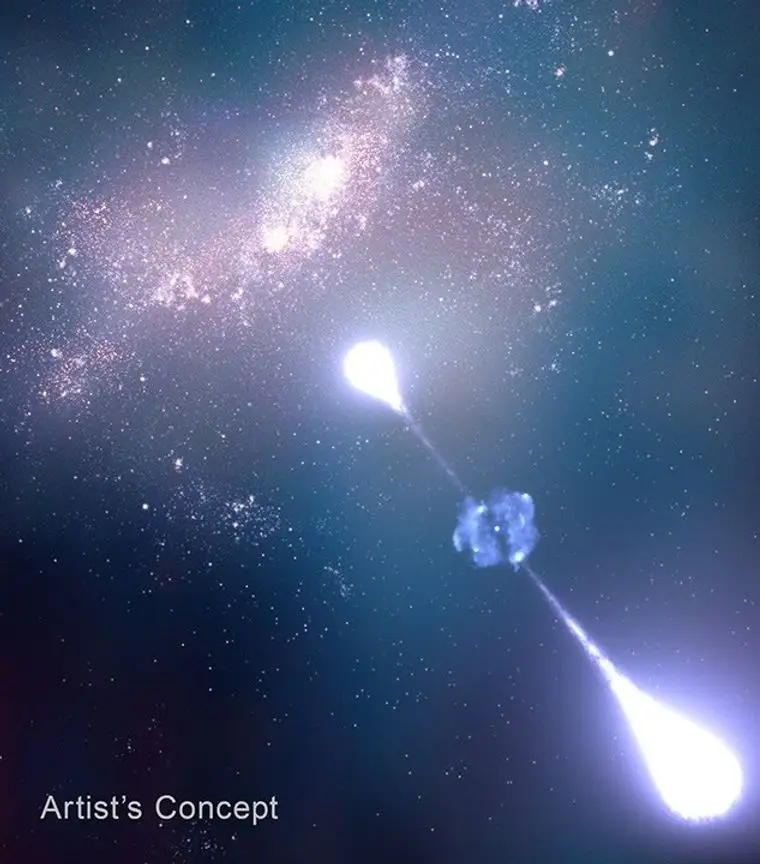
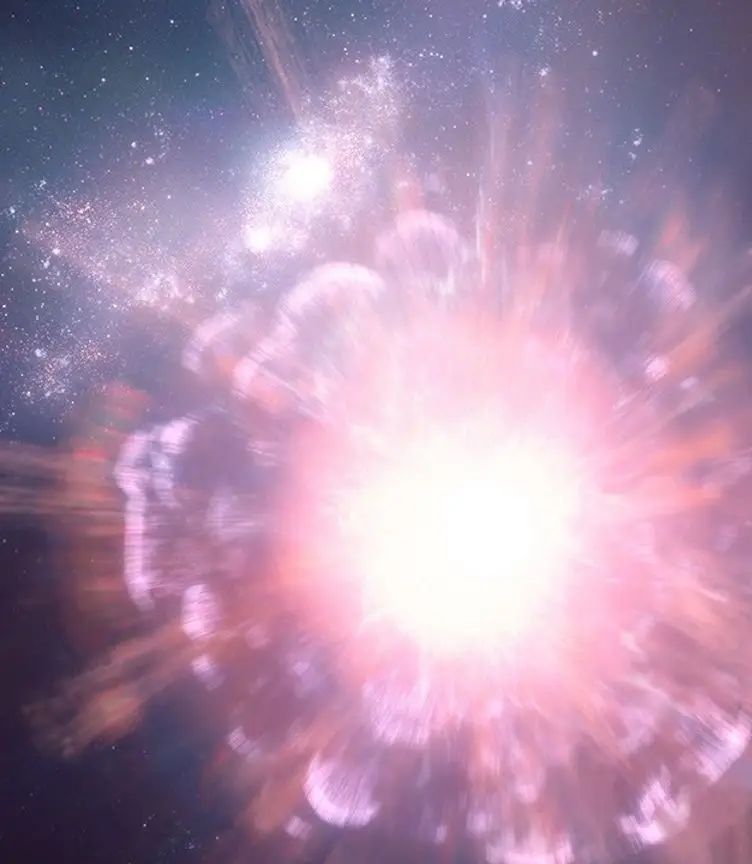
“Only Webb could directly show that this light is from a supernova — a collapsing massive star,” said Andrew Levan, the lead author of one of two new papers in Astronomy and Astrophysics Letters and a professor at Radboud University in Nijmegen, Netherlands, and the University of Warwick in the United Kingdom.
“This observation also demonstrates that we can use Webb to find individual stars when the universe was only 5 percent of its current age.
“There are only a handful of gamma-ray bursts in the last 50 years that have been detected in the first billion years of the universe.
“This particular event is very rare and very exciting.”
What surprised scientists the most was how familiar the explosion looked, closely resembling those seen in the modern universe.
“We went in with open minds,” said Nial Tanvir, a co-author and a professor at the University of Leicester in the United Kingdom. “And lo and behold, Webb showed that this supernova looks exactly like modern supernovae.”
“Webb’s observations indicate that this distant galaxy is similar to other galaxies that existed at the same time,” added co-author Emeric Le Floc’h.
The afterglow of the gamma-ray bursts themselves will allow the research team to observe more events with the Webb with a fresh objective.
On just how significant the finding is, Levan said 'that glow will help Webb see more and give us a fingerprint of the galaxy'.
The team will now be able to learn more about supernovas and the other early mysteries in our solar system.
 Anish Vij