ladbible homepage
ladbible homepage
  • Home
  • News
    • UK
    • US
    • World
    • Ireland
    • Australia
    • Science
    • Crime
    • Weather
  • Entertainment
    • Celebrity
    • TV
    • Film
    • Music
    • Gaming
    • Netflix
    • Disney
  • Sport
  • Technology
  • Travel
  • Lifestyle
  • Money
  • Originals
    • FFS PRODUCTIONS
    • Say Maaate to a Mate
    • Daily Ladness
    • UOKM8?
    • FreeToBe
    • Citizen Reef
  • Videos
  • Advertise
  • Terms
  • Privacy & Cookies
  • License Our Content
  • About Us & Contact
  • Jobs
  • Latest
  • Archive
  • Topics A-Z
  • Authors
Facebook
Instagram
X
Threads
Snapchat
TikTok
YouTube
Submit Your Content Here
  • GAMINGbible
  • LADbible Group
  • UNILAD
  • SPORTbible
  • Tyla
  • FOODbible
  • UNILAD Tech
NASA images show ancient volcanic field in middle of Sahara Desert from space
Home>News>Science
Updated 13:50 28 May 2025 GMT+1Published 13:48 28 May 2025 GMT+1

NASA images show ancient volcanic field in middle of Sahara Desert from space

Fascinating images from space show an ancient lava field in the middle of the Sahara Desert

Kegan Marquez

Kegan Marquez

google discoverFollow us on Google Discover

NASA's satellite imagery has shown us some interesting views of our planet over the years, but a select few have offered us a fiery view of one of the hottest places on Earth.

Known for its extreme heat - with the highest temperature recorded as 58°C - the Sahara Desert is one of the most harsh environments in the world.

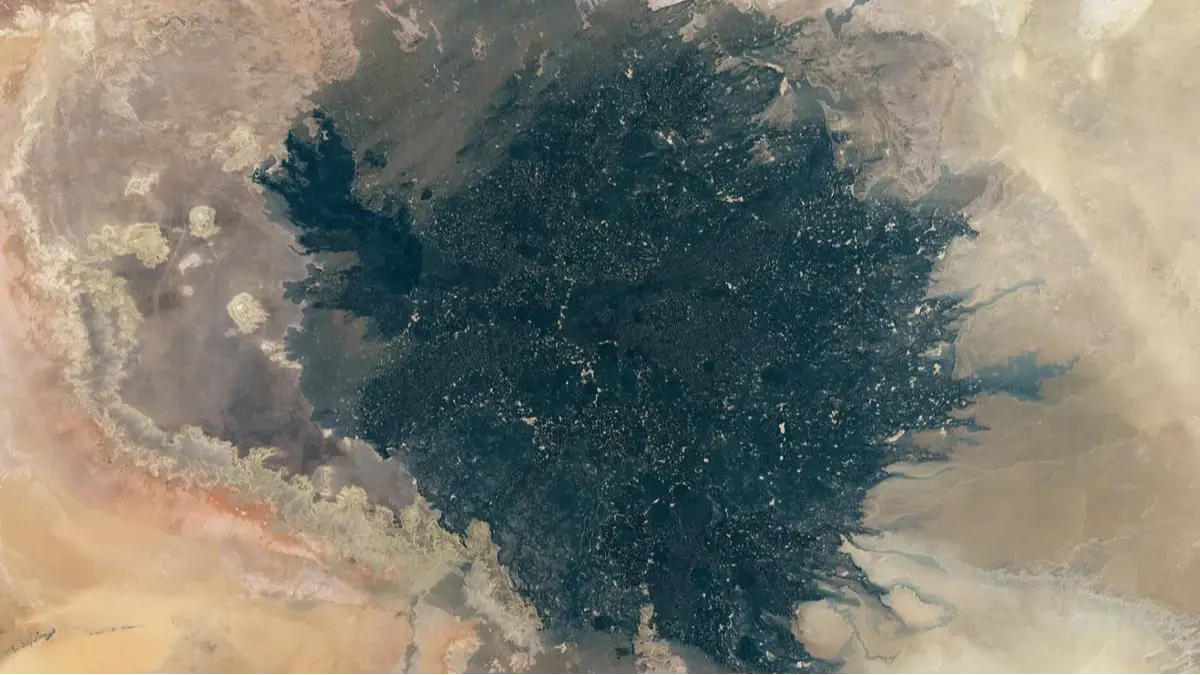
Images have emerged showing a giant black, fossilised lava field which is millions of years old, spewed across the North African desert.

How was the image made?

It has come from almost three years worth of NASA satellite imagery of the region, between July 2013 and April 2016.

The image is what is known as a 'best pixel mosaic'. Essentially, it's a combination of all the images put together into one and shows the ancient lava field in the middle of the desert.

Advert
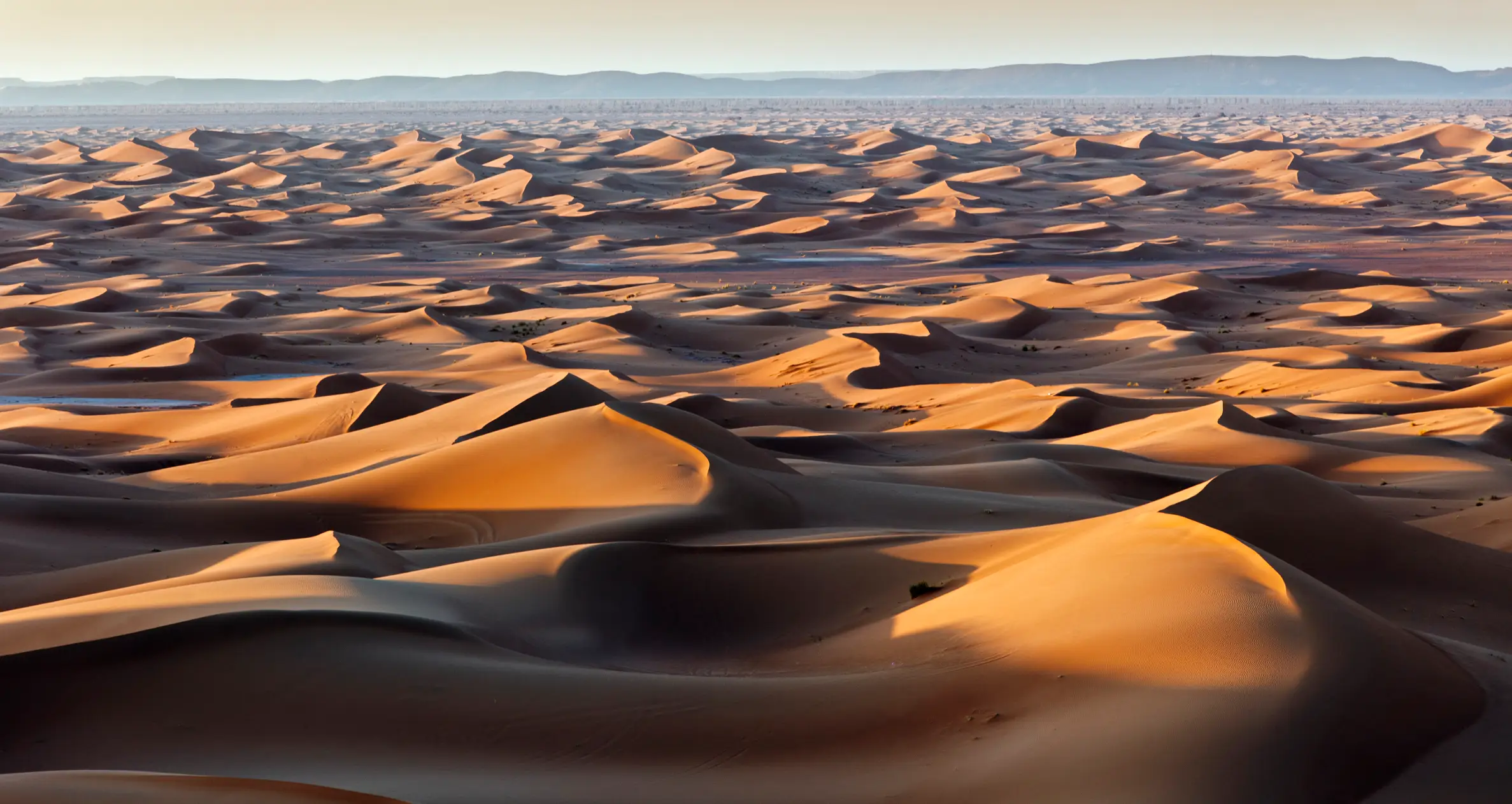
The Sahara Desert is one of the hottest places on Earth (Frans Lemmens via Getty Images)

It was put together using a computer program which sorts through the images, pixel by pixel to make sure you end up with an image which is free from clouds, dust storms, or anything else which could obscure the pic.

What is the Haruj volcanic field?

The Haruj volcanic field covers a huge area in central Libya - where the images have been captured.

While most volcanos are located around the Earth's fault lines, however, this particular volcanic fields isn't located near any known fault lines.

Experts believe that the lava field were dragged up from the mantle by a surge of hot material, known as a mantle plume.

How big is the Haruj volcanic field?

The Haruj volcanic field covers a massive area in Libya of around 45,000 square kilometres.

Some experts have come to the conclusion that the volcanic field is actually made up of two separate volcanic fields, merging into one.

Evidence suggests that the north side of the volcanic field is made up of much older, ancient lava, whereas, the southern side of the field might have been created much more recently, which could indicate two separate fields and back this theory.
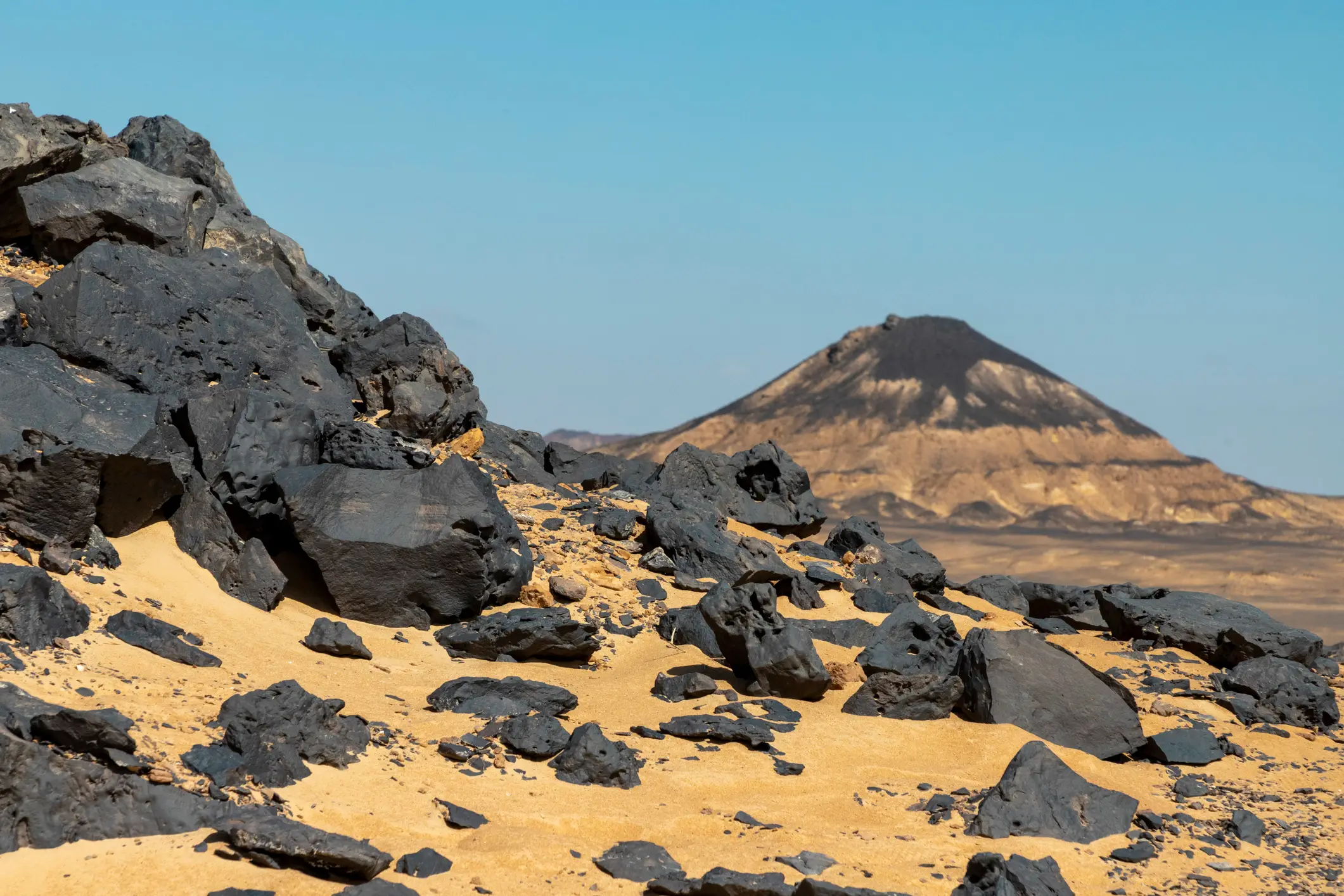
The volcanic fields have changed the desert landscape (Ulrich Hollmann via Getty Images)

Even if it is made up of two separate fields, due to its sheer size, and the fact it merges as one, most experts consider it to be a single volcanic field.

What does the Haruj Field tell us about Earth?

The Haruj volcanic field gives us an insight into how lava fields can be created, even without massive eruptions, or near fault lines.

Instead of volcanos changing the shape of the landscape around it, mantle plumes can instead slowly bubble up and change the environment around it.

Featured Image Credit: NASA

Topics: Science, NASA

Kegan Marquez
Kegan Marquez

Kegan is a freelance writer with a passion for everything tech and gaming. He has worked for global brands across the globe, including IGN, PCgamer, PCmag and many more. When he isn't working, Kegan spends most of his time playing video games, building and upgrading gaming PCs and looking for the next thing in tech to obsess about.

Recommended reads

Why Anne Hathaway and Tom Holland filmed The Odyssey without ever looking at each otherUniversal StudiosCouple now paying less than their rent after discovering mortgage scheme on TikTokSuppliedJennifer Garner makes rare comment about ex-husband Ben Affleck as she opens up on impact on kidsPascal Le Segretain/Getty ImagesMatt Damon explains one 'non-negotiable' rule he's refused to break with wife of 20 yearsPhoto by Angela WEISS / AFP via Getty Images

Advert

Choose your content:

3 hours ago
5 hours ago
7 hours ago
  • Diary of a CEO/YouTube
    3 hours ago

    Sobering explanation behind why people in these three countries barely get cancer

    They have some of the lowest rates in the world

    News
  • Facebook
    3 hours ago

    DNA confirms what happened after woman killed in horrific alligator attack in front of boyfriend

    Brittany Clark, 31, was killed by the alligator in the Little Big Econ State Forest in Orlando

    News
  • SWNS
    5 hours ago

    Woman who thought red patch on face was eczema 'freaked out' to discover it was cancer

    Beth Brown had initially brushed off the marks, and now shared a warning for people going out in the sun

    News
  • (Hampshire Police)
    7 hours ago

    Mum of Henry Nowak killer Vickrum Digwa jailed for hiding murder weapon

    Kiran Kaur has been given a three-year sentence for assisting an offender

    News
  • NASA boss admits agency has captured images of UFOs saying 'we don't know what it is'
  • NASA thinks rock found on Mars is a 'visitor from outer space'
  • NASA triggers first evacuation of International Space Station in history and cancels mission
  • NASA releases new images of 'potentially hostile alien threat' 3I/ATLAS after 'heartbeat' detected