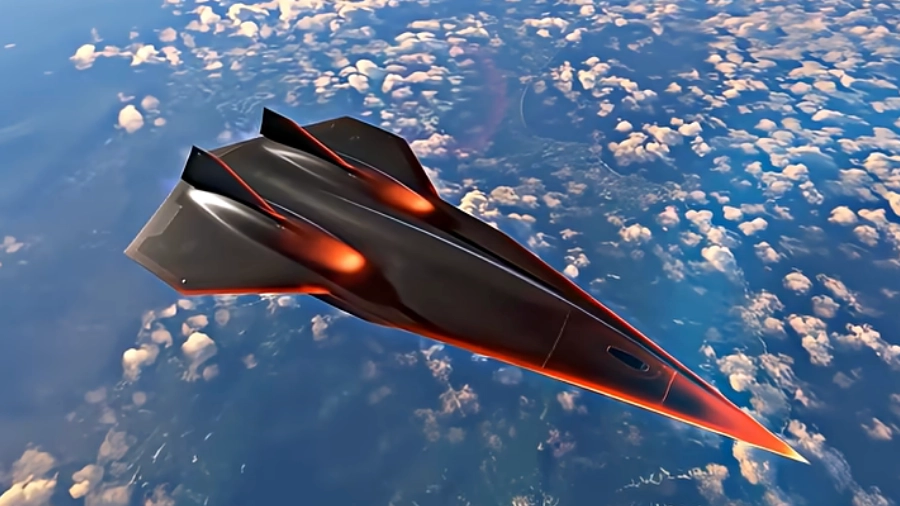
Man simulates longest flight in world with fastest plane on the planet and results are breathtaking

A flight simulation video shows a breathtaking run on the longest flight in the world, some 28,000 miles.
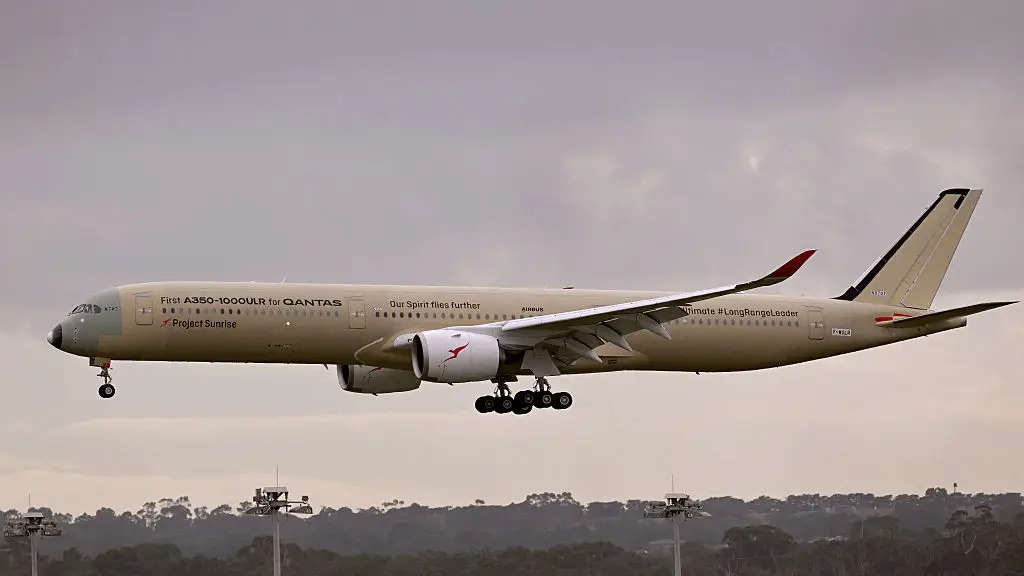
It comes as Airbus is planning to release a new plane called the Airbus A350-1000ULR, with 'ULR' standing for 'Ultra-Long Range', which can make very long trips without stopping.
At present the longest journeys still need airliners to stop to refuel, meaning that passengers have to change flights halfway through.
While the technology does exist to refuel planes in the air, this is technically complex and expensive, so is only used for military flights.
Advert
The new plane could make a trip from Sydney to London without needing to stop to refuel, saving time.
But while this is going to make commercial flights quicker, just how fast could we theoretically make it all the way around the globe?
Well, one simulation gave an idea of what it might look like if a plane could achieve this feat without even slowing down, making a trip of 28,000 kilometres, that's just under 17,400 miles.
The simulation used a fictional plane from Top Gun: Maverick called the 'DarkStar' which is capable of travelling at mach 10 in the film, and was posted to YouTube by account
Flight Simulator, which shares digital simulations of real and fictional aircraft.
In the clip, the Darkstar jet was able to fly from New York to New York in two hours and 38 minutes.
To get a sense of just how fast this would be, the International Space Station takes between 90 and 93 minutes to complete an orbit of the Earth.
Of course, this wouldn't account for things like the aircraft needing to slow down to refuel, as well as planes' maximum speed being different from their cruising speed, but it's a fun experiment to see how it would look to watch continents appearing and disappearing beneath you.
But how quickly could this journey be completed in a real plane?
For that we would need the fastest plane ever built - the Lockheed Martin SR-71 Blackbird.
This was a reconnoissance plane which had its first flight in 1964 and was retired by the US Air Force in 1998, with NASA operating it until 1999.
So just how fast could the Blackbird do this journey?
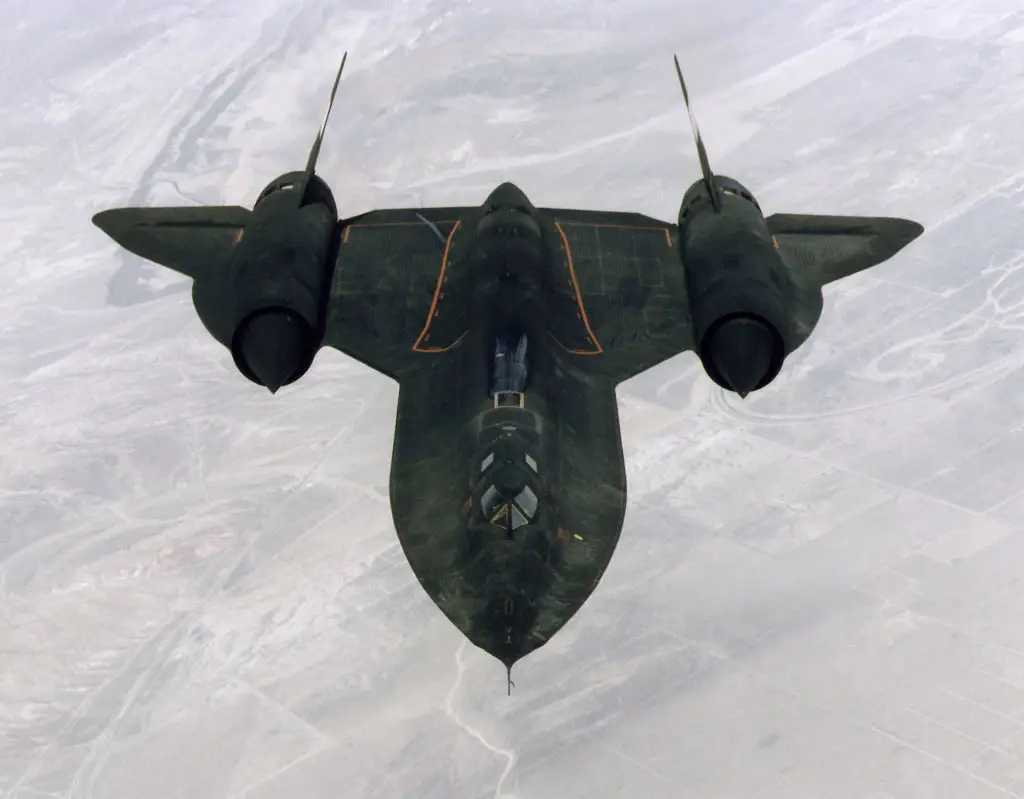
We don't need to simulate or even theorise about this, as we have two real world flights from this extraordinary aircraft as examples, starting with one on September 1 1974.
This wasn't all the way round the world, but it was from New York to London, a distance of around 3,461 miles.
For comparison, this is a journey which a Boeing 747 jumbo jet can do in six hours 15 minutes and the supersonic passenger jet Concorde achieved in two hours 52 minutes.
On the flight, the Blackbird managed less than two hours, clocking in at 1 hour 54 minutes and 56.4 seconds.
This meant it crossed the Atlantic Ocean, a journey which just 50 years earlier would have taken days, in less time than it now takes to get from Manchester to London by train.
While that journey was already astonishing, there was another occasion where the Blackbird actually pulled off a journey which was comparable to the one in the DarkStar simulation.
On 26 April 1971 a Blackbird made a journey of 15,000 miles, around 24,000km, so almost as much as the fictional round-the-world journey in the video.
It completed this journey in 10 hours and 30 minutes, meaning an average speed of around 1,428mph.
Topics: World News, Travel
 Kit Roberts