Latest update on alien planet with ‘best ever signs of life’ reveals sad development

It seems the world might have jumped the gun when rolling out the welcome wagon for the alien planet with the 'highest ever' signs of life.
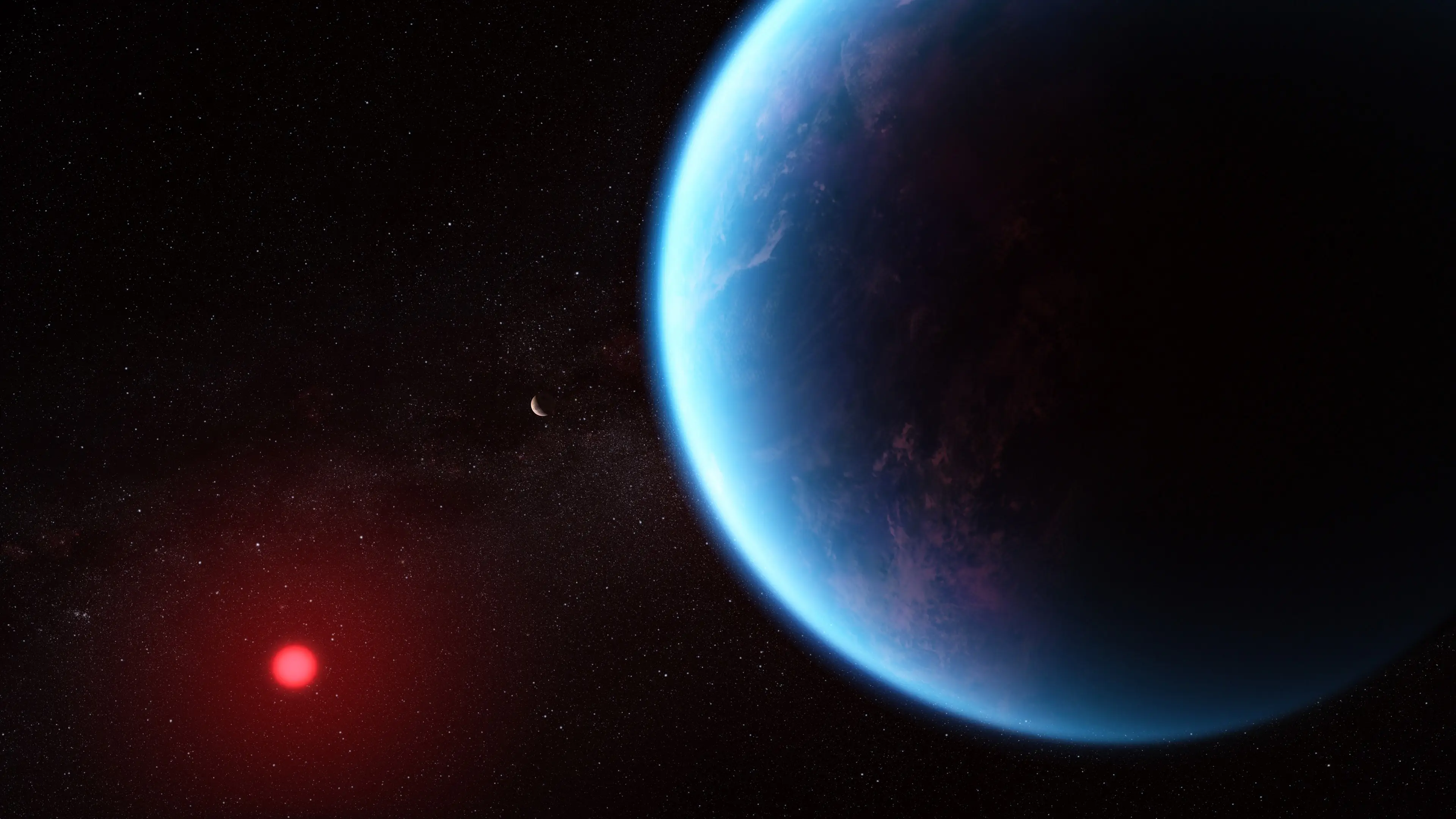
The planet, known as K2-18b, set the scientific world alight with speculation earlier this year after researchers at the University of Cambridge made an extraordinary discovery.
In April, Professor Nikku Madhusudhan and his team of experts announced they had found the 'strongest hint we have ever seen in the history of science' that other life forms might be out there.
Advert
He explained that they had 'detected molecules that could potentially indicate the presence of life' on K2-18b, which is situated some 124 light-years away from Earth.
Take a look at this:
Using the James Webb Space Telescope (JWST), the UK boffins detected gases such as methane, carbon dioxide, and notably, dimethyl sulfide (DMS) in the planet's atmosphere.
The presence of DMS and dimethyl disulfide (DMDS) is what set tongues wagging, as on Earth, these molecules are only produced by simple organisms.
Marine phytoplankton and bacteria are the main sources of these compounds on our planet - and the detection of these led the Cambridge team to believe there may be potential biological activity on K2-18b.
Professor Madhusudhan previously said 'there is no mechanism in the literature that can explain what we are seeing without life', suggesting we might not be alone in the solar system after all.
He did, however, warn that further research and data was needed to confirm his team's findings - and after digging deeper into the activity on K2-18b, it seems as though we should have all held our horses.
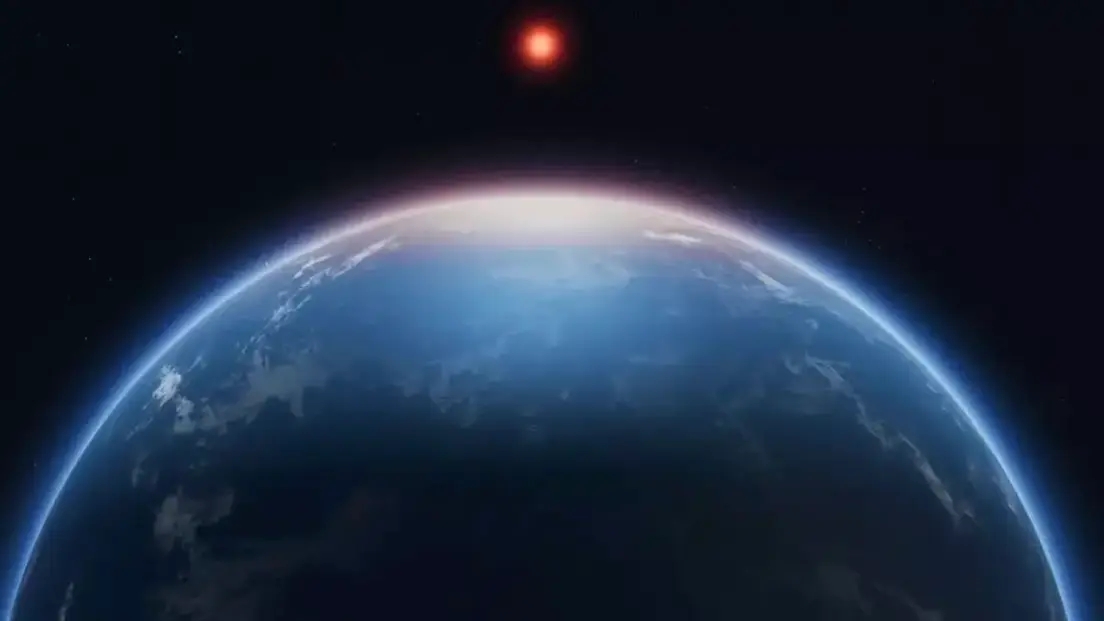
Madhusudhan teamed up with researchers at the California Institute of Technology to investigate the so-called alien planet further, before sharing their observations in July this year.
Renyu Hu, a planetary scientist and astronomer at NASA's Jet Propulsion Laboratory, and his colleagues once again used the JWST to conduct further analysis of K2-18b.
And sadly, they could not find any 'conclusive evidence for the existence of this molecule in the atmosphere' after taking another look.
This time around, Madhusudhan, Hu & Co used JWST’s near-infrared camera - which provides high-resolution imaging and spectroscopy - to analyse a different wavelength of light, instead of the mid-infrared measurements that were used in April.
After acquiring the data about what molecules may exist on K2-18b, they then came up with various scenarios and applied them to several different models of the planet's atmosphere.
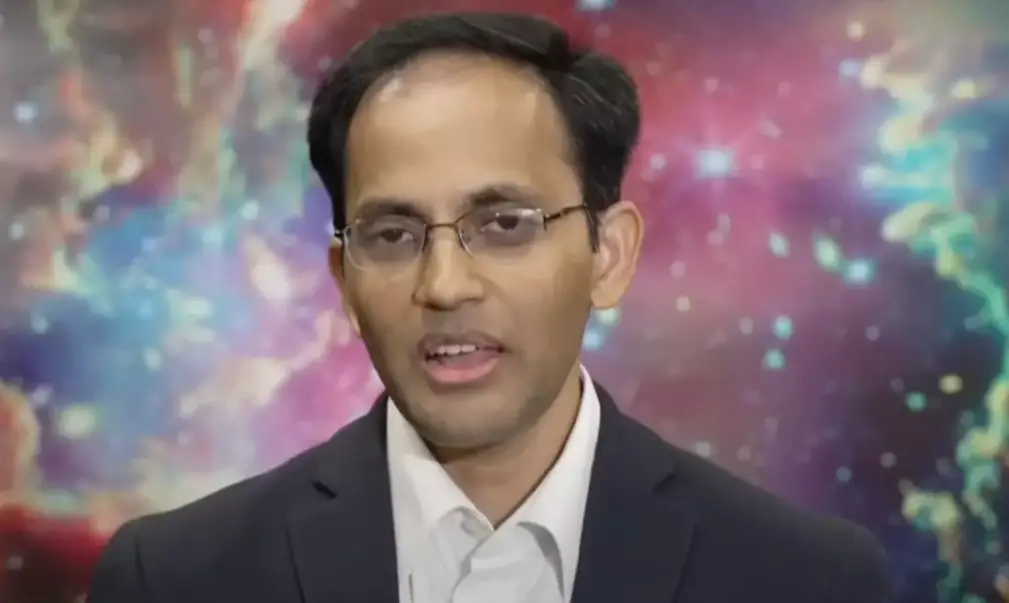
However, the results did not hit the criteria for what the team could 'confidently call a detection', according to New Scientist magazine.
Hu told the publication: "This model dependency just speaks to the fact that it is a very weak signal, if there is any signal at all. I would just exercise caution."
Despite his earlier excitement, Madhusudhan concurred - although he said he somewhat still held out hope that there might be life on K2-18b.
"Purely statistically speaking, based on what we are reporting in the paper, the data objectively is showing slightly higher evidence for DMS," he said.
"There could still be other molecules that are masquerading as DMS...but we can still obviously not make a robust claim."
But it wasn't all doom and gloom, as both Hu and Madhusudhan were left confident that K2-18b has water, as they found strong evidence of the presence of methane and carbon dioxide.
Topics: Science, News, Space, Aliens, James Webb Space Telescope
 Olivia Burke