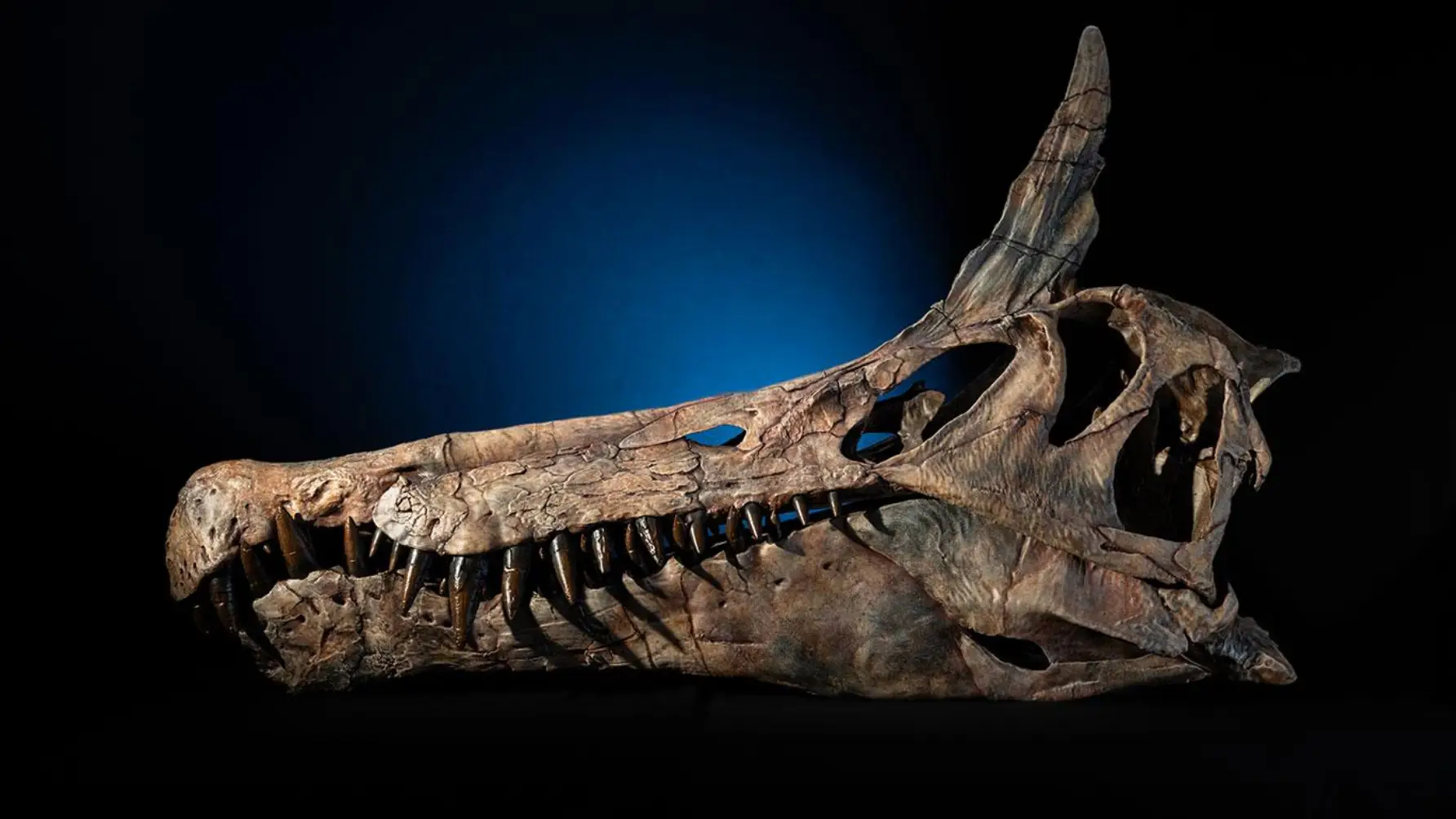
Scientists shocked to discover what mysterious creature from 95 million years ago is

University of Chicago staff have encountered a brand-new species of dinosaur in the Sahara desert, resembling one of our most beloved mythological creatures.
Officially named by the scientists Spinosaurus mirabilis (translating to 'astonishing spined lizard'), its man-sized skull boasts a reptilian snout and jawline, packed with sword-like nashers.
What is most eye-catching about this immense find, though, is the creature's 20-inch curved bone protruding from the back of its head.
Advert
The Pokémon creators clearly missed a trick by not dreaming up this thing.
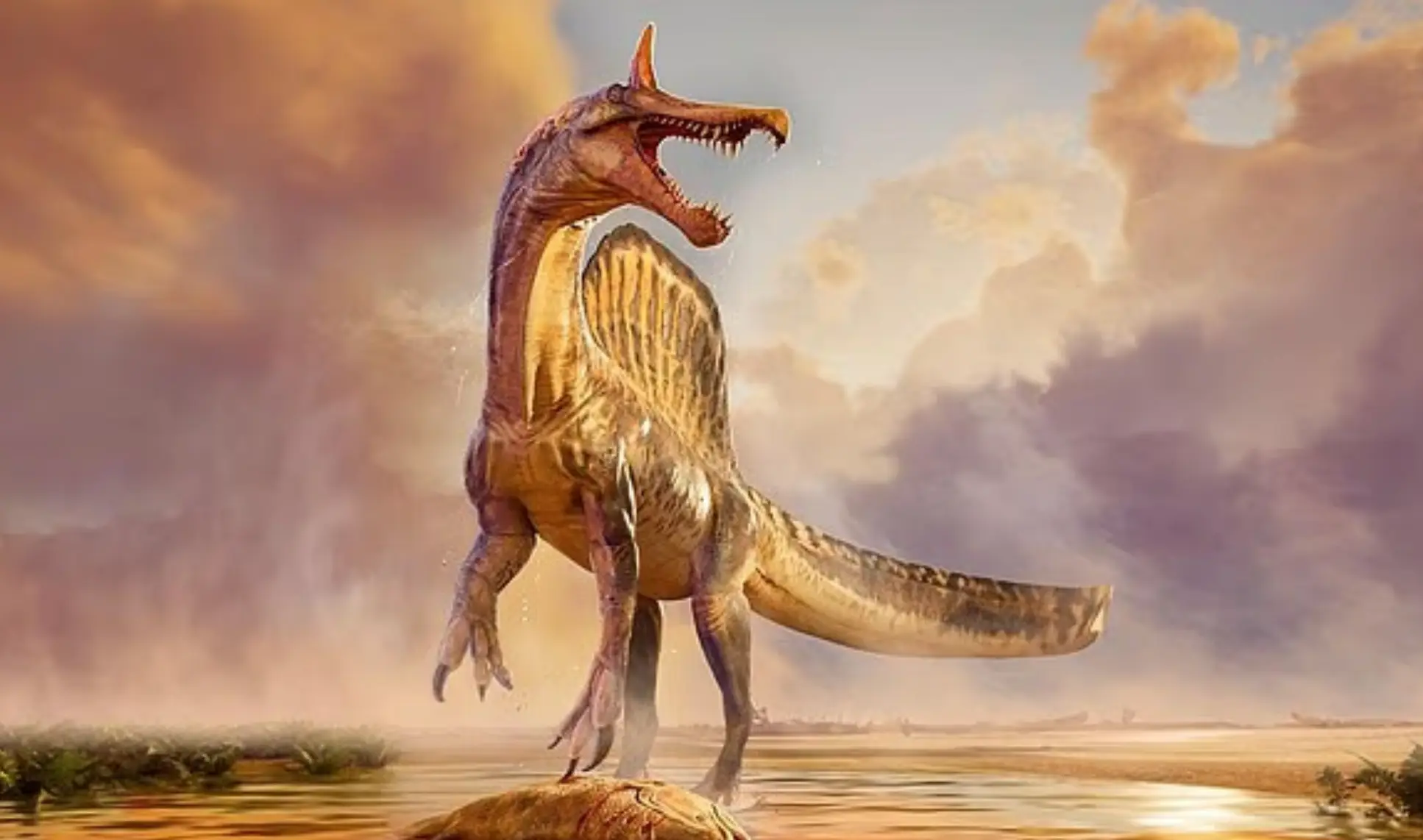
Paul Sereno, professor of organismal biology and anatomy at the University of Chicago, and leader of the 20-man expedition, shared a statement addressing this exciting discovery.
It read: "This find was so sudden and amazing, it was really emotional for our team. I'll forever cherish the moment in camp when we crowded around a laptop to look at the new species for the first time.
“I envision this dinosaur as a kind of 'hell heron' that had no problem wading on its sturdy legs into two meters of water but probably spent most of its time stalking shallower traps for the many large fish of the day."
Originating 95 million years ago during the Cretaceous Period, the Spinosaurus mirabilis' environment was believed to be lushly forested as opposed to the dry desolation that stands there today.
On social media, one ancient animal lover wrote: "That's definitely a dragon head."
"Just say it's a dragon already", "The unicorn of spinosaurids" and "I definitely think the ancients encountered at least a couple of things like this because this is definitely a dragon," added three more.
The researchers of Science journal previously estimated that there were between 10 and 17 different species of this prehistoric beast out there, while the fact that Spinosaurus mirabilis was dug up so far away from the ocean may rewrite what historians believed to be true: that spinosaurids needed to live near water to survive.
The fossil site where Spinosaurus mirabilis was found was completely untouched by scientists for over 70 years before expeditions touched down there in both 2019 and 2022.
Topics: Animals, Science, Technology
 Dan Seddon