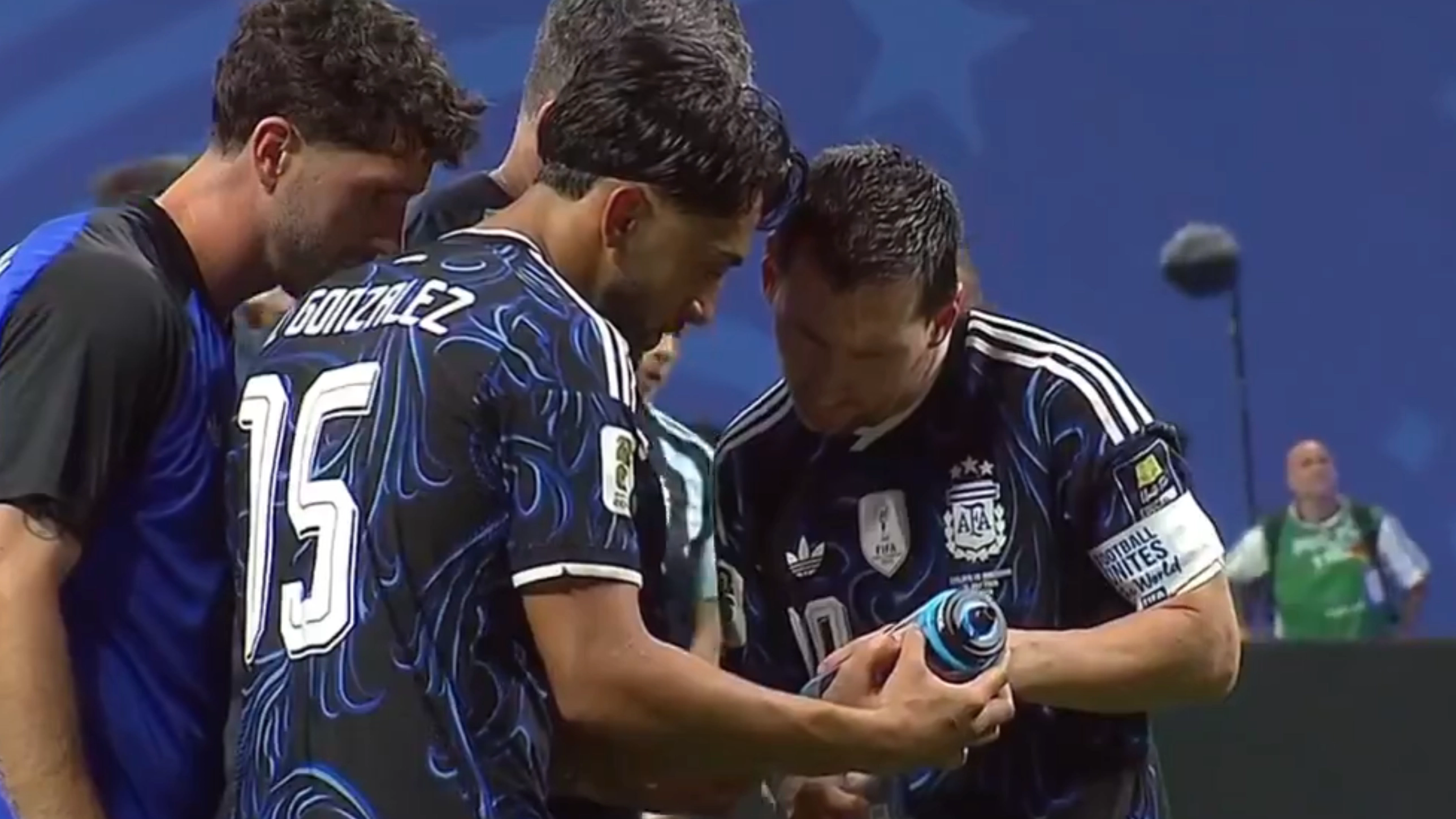
Argentina players laugh after discovering what was on Jordan Pickford’s water bottle at semi-final clash

It’s safe to say Argentina didn’t hold back after beating England 2-1 in last night’s World Cup semi-final win.
Post-match celebrations took a controversial turn when their players held up a banner referring to the Falkland Islands war.
After things calmed down, members of the squad were handed what was widely reported to be Jordan Pickford’s water bottle.
The likes of Lionel Messi, who provided two assists on the night, Enzo Fernandez, whose 85th-minute strike from distance made it 1-1, and Nicolás González reportedly found their names and penalty preferences listed on the Powerade bottle.
Advert
It’s common practice for goalkeepers to note opposition players’ penalty preferences beforehand if the match was to get past extra time.
Argentina fitness coach Luis Martin reportedly shared a photo of Pickford's water bottle on Instagram, providing some insight into what the Everton keeper was thinking. The post appears to have now been deleted.
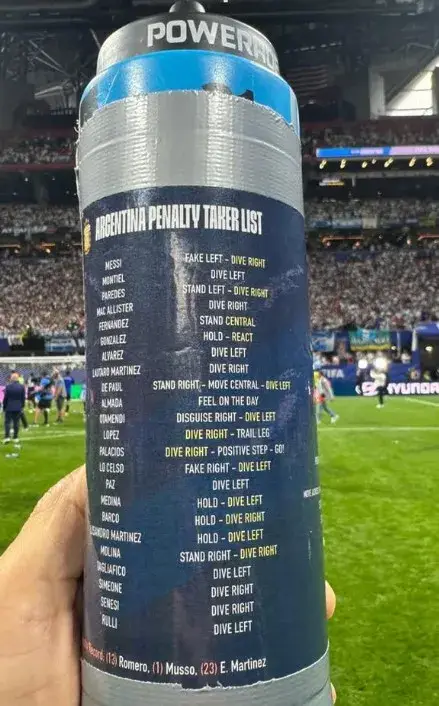
As the bottle shows, Pickford apparently was going to fake left and dive right for Messi, stand central for Fernandez and ‘hold and react’ for González.
Footage shared by TYC Sports showed the likes of González and Fernandez see the funny side of Pickford’s tactics.
England have historically been awful at penalties until their losing streak ended in 2018 thanks to Pickford making a brilliant save against Colombia.
Falkland Islands controversy
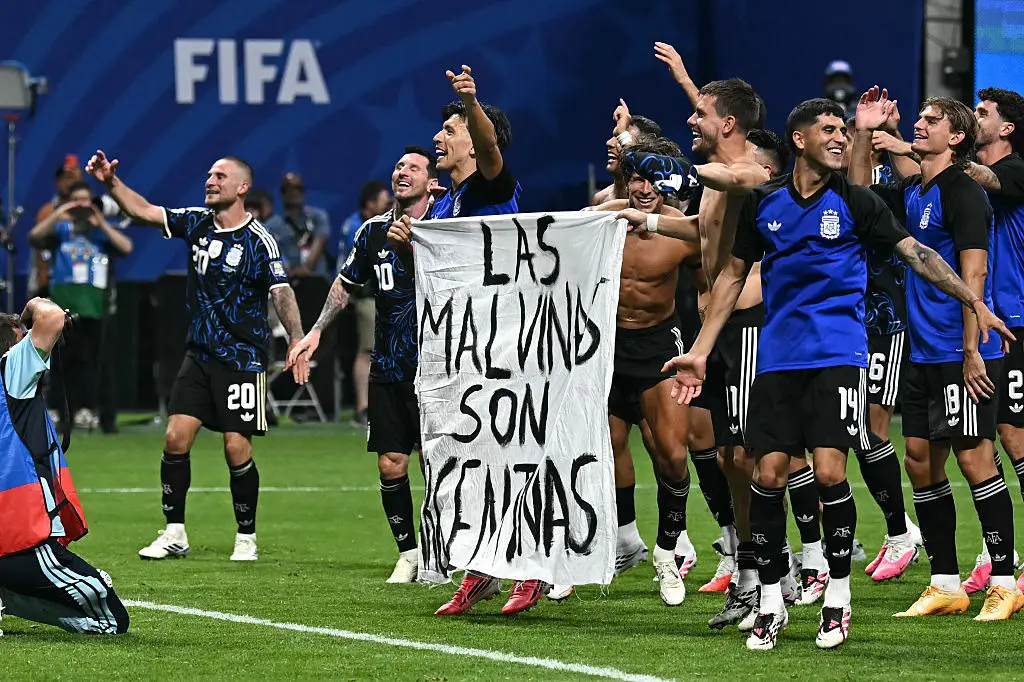
Argentina could face disciplinary action for taking to the field with a banner saying, ‘Las Malvinas son Argentinas,’ which translates to ‘The Malvinas are Argentine’.
The International Football Association Board (IFAB) has a clear policy when it comes to political messaging.
“Equipment must not have any political, religious or personal slogans, statements or images. Players must not reveal undergarments that show political, religious, personal slogans, statements or images, or advertising other than the manufacturer’s logo,” IFAB’s rulebook states.
“For any offence the player and/or the team will be sanctioned by the competition organiser, national football association or by FIFA.”
History behind the Falkland Islands
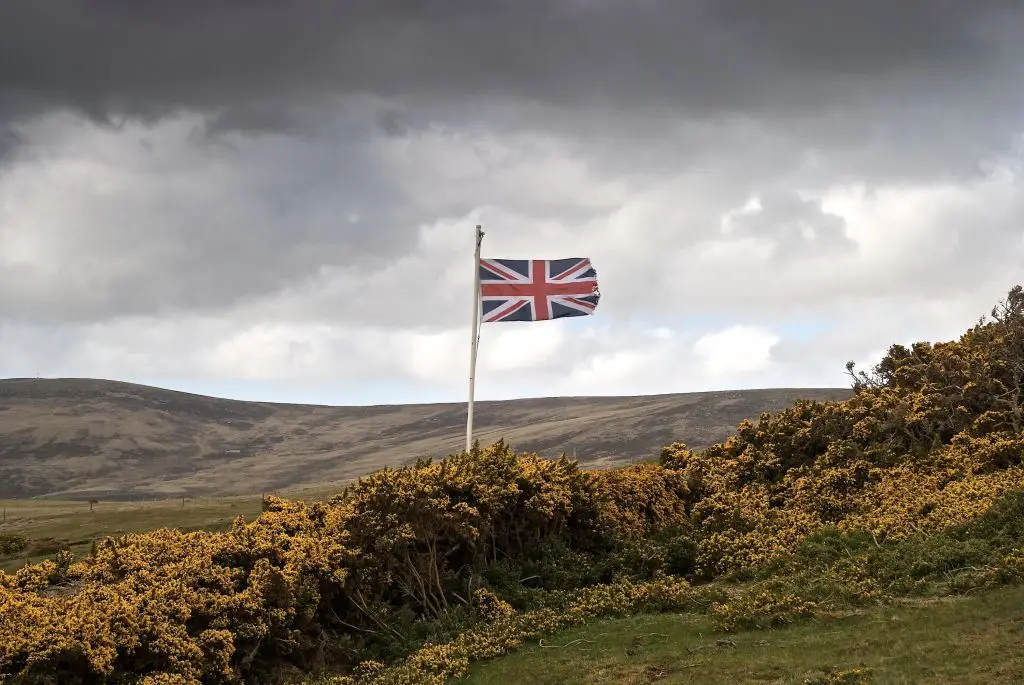
On 2 April, 1982, the Argentine military launched an invasion of the islands. As a response, the UK sent a naval task force, which sparked a 74-day conflict.
The war resulted in the deaths of 255 British personnel and 649 Argentines, ending with an Argentine surrender and the restoration of British control on 14 June 1982.
It is believed English navigator John Davis likely made the first sighting in 1592. In 1690, English Captain John Strong made the first recorded landing, naming the passage between the islands ‘Falkland Sound’, which ultimately lent its name to the entire archipelago.
Following its independence from Spain, the government of Buenos Aires proclaimed sovereignty over the islands in 1820.
In 1831, a US warship destroyed the Argentine settlement in retaliation for a dispute over sealing rights.
Then in 1833, British naval forces arrived, expelled the remaining Argentine officials, and established enduring British administration ever since.
 Anish Vij