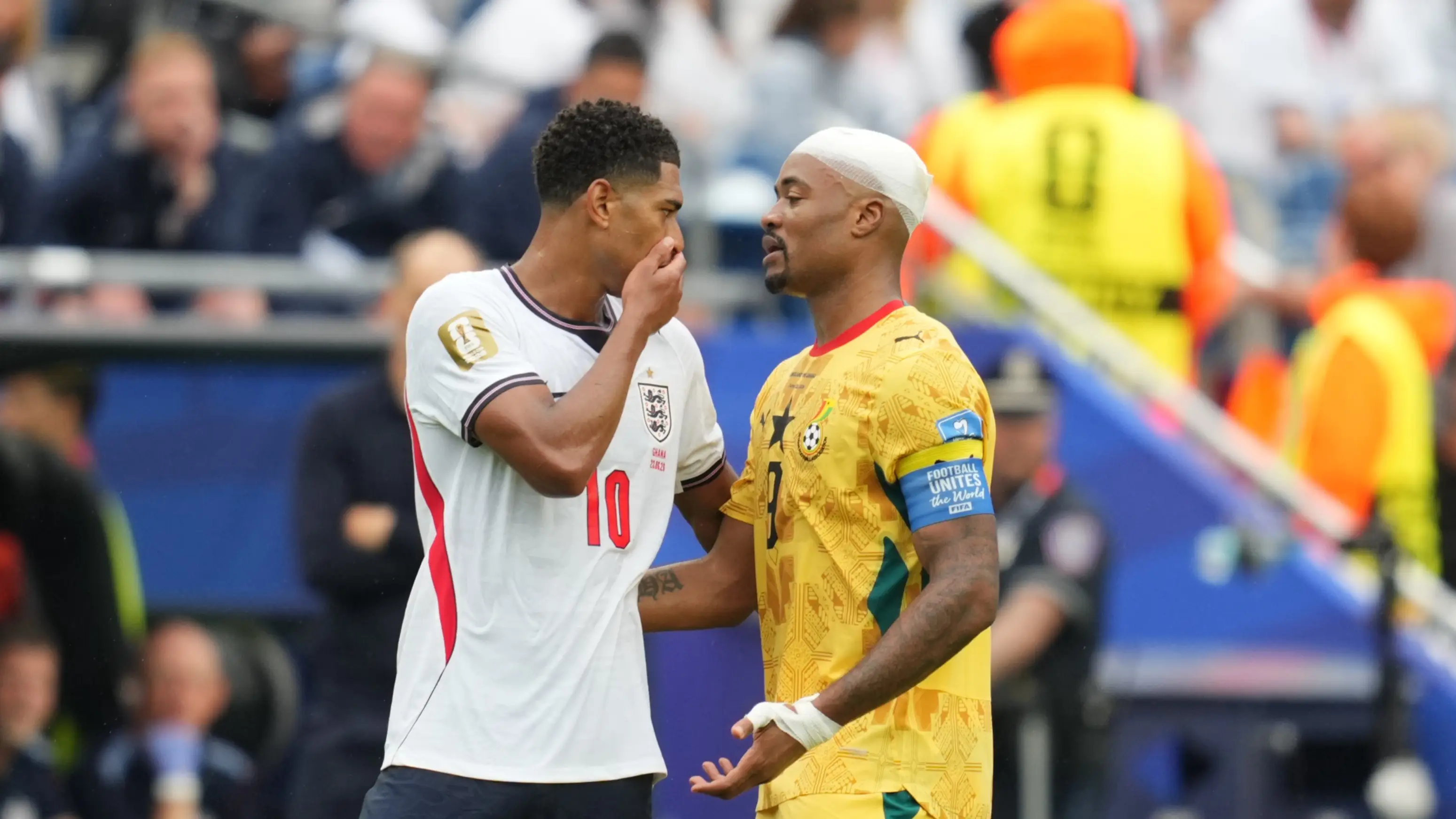
Why Jude Bellingham wasn't sent off for covering his mouth following new rule

It’s fair to say last night’s (23 June) England game against Ghana ended in disappointment as the match was totally goalless.
The Three Lions will now need to defeat Panama on Saturday in order to top the group.
But it wasn’t just disappointment that fans were feeling, there was some confusion too from plenty of people watching the football.
That’s as one of the many new rules from FIFA for this World Cup includes players getting sent off for deliberately hiding their mouth while speaking to an opponent.
Advert
However, Jude Bellingham was spotted covering his mouth while speaking to Ghana’s Jordan Ayew yet was not given a red card and remained on the pitch.
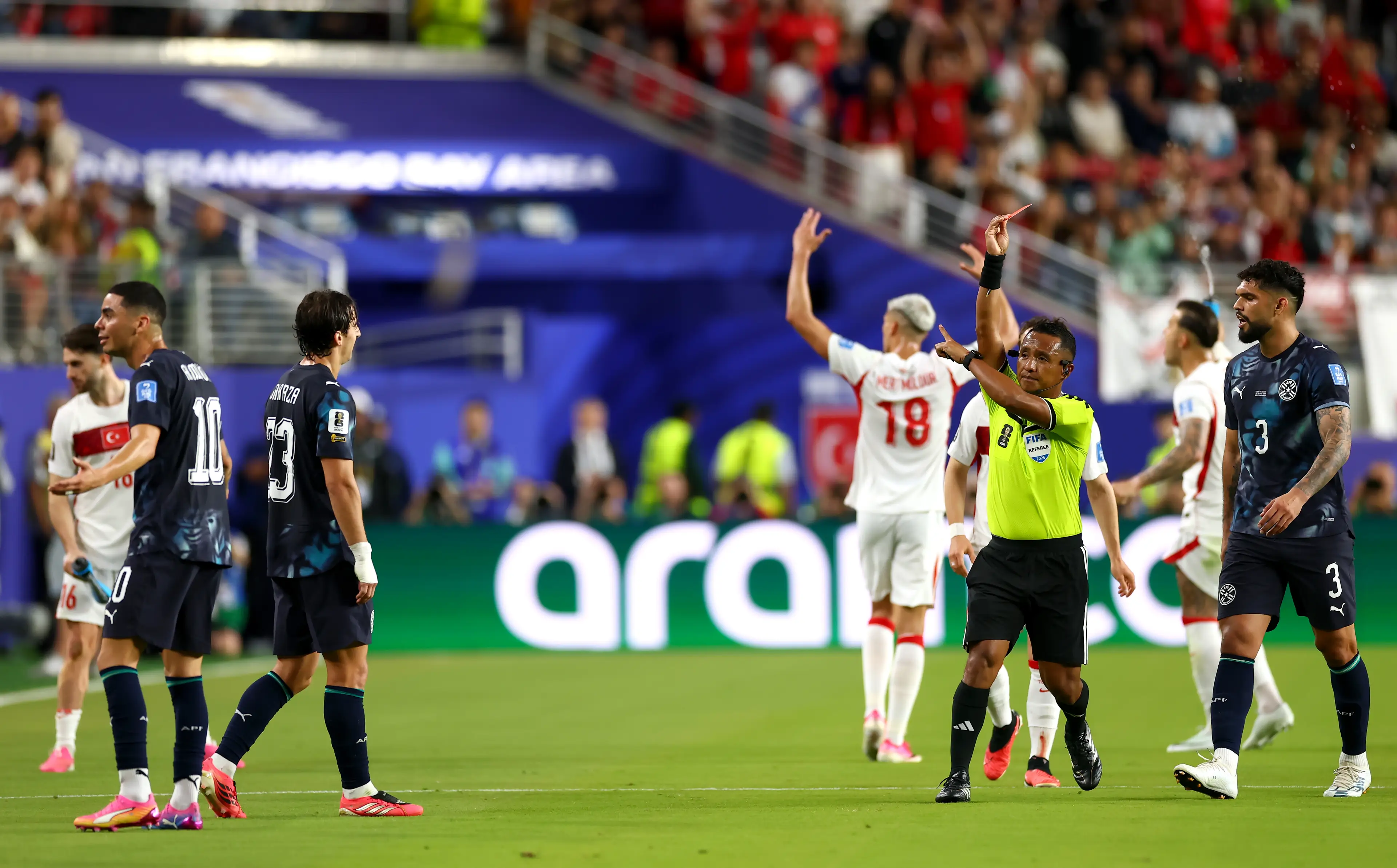
And some fans are calling this out after Paraguay’s Miguel Almirón was sent off for it during the side’s match against Turkey at the weekend when the VAR stepped in.
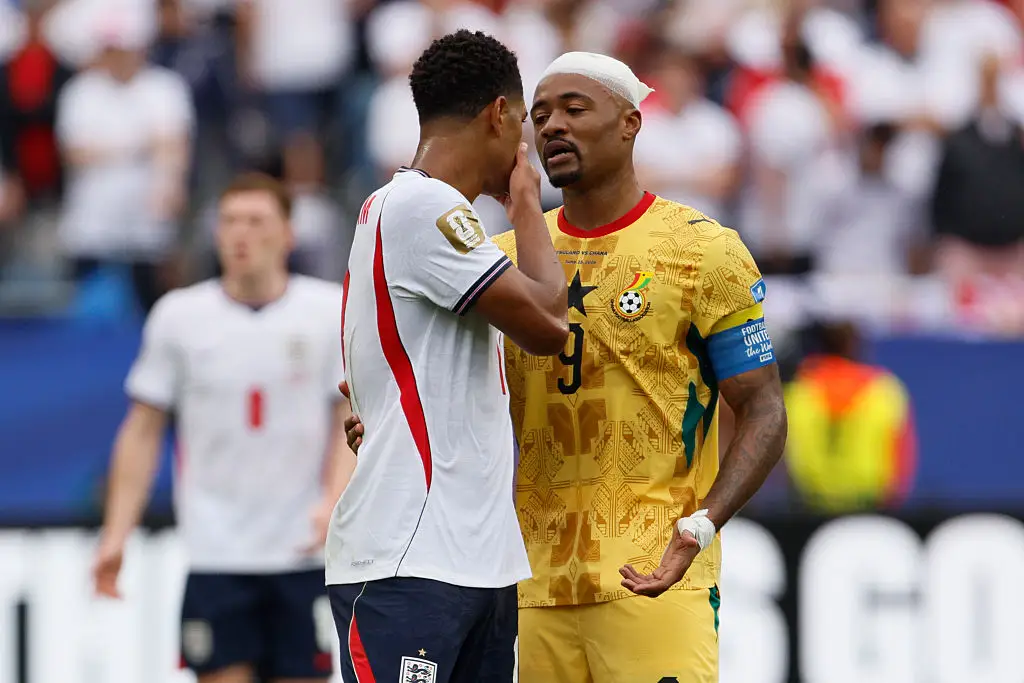
FIFA president Gianni Infantino championed the rule when it was introduced for the World Cup as he said it’s all ‘about respect’.
“It's about the example that we should give,” the football boss said.
“If you have nothing to hide, you don't cover your mouth when you speak to somebody. The rules have been made very clear to everyone."
It’s just that some fans don’t think these rules are very clear after Bellingham remained on the pitch after covering his mouth.
“Same action, different outcomes… interesting debate on consistency in decision-making at this World Cup,” one wrote on X.
“Why wasn't Jude Bellingham sent off when he covered his mouth with his hand yesterday?” asked another.
But it turns out that context is key with the mouth covering rule.
That’s because players covering their mouths hasn’t been totally banned, it’s when it's done in a confrontation with another player that’s not allowed.
Fifa’s head of referees, Pierluigi Collina, made this pretty clear before the tournament kicked off.
"Players can continue to cover their mouth with an arm and the shirt because they may chat with friends," he said.
"It's normal to a chat before, during or after the match.
"So if the conversation is a friendly conversation, they can continue to do it without any problem.
"When the conversation is confrontational, covering the mouth means that you are doing something very wrong, potentially, and the sanction is the red card."
However, elsewhere last night, Bellingham is accused of going on an X-rated rant by Ghana manager Carlos Queiroz.
Speaking about the incident, Queiroz claimed Bellingham 'had a bad reaction with some bad names', though played down the idea of anything serious going on.
New rules for the FIFA World Cup 2026
This year, there’s been a whole host of rule changes, many of which are designed to speed up the game and penalise players who drag things out. Some of the new regulations are likely to prove controversial.
10-second substitution
Subbed players now have to get a move on and leave the pitch within ten seconds by the nearest exit point. If they haven’t, their replacement will get held up by one minute until the next stoppage of play, and until then, their side will have to play with 10 men.
5-second throw-ins and goal kicks
If a referee thinks a player is taking too long for a throw-in or goal kick, they’ll start a five-second countdown, by which time the ball needs to be back in play. If it’s not, for throw-ins the opposing team will get their own throw-in, or for a goal kick the other side gets a corner.
Injured players to remain off the pitch for one minute
An injured player treated by medical staff off-field has to stay off the pitch for one minute, leaving their side with just 10 players.
More VAR
VAR can now be used to review an incorrectly awarded corner kick; second yellow cards resulting in a red card; when a player is incorrectly awarded a yellow or red card for another player’s actions; and any attacking fouls that occur before the ball is in play.
Players can’t cover their mouths
Players who cover their mouths in confrontational situations will be handed a red card. It’s believed players might cover their mouths to guard against lip readers while racially abusing other players, which some suspect has happened in the past.
Red cards for players leaving the pitch
Any player who leaves the pitch in protest over a referee’s decision will be handed a red card, and if a team walks off and causes a match to be abandoned, they’ll forfeit the game.
Topics: World Cup, Football, Jude Bellingham
 Jess Battison