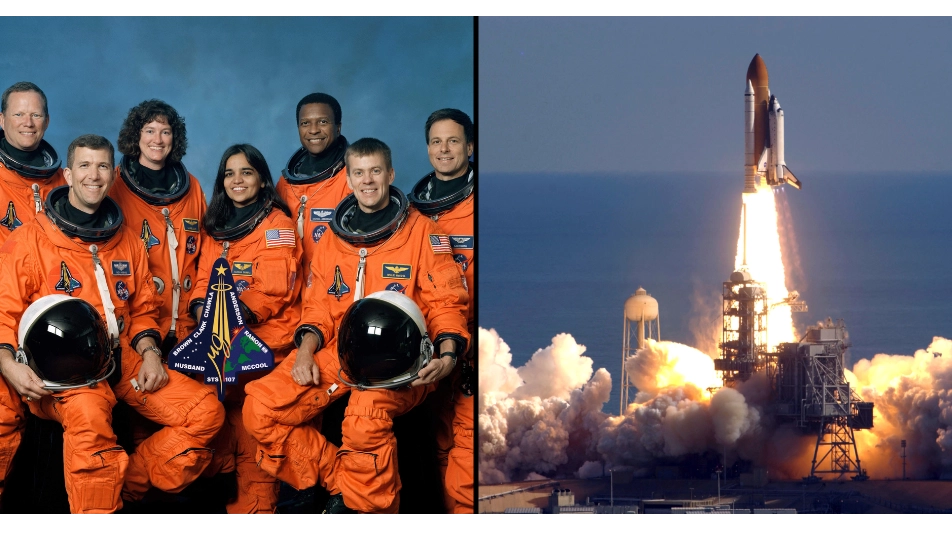
Harrowing moment Columbia astronauts found out they were about to die as space shuttle crashed back down to earth

21 years ago, Space Shuttle Columbia disintegrated as it reentered the Earth's atmosphere following a 17-day mission in space, killing all seven astronauts on board.
NASA's control room knew that Columbia could be in trouble, but the crew had no idea right until the last minute.
Advert
The gut-wrenching moment the astronauts learnt they were going to die has since been shared.
Who was onboard Space Shuttle Columbia?
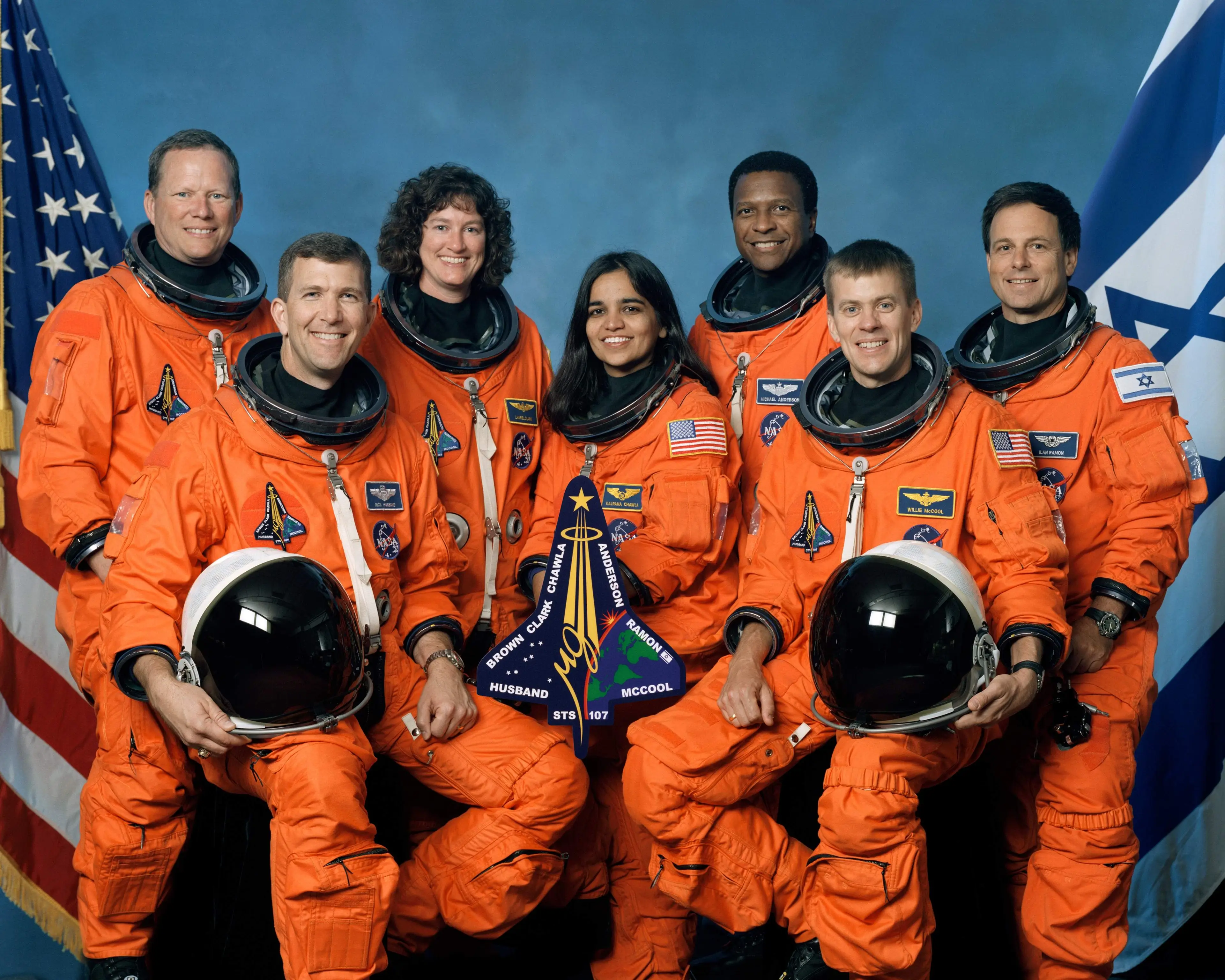
On 1 February 2003, Rick Husband, Willie McCool, Kalpana Chawla, Laurel Clark, Michael Anderson, David Brown and Ilan Ramon were preparing to return to Earth after a 17-day research mission.
The 'science mission featur[ed] numerous microgravity experiments,' according to NASA's website.
But upon their return to earth, they were informed of a problem.
What happened to the shuttle as it returned to Earth?
During launch, a piece of the insulating foam had broken away from the external tank of the space shuttle and struck the thermal protection system tiles on the orbiter's left wing.
However, those on the ground believed that the heat shield would still be intact and assured the astronauts that damage was limited.
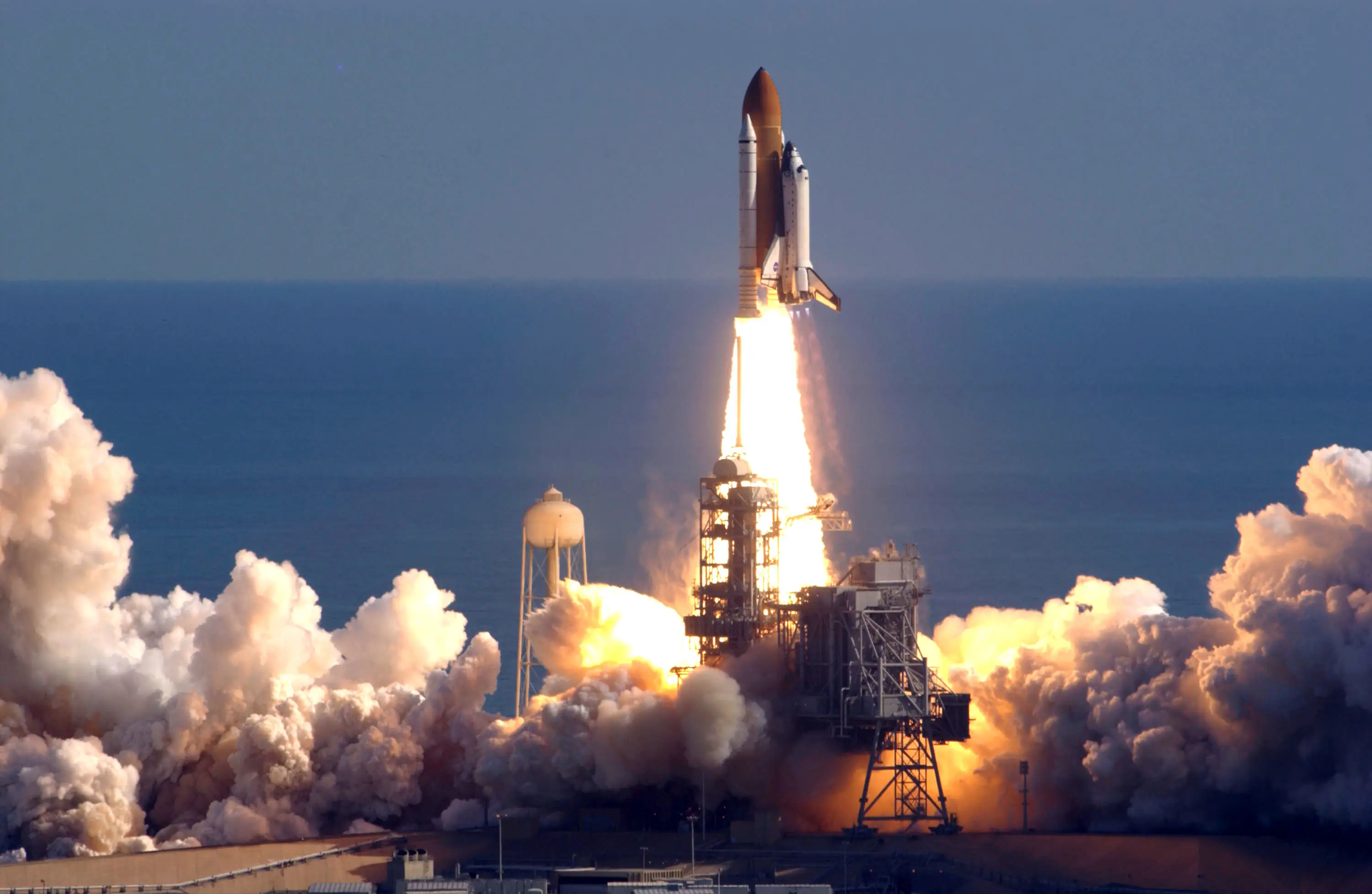
Tragically, they turned out to be very wrong.
The heat shield was compromised and it was highly unlikely it was to remain intact as Columbia re-entered the Earth's atmosphere, resulting in certain death for those onboard.
NASA managers determined that there was nothing the crew could do to fix the problem if it was confirmed, so the astronauts were assured they had nothing to worry about.
After receiving the 10-minute warning for their descent, the doomed crew put on their suits and safety gloves as they prepared for what they believed would be a routine landing.
Meanwhile, their colleagues on the ground could only look on in horror as abnormal readings showed damage to the sensors on the left wing.
Just before 9am, Commander Rick Husband spoke with Mission Control for the final time, saying "Roger" before the transmission was interrupted.
At 9am, the orbiter began its catastrophic breakup.
The astronauts' final moments
Five years later, a NASA crew survival report found that the astronauts probably survived the initial breakup and, in a terrifying moment, realised they were about to die before losing consciousness when the cabin lost pressure.
According to the report, their cause of deaths included exposure to high altitude and blunt force trauma.
Following an extensive search, the bodies of all seven astronauts were recovered.
NASA's Wayne Hale opened up about the agonising decision the ground team faced that day on his blog.
He wrote: "If it has been damaged it's probably better not to know. I think the crew would rather not know.
"Don't you think it would be better for them to have a happy successful flight and die unexpectedly during entry than to stay in orbit, knowing that there was nothing to be done, until the air ran out?"
Topics: NASA, Space, Technology, US News
 Bec Oakes