Expert shares terrifying true reality about what would happen if world’s internet went down

Experts have revealed the horrific effects we would face if the internet went down around the world.
You may have heard it from older generations - we rely too much on our phones and technology on a day-to-day basis, but the reality is that it keeps the world going.
It doesn't just help us figure out the answers to stupid questions on our minds, the internet allows us to work from anywhere, call anyone at any time, and support every country's CCTV network.
Going without working services even for a few hours can spend the world into a spiral, as the Microsoft outage last month demonstrated.
Advert
It's not the first example of the world figuratively bursting into flames after a tech blip, but what were to happen if the internet were to go out - and never come back?

The fragility of the world in this century has been seen through the hundreds of millions lost by large corporations following cyber attacks, and it doesn't help as the information that can fix the issue is often, well, online.
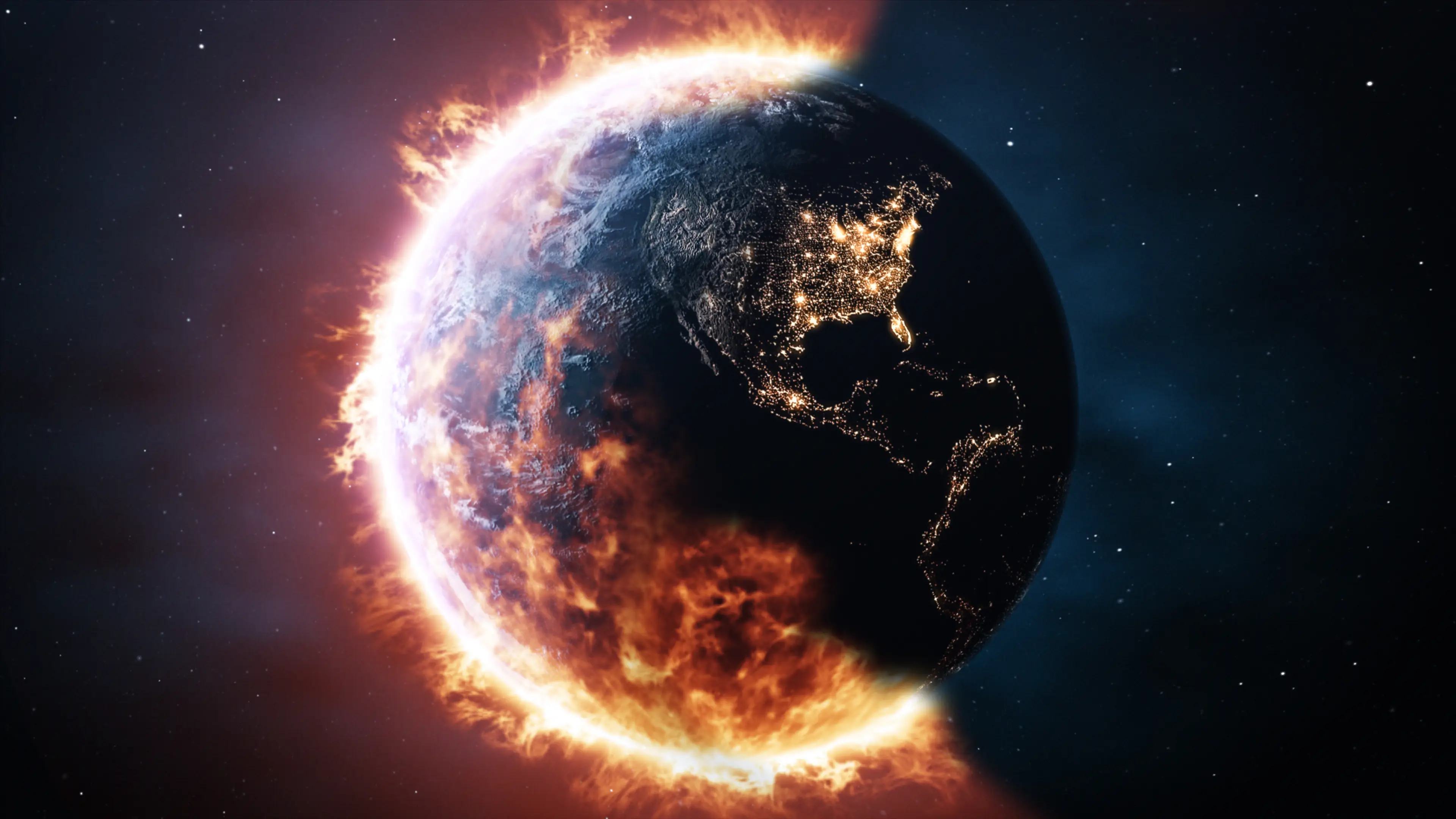
Huge solar flares from the Sun can trigger coronal mass ejections (CME), massive clouds of solar material and magnetic fields which can cause disruptions to satellites, flights, and high-frequency radio.
On Tuesday this week, a flare caused radio outages across Europe and Africa, as solar physicist Dr Ryan French told the Daily Mail: "In most events, these particles are absorbed by the atmosphere and don’t reach the ground,
"But in this flare, we measured what is called a ground-level enhancement, where these particles did make it to the ground," the scientist-based at the Laboratory for Atmospheric & Space Physics in Boulder in Colorado explained.
Such flares have hit out planet less than 100 times siince they started being recorded in 1942, but it is noted that 'The Carrington Event of 1859' caused such intense electrical activity that telegraph wires burned out.
So if something similar were to happen again, here's what would likely happen in Britain, according to cyber experts.
Day one - 3pm
Following the first blast from the CME towards Earth, about 100 times more powerful than this week's event, thousands of satellites are rendered useless as phone, spy and GPS networks are rendered useless.
Circuits fail onboard the International Space Station, while electrical surges on the ground fry components of every device plugged into the mains, with household devices, computers and TV bursting into flames.
Thousands suffer electric shocks and the National grid fails as traffic lights and street lamps go out, causing several car crashes across the world.
Day one - 5pm
As fires continue to blaze in nations and an absence of communication between emergency teams takes its toll, it's harder for those in need to be reached.
Luckily for half the world, Asia was facing away from the Sun and was missed by the CME, as Russia survives with its own internal communication network, which separates it from the West.
RusNet keeps essential services running for the Kremlin, while those in China are in bed, unaware of the chaos happening in the West.
Day two - 6am
The Prime Minister orders the Army to set up a government communication system, which is not operational through the use of field telephones and military radios, while Morse code once again became the best way to transmit messages.
Police are now on the streets of major UK cities to stop any looting, which has gotten out of hand in the absence of CCTV, while roads are clogged with abandoned electric cars, as bulldozers would be used to clear motorways.
Hospitals are turning on back-up generators to keep the lights on, as A&E departments are being overwhelmed due to the ongoing electricity-induced fires.
Day two - 9am
Keir Starmer is now in communication with tech experts to get the nation's systems back up and running, as phone signals are slowly being reinstated.
"The internet is a remarkably fragile thing – a critical piece of our economic infrastructure, built on very shaky foundations," Professor Alan Woodward of the University of Surrey explains.
He says that power being restored to the London Internet Exchange in Telehouse, in the Docklands, would help make it a hub for the nation's cyber traffic.
Day two - 3pm
The internet must be rebuilt from scratch, as America's main cloud data centres have been eradicated.
The UK seems medieval, with resources such as food, power, water, and fuel being shared, while those with portable generators are using them for light and heat.
Older people will cope better as they have lived in times like this, with middle-aged adults and younger people struggling the most with the new tech-free world.
The banking network is also down, while the lack of speed cameras means that roads become race tracks for burglars in stolen cars.
Two months later
Hackers will start to rise here as new makeshift computer systems will be prone to attacks, with the government constantly being held to ransom by criminals.
Russia may become more involved as it targets the remaining infrastructure in place, as the UK tries to re-establish their links with the UK.
Brits start to struggle with the cold, while diseases like cholera pop up through unfiltered water supplies caused by a lapse in logistical systems.
Topics: Technology, UK News
 Joshua Nair