
UK health authority issues statement on plague fears after Russia 'lab leak'

UK health officials have said they are looking into reports of a lab worker dying from suspected pneumonic plague in Russia.
Twenty-eight-year-old Daria Shipilova, a lab technician at the Irkutsk Anti-Plague Institute in Siberia, died last week after contracting pneumonia from an ‘unknown’ cause.
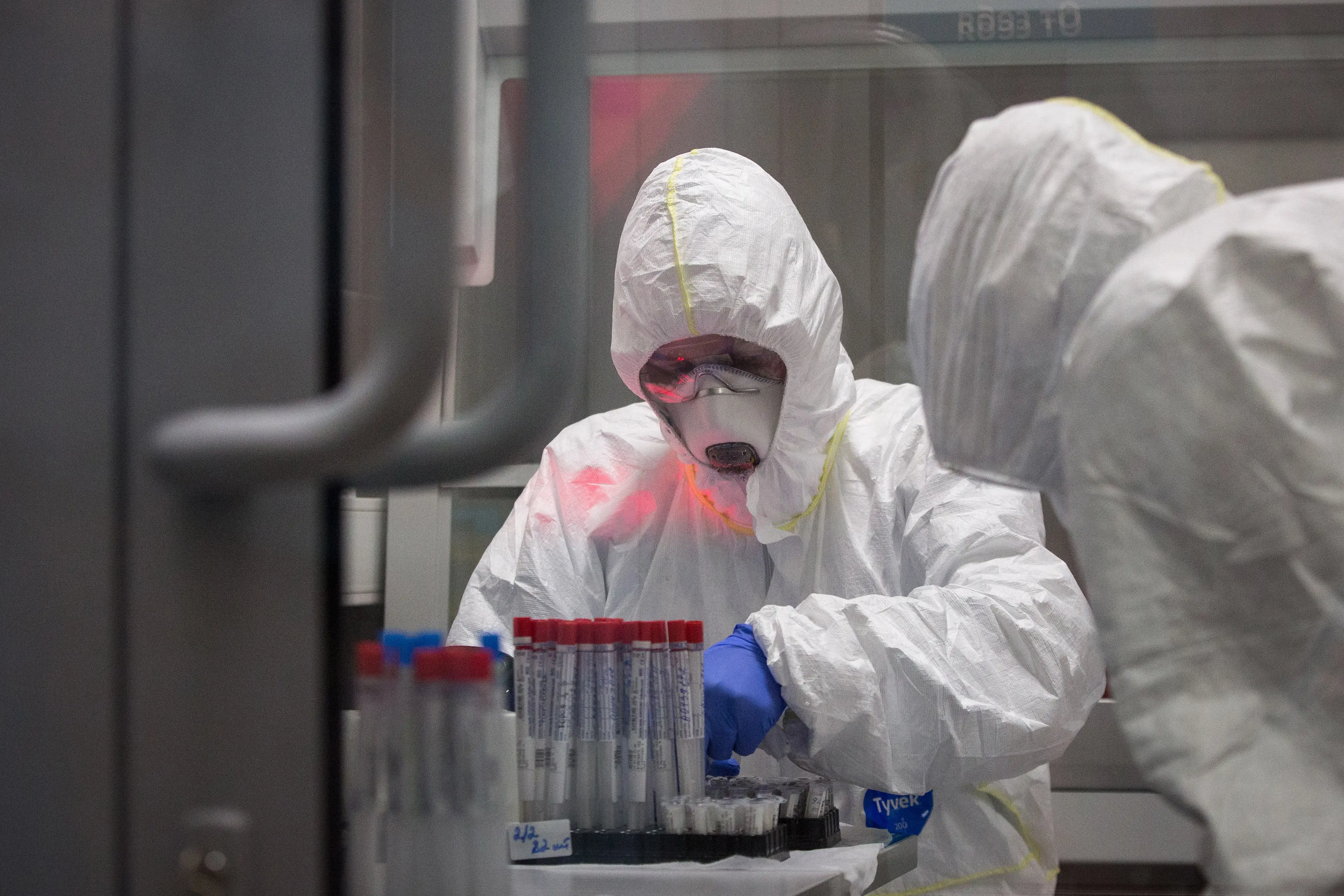
Reports in local media suggested that she became ill after she broke a test tube and came into contact with bacteria that can cause pneumonic plague.
Shipilova was taken to hospital in Shelekhov with severe pneumonia symptoms on 29 September and was placed on a ventilator but tragically died just two days later.
Advert
Following her death, several hospitals and colleges have reportedly been placed into lockdown and around 200 people who had come into contact with Shipilova have been quarantined.
Her death has sparked fears of a pneumonic plague outbreak.

Mayor of Shelekhov, Maxim Modin, has urged people not to speculate about the death, telling the public ‘not to spread rumours or unreliable information – use only official sources’.
He added: “It is too early to draw final conclusions – we will wait for the specialists' findings.”
Irkutsk governor Igor Kobzev said: “We held an extraordinary meeting of the regional sanitary and anti-epidemic commission with the participation of Russia's Chief State Sanitary Doctor Anna Popova.
“The reason was information that had emerged about a suspected case of a particularly dangerous infectious disease in a resident of the region.”
Meanwhile, the UK’s Health Security Agency (UKHSA) has said it is looking into the reports.
In a statement shared with the HuffPost, Chris Lewis, Director of Global Health Protection at UKHSA, said: “UKHSA is aware of media reports that emergency containment measures have been introduced in Russia’s Irkutsk region following the death of an employee at the Irkutsk Anti-Plague Institute.
“We are seeking information through the International Health Regulations channels to further understand the circumstances and verify the accuracy of these reports.”
However, he went on to stress that ‘the public health risk from plague to the wider UK population currently remains very low’.
Meanwhile, the US Department of Health is also reportedly monitoring the situation.
President Donald Trump said: “It’s a rough disease. You know, that’s a disease we used to be able to control, but somehow those microbes have gotten stronger and smarter. They’re like an army.
“Even with great advancement, the germs have really become relatively stronger than they were, and things that used to work on pneumonia don’t work as well anymore.”
What is pneumonic plague?
Pneumonic plague is one of three kinds of plague, alongside bubonic and septicaemic.
It is caused by the bacteria Yersinia pestis, usually found in small mammals and their fleas and can be contracted by humans via bites from infected fleas, unprotected contact with infected bodily fluids, or the inhalation of particles from a patient with pneumonic plague.
According to the World Health Organisation, pneumonic - or lung-based - plague is the most virulent form of plague.
“Incubation can be as short as 24 hours,” WHO writes.
“Any person with pneumonic plague may transmit the disease via respiratory particles to other humans. Untreated pneumonic plague, if not diagnosed and treated early, can be fatal.”
However, the organisation also notes that recovery rates are ‘high’ if the disease is detected and treated within 24 hours of onset symptoms.
Topics: UK News, World News, Health, Russia
 Claire Reid