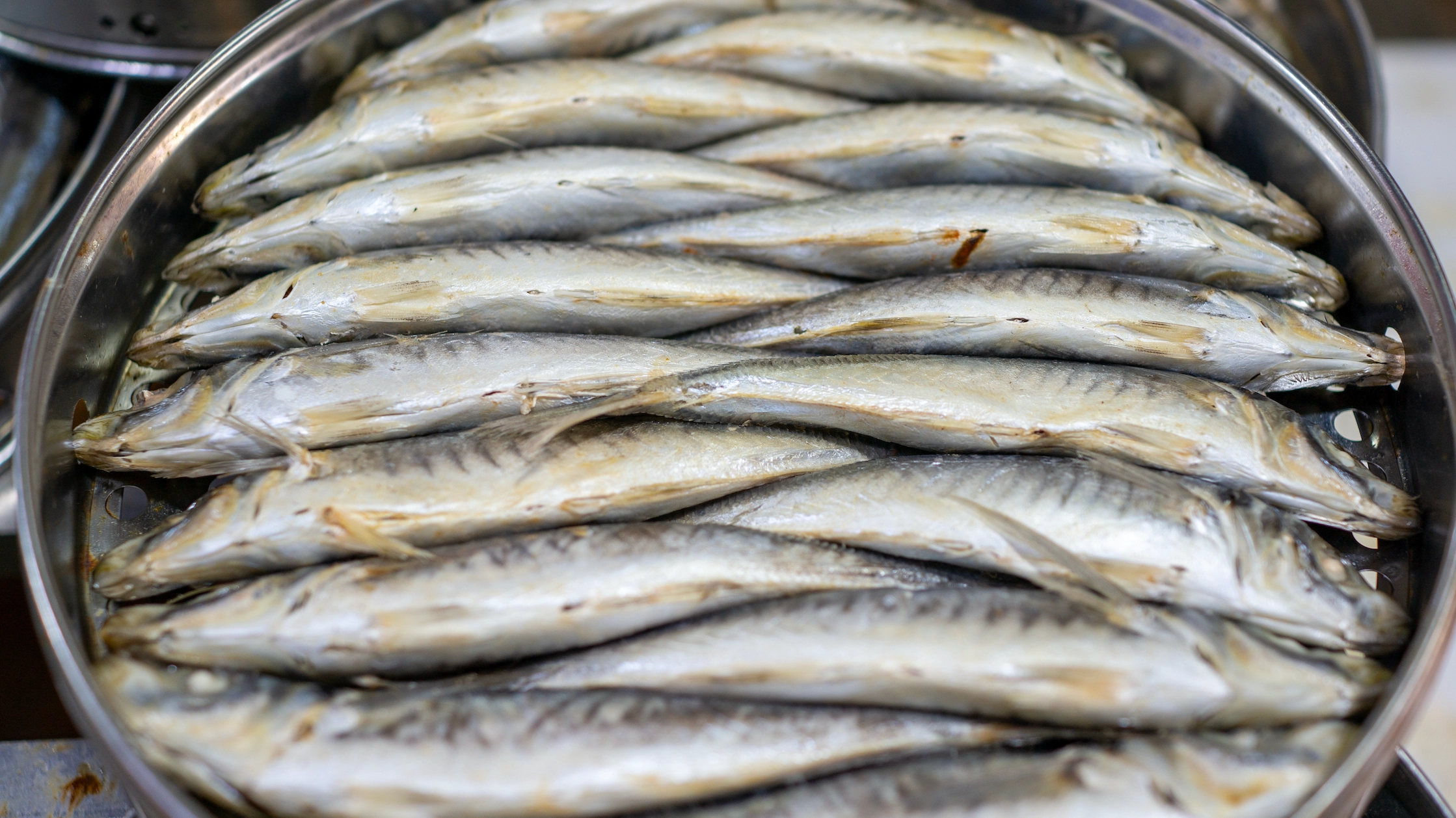
Tinned 'mackerel' in the UK no longer contains mackerel

There's something fishy going on with some of the mackerel being sold in UK supermarkets – and no, we're not talking about the smell.
According to a recent report from The Financial Times, Princes, a company which supplies branded mackerel to supermarkets such as Lidl, Aldi, Tesco and Sainsbury’s, has switched to using Chilean jack mackerel for its tinned products.
Now this may not sound like much of a difference at first glance – until you learn that jack mackerel and true mackerel come from completely different families of fish.
True mackerel, which is the mackerel you and I are used to eating, originates from species of fish known as Scomber or Rastrelliger, which come from the Scombridae family.
Advert
Meanwhile, jack mackerel is from a species of fish known as Trachurus, which is part of the Carangidae family.

But what does that mean, exactly – surely all fish are fish?
Well, not all fish families are the same when it comes to nutritional value, as jack mackerel is reported to contain roughly half as much omega-3 and a third as much vitamin B12 as true mackerel.
However, the nutritional value of jack mackerel isn't all bad, as this variant boasts more protein and fewer calories per serving. This means the main difference comes down to taste.
And the initial reviews for jack mackerel don't appear to be too positive.
In a recent review, seafood reviewer Marcus Ansell compared true mackerel to jack mackerel fillets, complaining that the latter had a 'significantly lower quality' and was 'quite a bad tinned fish'.
"It’s not a substitute at all... It’s a completely different species and is nothing like mackerel in its taste, texture, or smell," he added.
Reacting to the change of fish supply, consumer brand Which? said it was important that consumers were aware of ingredient changes to the products they were buying.
"While manufacturers face genuine supply chain pressures and sustainability challenges, they have a responsibility to shoppers to be completely upfront when they change a product’s recipe," Sue Davies, the head of food policy at Which? told The Guardian.
“Skimpflation can feel particularly sneaky as shoppers may not realise a product has changed until they get it home and eat it."

Why are suppliers switching mackerel variants?
The decision for Princes to switch suppliers is due to concerns over dwindling mackerel stocks.
Caught in the North Atlantic Ocean, mackerel is currently considered to be severely overfished, with a cut of 77 percent of catches suggested in order to allow mackerel stocks to recover from a critical threshold.
Despite warnings of a total stock collapse, mackerel catches in the North Atlantic remain at 39 percent above recommended limits.
The fish is no longer eligible for MSC certification, which means that a fishery meets sustainable standards, whereas jack mackerel is seen as a more environmentally friendly alternative.
What has Princes said about the change?
In a statement given to The Guardian, Princes stated that jack mackerel labelling was 'clearly identified' on their products, adding that it had been chosen as a true mackerel replacement after concerns about sustainability and consumer testing.
LADbible has approached Princes for comment.
Topics: UK News, Food And Drink
 Brenna Cooper