'Falling man' in 9/11 photo identified by chilling clue as truth revealed 25 years on

He's the subject of one of the most harrowing photographs taken on 9/11 – but who is the 'Falling Man'?
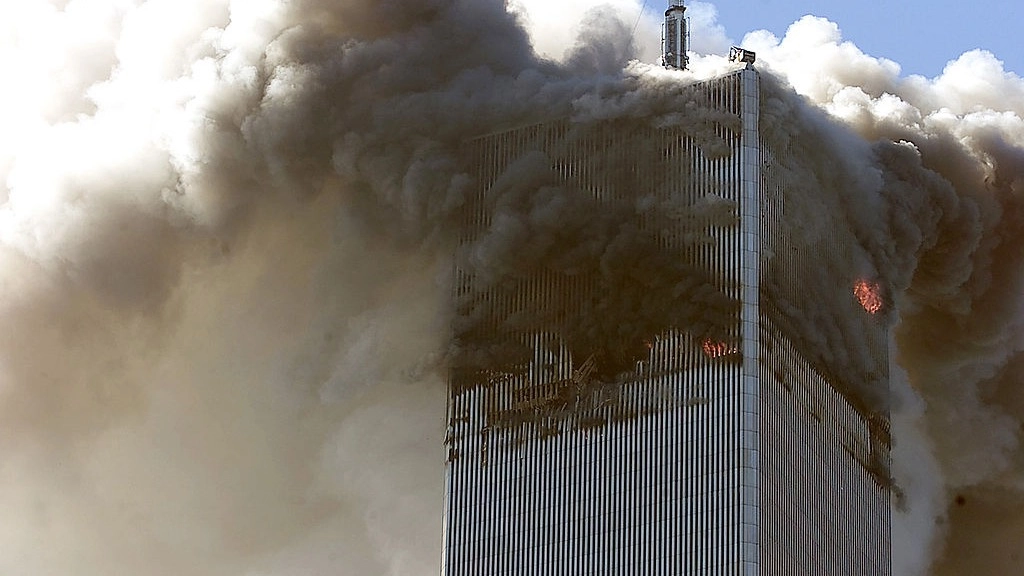
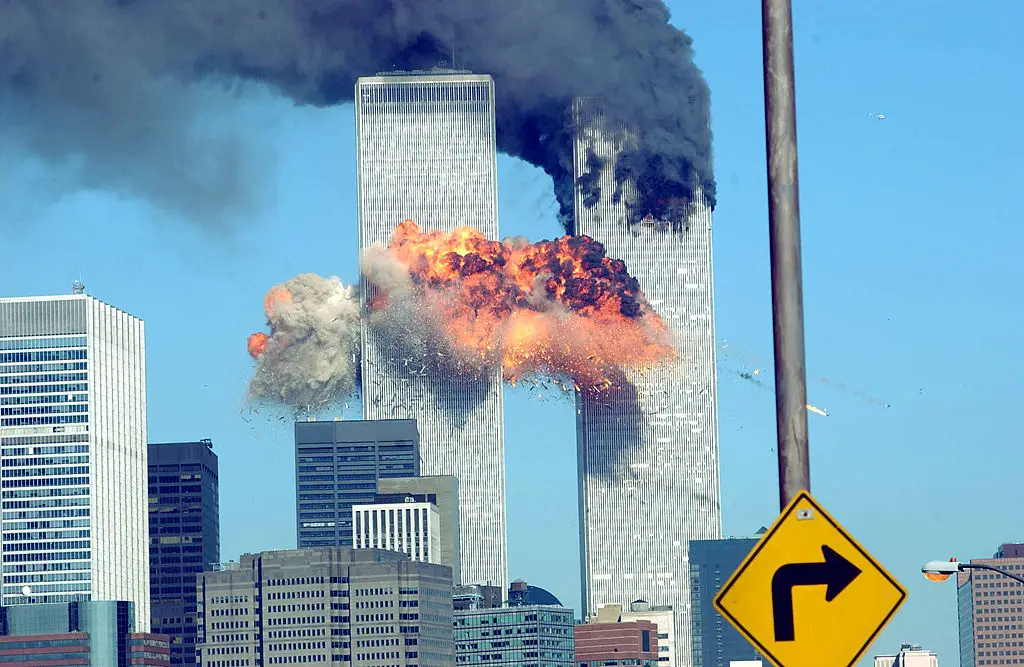
When American Airlines Flight 11 smashed between the 93rd through 96th floors of the World Trade Centre's North Tower at 440 to 465 mph, the resulting wreckage severed all exits from the building, meaning that everyone on the 11 floors above was now trapped in a burning building with no way to escape.
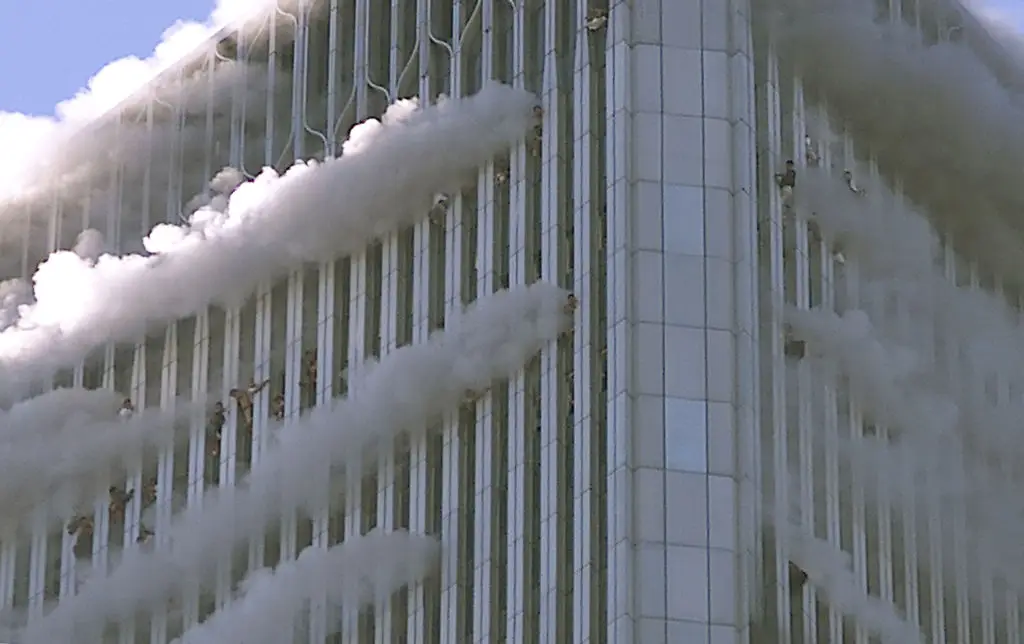
Faced with the alternative of suffocating or burning alive, it's estimated that as many as 200 people either jumped or fell to their deaths from the upper floors of the buildings, most of whom were in the North Tower.
Those who chose to jump were captured in photographs and on video by reporters at the scene, but none remain as striking as the images photographed by Associated Press reporter Richard Drew.
Advert
Captured by Drew at 9:41am and 15 seconds, the man appears almost at peace as he falls headfirst through the sky.
The photo captured attention over its seemingly calm and meditative appearance, not directly showing any of the chaos and carnage that was unfolding just out of shot.
It was shared in the days after the atrocity, but proved to be so controversial that many newspapers, including the New York Times stopped circulating it as readers had written in to say that the image was too difficult to look at.
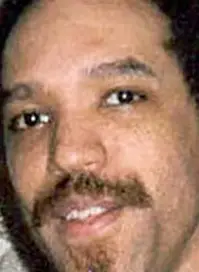
He's never officially been identified. However, the family of one of the victims, Jonathan Briley, have since come forward to say they believe it was him.
A sound engineer for the tower's Windows on the World bar and restaurant complex on the 106th floor, Briley is one of the 2,977 victims of 9/11.
Why do people think the Falling Man is Jonathan Briley?
According to an investigation by Esquire, Briley is the most likely candidate for the man in the photo due to the orange T-shirt, which can be seen underneath the man's shirt in the photo.
According to Briley's father Timothy and sister Gwen, Jonathan had often worn an orange shirt.
The article concludes that most of the other candidates for the Falling Man were ruled out on the basis that they wouldn't have been able to wear an orange shirt or simply didn't own one, making Briley the most likely candidate.
Briley family's response to the image
During a recent interview with the Daily Mail, Jonathan's sister Gwen explained why she can no longer bear to look at the photo.
"The photograph brought so much pain to so many people when they were trying to figure out who this person was," she said.
"I remember hearing about a family who were deeply religious and, with Catholicism, this man that jumped, that's suicide and that's the unforgivable sin."
She added: "I don't believe in an unforgivable sin. God is too benevolent. He's too wonderful. I think the only unforgivable sin is not to believe in Him."
New York's medical examiners office specifically did not refer to the people who fell from the buildings as 'jumpers', reasoning that those people had not gone into work intending to jump to their deaths, but had been forced to. All of the deaths in the September 11 attacks were ruled as homicides.
Why was the photo controversial?
Years later in 2023, Drew would open up about the criticism of the picture, including people who said that it had showed the man's death, and explained why he believed people had found the image so evocative and painful.
"But it wasn’t his death," he told Quill. "It was the last moments of his life."
He added: "As a photojournalist, I chronicle people’s lives. This was part of the man’s life. I think people were upset because the photo looked so … quiet. It didn’t show actual violence, which we’d gotten numb to by then."
Drew had even previously said that he had got the picture entirely by chance, with several other frames of the same man showing him not in the same position.
"I have, I think, eight or nine frames of this gentleman falling, and the camera just happened to cycle in that time when he was completely vertical," Drew told CBS News in 2021. "I didn't see that picture really until I got back to the office and then started looking at my stuff on my laptop. I didn't see it."
He added: "I didn't take the picture. The camera took the picture of the falling man.
"And when these people were falling, I would then put my finger on the trigger of the camera and I'd hold the camera up, and I'd photograph and follow them going down, and then the camera would open and close and take the pictures as they were going down."
Additional reporting by Brenna Cooper.
 Kit Roberts