
Woman born with no brain defies doctors' predictions and celebrates 20th birthday

A woman born with no brain has celebrated her 20th birthday, defying doctors’ predictions.
When Alex Simpson was born on 4 November 2005, her parents were told she was a healthy child. However, at a check-up two months later, her parents say they were told their daughter has hydranencephaly.
This rare condition affects brain development as a baby will be born missing certain portions of their brain. Typically, the condition is fatal, and the Nebraska family say doctors told them Alex would likely not live past four years old.
Having now made it to the age of 20, the woman is said to be missing the parts of the brain capable of seeing and hearing, but her family believe she can sense their presence and is more aware of things than what people think.
Advert
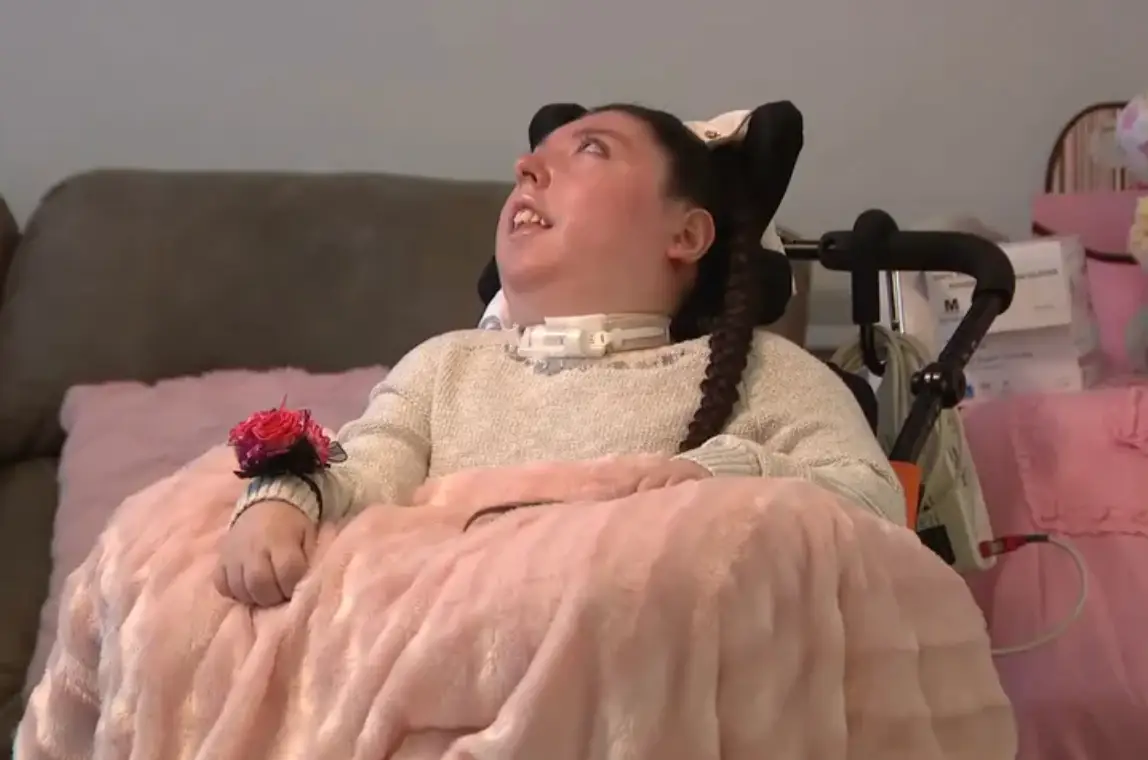
"[Hydranencephaly] means that her brain is not there,” her dad Shawn told local news outlet KETV News.
“Technically, she has about half the size of my pinky finger of her cerebellum in the back part of her brain, but that's all that's there.”
Both her father and mother, Lorena, said they believe the reason why Alex has lived so much longer than expected is ‘love’.
Mimicking her eye movements, Shawn added: “You can see that when I went up there and talked to her a little bit ago, she was looking for me.”
READ MORE:
EX KETAMINE ADDICT SHARES 'MASSIVE' RECOVERY UPDATE
MUM ISSUES WARNING AS SON LEFT WITH THIRD DEGREE BURNS
And her 14-year-old brother, SJ, echoed: “Say somebody’s stressed around her. Nothing will even happen — it could be completely silent — but Alex will know. She’ll feel something.
“Like, if my grandma’s hurting, in her back, she’ll radiate off of it – it’s crazy.”
The family refer to Alex as a ‘miracle’ and the teen is proud to have her as a sister and has spent time researching her condition, as he added: “When people ask about my family, the first thing I start with is Alex, my disabled sister.”

Shawn said that while the family were ‘scared’ 20 years ago: “But faith, I think, is really what kept us alive.”
“She’s a fighter,” Lorena said.
According to Cleveland Clinic, scientists estimate that hydranencephaly occurs in one in 10,000 to one in 5,000 pregnancies and they aren’t sure what causes the condition.
“They believe it might be inherited, but they don’t understand how,” it adds. “Some cases have been linked to exposure to toxins during pregnancy.”
Symptoms of hydranencephaly often tend to appear in the first few weeks and months of a baby’s life and include: failure to grow, increased or decreased muscle tone, a larger than normal head, problems with vision and hearing, rigid arms and legs and trouble breathing.
 Jess Battison