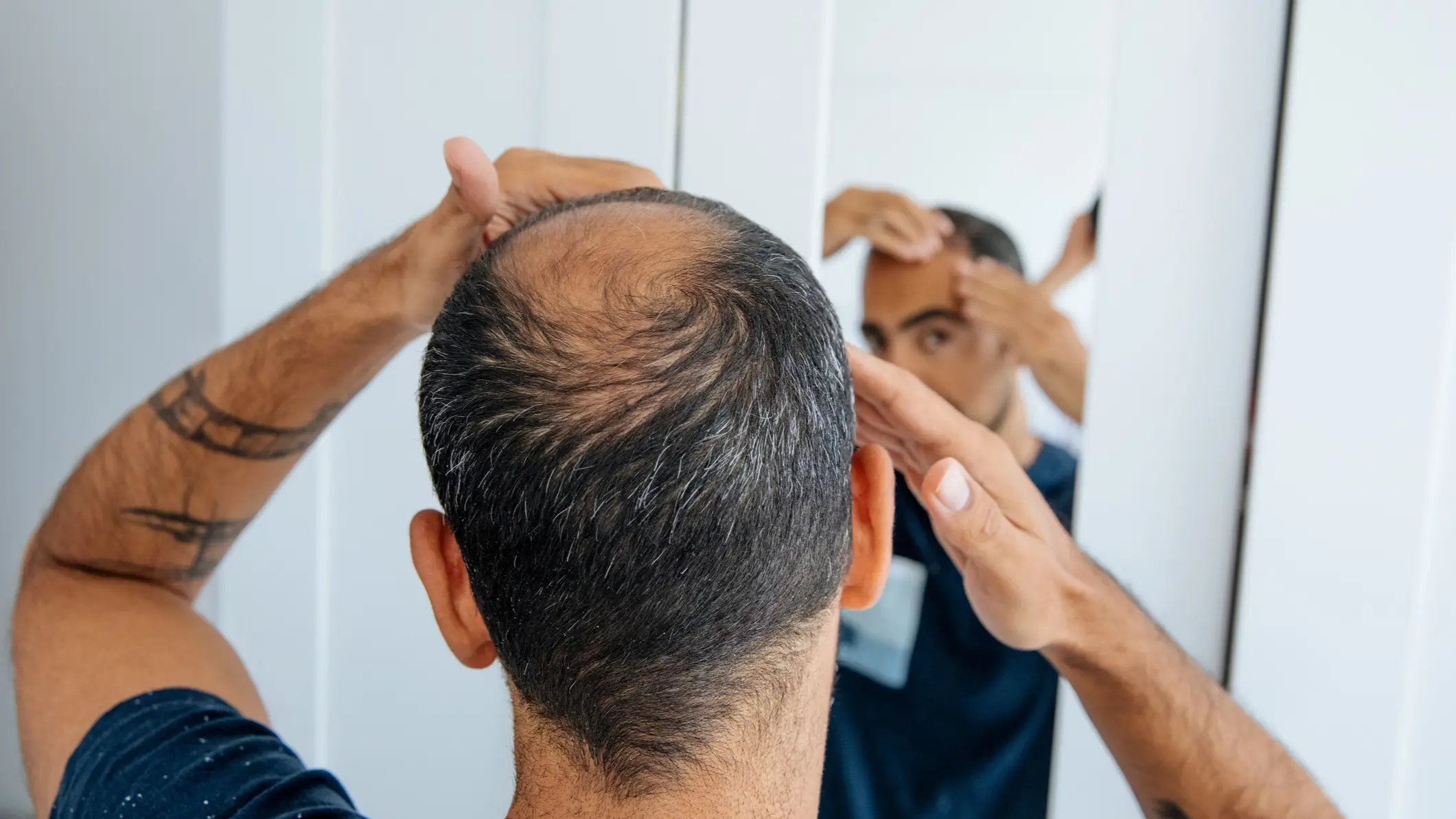
Scientists think we may have finally found a cure for going bald

Among the various diseases and health conditions that affect millions of people each day, losing your hair might not seem that bad.
However, baldness and hair thinning is something which both men and women struggle with on a daily basis, which is perhaps another reason why trips to Turkey have become so popular in recent years.
Although men might face the brunt of the issue, as it affects such a high percentage of the population, it can also plague women too, in cases of extreme stress, hormonal changes or medical conditions such as alopecia.
Fortunately, as our knowledge of the human body continues to grow, with scientific and technological advancements also arriving all the time, it seems as if we've made some progress in identifying exactly what causes baldness and how we might be able to reverse it.
Advert
While things such as hot showers have been linked to hair loss, most scientists seem to agree that it involves ageing hair follicles, hormones and stress, as well as whatever genes our parents passed on.
It's also long been established that there is a strong link between balding and genes on the X chromosome that influence the body’s response to testosterone.
So, while testosterone might well be the key to the balding process, interfering with testosterone levels in the body is far from ideal, so scientists have been looking for an alternative.
And they might just have found it in the form of the popular experimental treatment platelet-rich plasma (PRP) therapy.
PRP sees a plethora of components with restorative potential concentrated from the patient's own blood, before being injected into their scalp.
It's already shown some promising results and is remarkably safe for both men and women, but the downside is that scientists haven't quite figured out how or why it works, and also what a standard treatment regime should look like.

Sadly, it's also impossible to predict who it might work for and who it might not, so perhaps the long-term solution is to find someone with a universal blood type who has gone bald and hope that the treatment works on them.
This is also an expensive option for many, with Dr Christina Weng telling the BBC: “[You might pay] $800-plus (around £600) a pop for a series of six injections and then maintenance injections thereafter.
"So the cost really adds up, and you don’t know if you’re going to be one of the folks who respond until six treatments in.”
Stem cells could also prove crucial to the future of hair loss treatments, especially if they can consistently generate new hairs and regenerate old ones.
Weng also sang the praises of Pelage's PP405, a new topical treatment for hair loss, which supposedly delivered 'fantastic' results in initial safety trials in humans.
The drug works by targeting stem cells already living in the hair follicles.
Dr William Lowry, Pelage co-founder and stem cell expert at the University of California in Los Angeles, said: “They wake up at the start of a new hair cycle to produce very rapidly dividing cells that go on to make a new hair and then they return to quiescence a couple of days later.”
Either way, it's clear that there's plenty of progress being made in the world of baldness, which is fantastic news for anyone who's bald, but terrible news for anyone working in the toupée business.
Topics: Health
 James Moorhouse