
Australia makes £4.5 trillion find that could change entire world’s economy

Australia has become £4.5 trillion ($6 trillion USD) richer overnight after discovering the world's largest iron deposit.
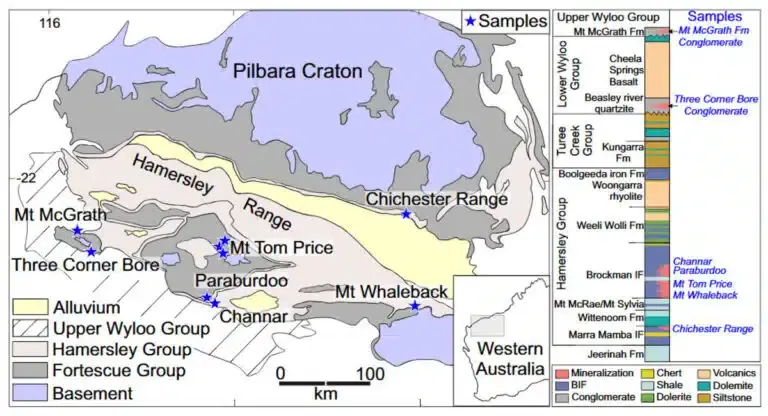
One of the most significant geological findings in years was hidden deep beneath Western Australia’s remote Hamersley region.
The discovery has implications for the global economy regarding mining practices and our understanding of how the Earth's crust evolved.
Researchers have estimated that the deposit consists of around 55 billion metric tonnes of high-grade ore, with iron concentrations above 60 per cent, Futura reports.
Advert
It's enough to make Australia, already the world's leading iron ore exporter, dominate the market for years to come.
Although Hamersley has been mined for decades, new imaging technology and analysis revealed that previous estimates around the area's formations have gone from 2.2 billion years old to a revised 1.4 billion years.
The research team, led by scientists from Curtin University, published their findings in the Proceedings of the National Academy of Sciences.
Associate Professor Martin Danisík, a geochronologist on the project, said: “Finding a connection between these enormous iron deposits and shifts in supercontinent cycles gives us new insight into ancient geological processes.”
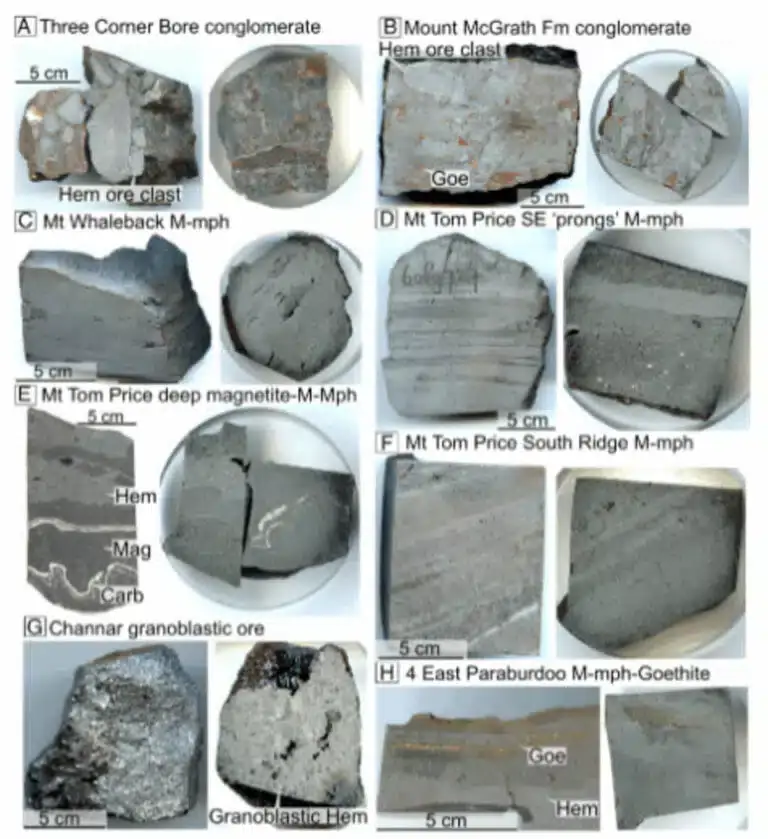
The cutting-edge tools consisted of chemical and isotopic techniques used to measure the extent and purity of the deposit. It showed concentrations of over 60 per cent compared to previous estimates of 30 per cent.
This makes it one of the richest iron deposits on record.
“This isn’t just about science,” Dr Courtney-Davis added. “These technologies could make mining cleaner, less wasteful, and more environmentally responsible.”
In economic terms, the impact from increased long-term supply may affect iron prices, global steel production and trade relationships with major importers like China.
Last year, Danisík told the outlet: “Linking these giant deposits to supercontinent cycles gives us a clearer picture of how Earth’s crust evolved.
“The shifting and collision of landmasses millions of years ago likely created the conditions for these vast accumulations.”
"Until now, the exact timeline of these formations changing from 30 per cent iron as they originally were, to more than 60 per cent iron as they are today, was unclear, which has hindered our understanding of the processes that led to the formation of the world's largest ore deposits," the associate professor added in 2024.
"By using an emerging technique to date iron oxide minerals through uranium and lead isotope analysis within the mineral grains, we directly dated all the major giant BIF-hosted iron ore deposits in the Hamersley Province.
"Our research indicates these deposits formed in conjunction with major tectonic events, highlighting the dynamic nature of our planet's history and the complexity of iron ore mineralisation."
Topics: Australia, News, World News, Environment
 Anish Vij