
Crime scene cleaner opens up about job that will stay with him forever

Warning: This article contains discussion of suicide which some readers may find distressing.
Ben Giles has spent 30 years as a biohazard crime scene cleaner, and has seen some incredibly harrowing things in his time.
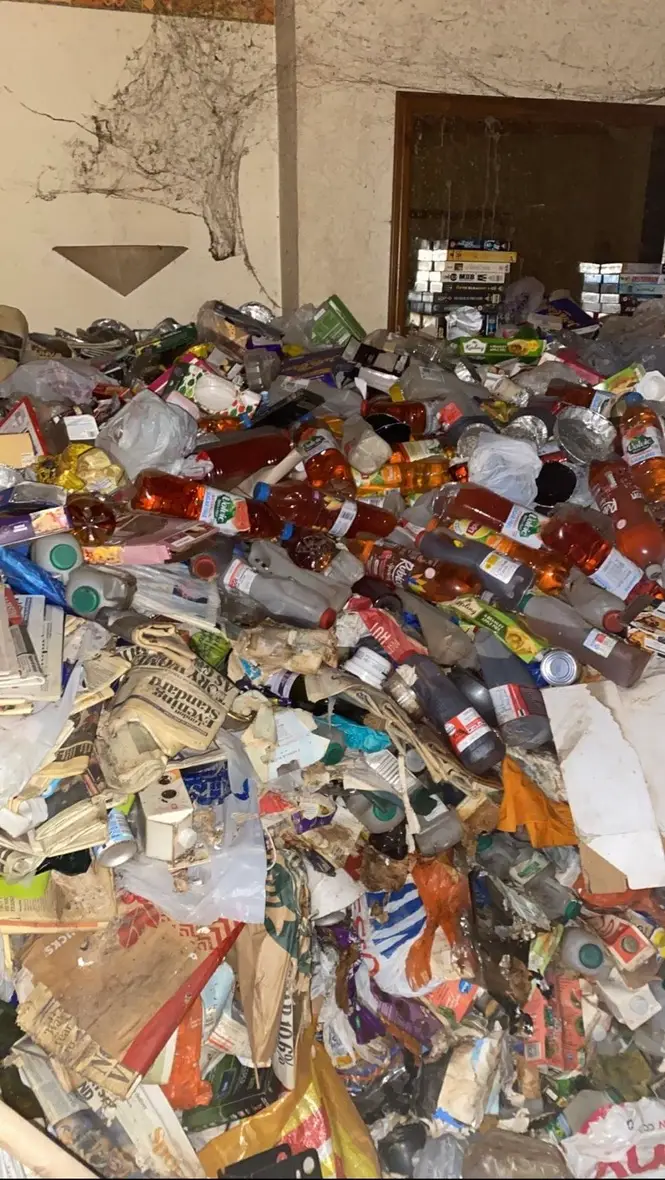
His first ever job was cleaning up a house a man had been living in for 10 years where the bath and toilet were 'full to the top with faeces' and the floor 'was just moving with fleas'.
It was so bad that one of his colleagues threw up in their cleaning mask, and while Ben says he's never thrown up on the job, he has seen enough to the point he thinks there's 'probably not' anything that could shock him now.
Advert
In his time he's cleaned up bodies, found body parts the police forensics teams missed and been contracted to deal with a 22 tonne whale that was stuck on a ship in Portsmouth Harbour.
Speaking to LADbible's Honesty Box, Ben opened up about the jobs that have stuck with him the most, and he had several to talk about.

'There was one scene which was particularly harrowing'
While the crime scene cleaner said the saddest cases he's dealt with have typically involved children, he explained that one of the toughest clean-up scenes involved people on the other end of the age spectrum.
He explained he found it 'particularly harrowing' when he was called to the home of a couple who had been childhood sweethearts and were now in their 90s.
Ben reckoned they'd 'got married at 17', but sadly the man had developed dementia in his old age and while his wife had popped out to the shops he'd 'decided to take his life in the garage'.
Suggesting the elderly man had done it through 'either dementia or depression', Ben described how the man in his 90s 'went into the garage and took his life, or tried to, on a rotating table saw and put his throat onto it'.
"The fallout from it was awful," he said. "But not only that, the poor guy took out all his voice box but didn't take out his jugular vein and ended up surviving.
"So he then had dementia, no voice box in hospital and his wife had to then come and look after him and take care of him."
'I still struggle to deal with that a little bit'
Another job he did which has 'stayed with him the most' was the job Ben reckoned was the 20th or 30th home he cleaned during his career.
"This was for the major crime scene investigation team, a police force," he explained, "They asked us to go and clean up a property where a guy had bludgeoned his wife to death."
The crime scene cleaner said that had been 'a really difficult one' as he was married, and while he and his wife have had their share of 'tiffs and arguments' over the years he couldn't understand how the scene he'd been sent to clean up had happened.
He said: "But I couldn't ever understand how someone could cross that line and actually inflict so much pain and harm on someone that they would take their life.
"So that's really stuck with me, still has, I still struggle to deal with that a little bit."
'The pain he'd gone through, nobody was there with him'
Another case that comes to mind for him was when estate agents gave him the keys to a property which had a tenant who'd stopped paying his bills.
He'd been contracted to clean the property and remove the furniture, but he'd also been told 'there was a smell' and as soon as Ben got into the property he 'could smell the scene of decomposed body fluid'.
Ben explained that the smell of decomposition depended on how someone had died, and the smell gets worse the longer the body has been left there.
The smell of death is 'something that stays with you most of your life', he explained, saying that he explored the property with a torch because the electricity was off.
"I found this door and opened the door and looked down with my torch into the basement," Ben said of the moment he found out what had happened to the tenant.
"This gentleman's body was at the bottom of the stairs. And that was really hard to deal with because when I found out he'd just broken two hips.
"So he'd fallen down the stairs and he'd been there for close on a year."
While Ben didn't know how the man had died he thought it was 'probably starvation', and what really stayed with him was thinking about 'the pain he'd gone through, nobody was there with him'.
"So that one was particularly difficult to deal with, thinking I would hate to be in that situation myself," the crime scene cleaner recounted.
 Joe Harker