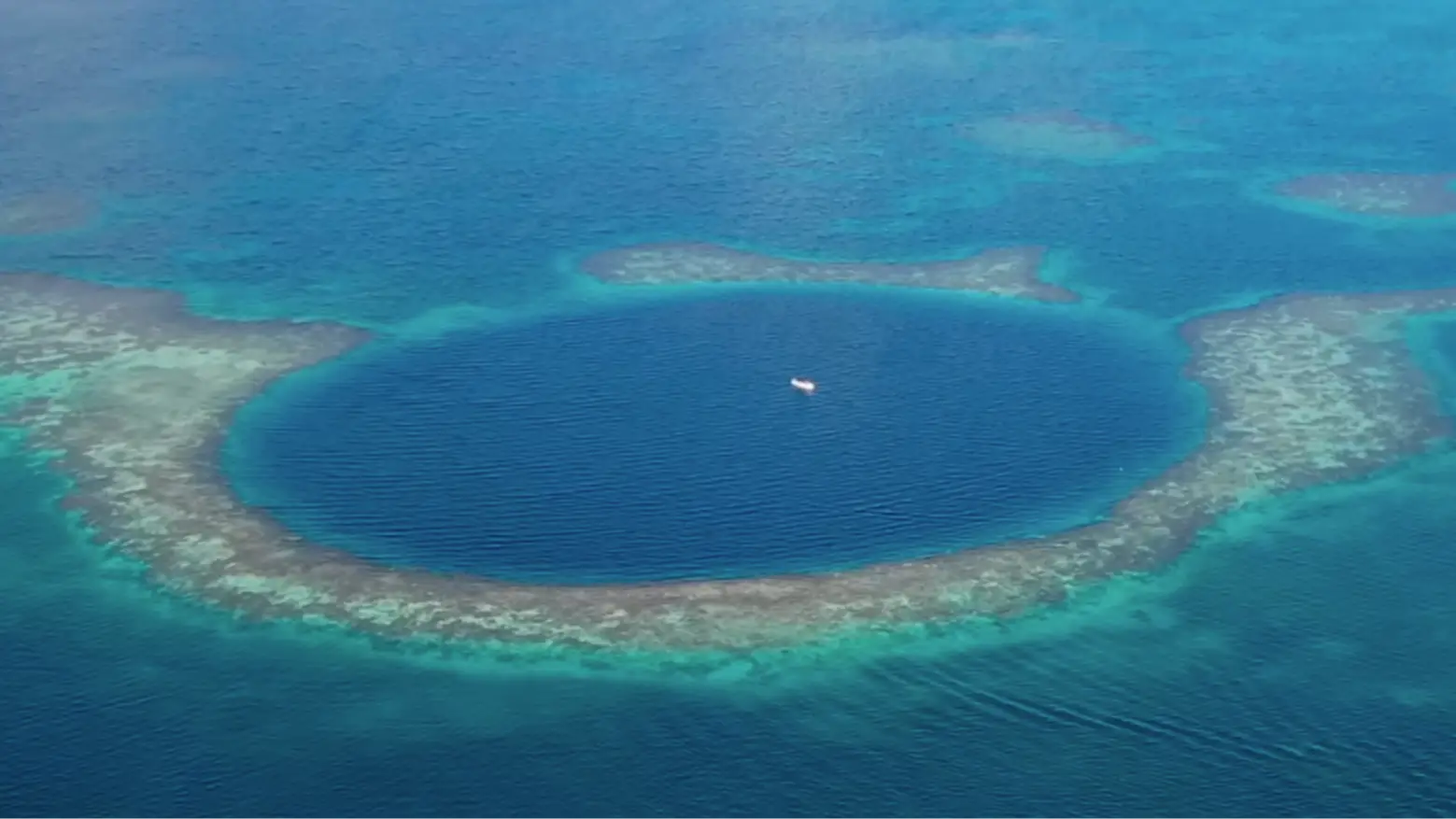
Man dropped a drone into the Great Blue Hole to find ‘sinister things’ at the bottom - but what he actually found was far more disturbing

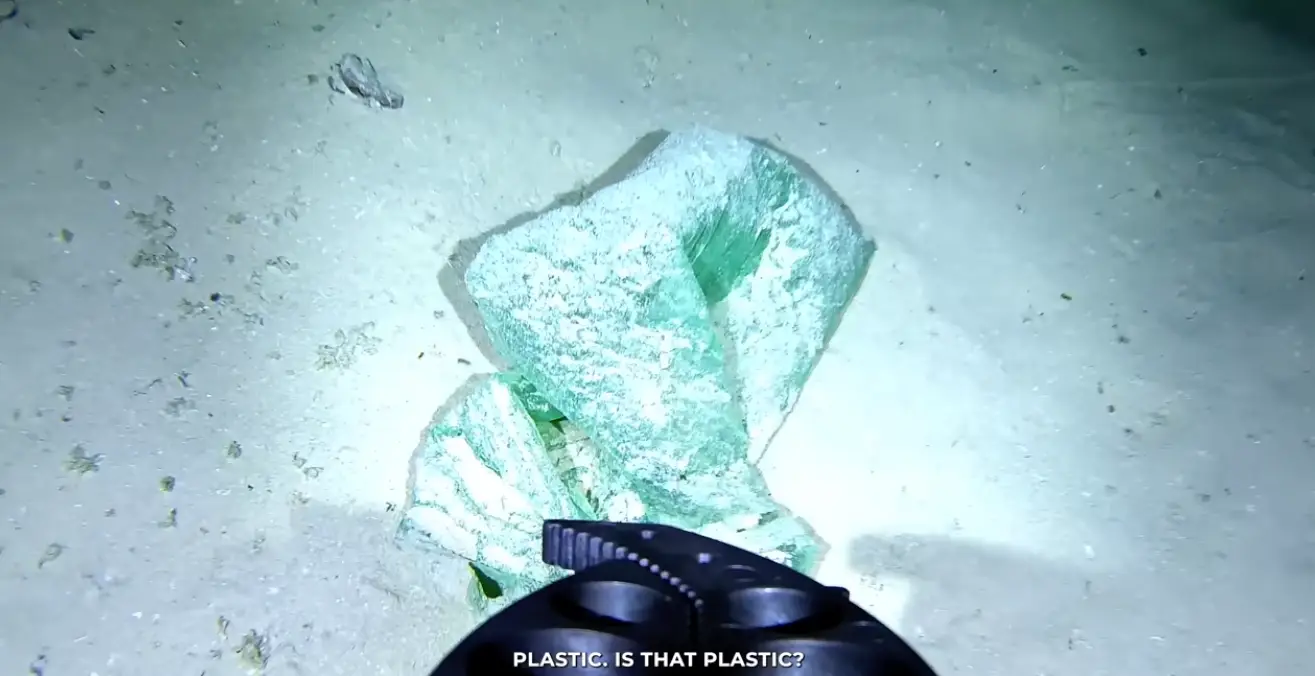
There have long been theories about what lurks in the very depths of unexplored places in the ocean. And the Great Blue Hole, which is around 60 miles off the coast of Belize is no different. From afar it looks like a marvel of nature: a perfect circle of bright blue water in the Caribbean.
But one adventurous soul decided to drop a drone into the hole to see what could be dredged up.
It began as a dry limestone cave system during the last Ice Age, researchers have said, but as sea levels rose, the cave flooded and collapsed, forming the circular void that now measures around 318 metres across and is said to have depths of around 124 metres.
Previously human remains were found in its depths, but YouTuber Will Mitchell decided to lower an underwater drone straight down to the bottom of the hole with a GoPo and lots of weights to see what was lurking there.
Advert
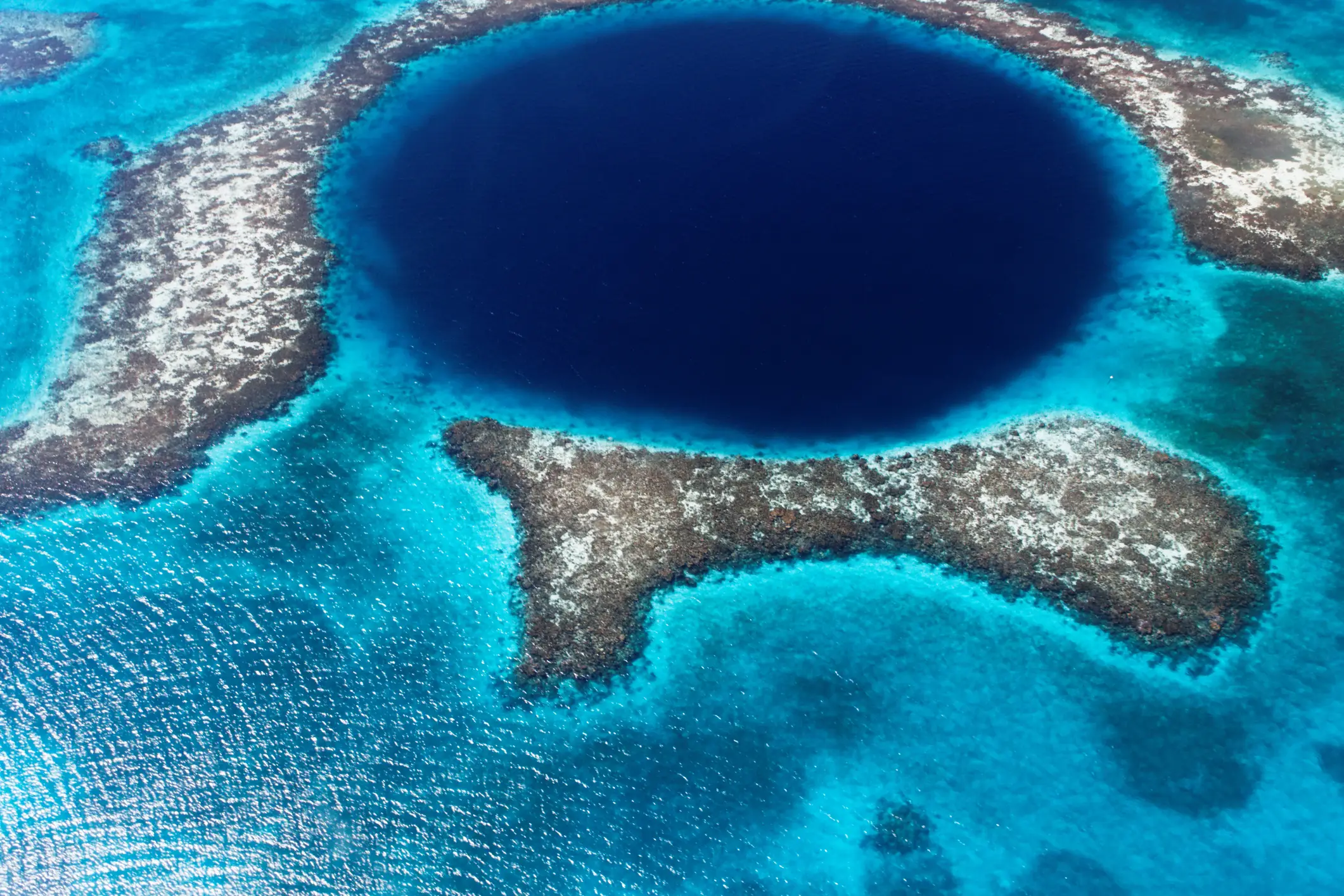
At first, the footage was quite remarkable, showing bright blue water and marine life, as well as the occasional shark circling the device.
Before getting all the way down, however, a shark suddenly vanishes from view before reappearing without warning.
It ends up smashing directly into the drone and sends the footage spinning chaotically.
“The shark just blitzed us,” he said in the video posted in January 2024.
Things then get more eerie at around 90 metres down when the camera passes through a thick layer of hydrogen sulphide — a toxic boundary beyond which life simply disappears.
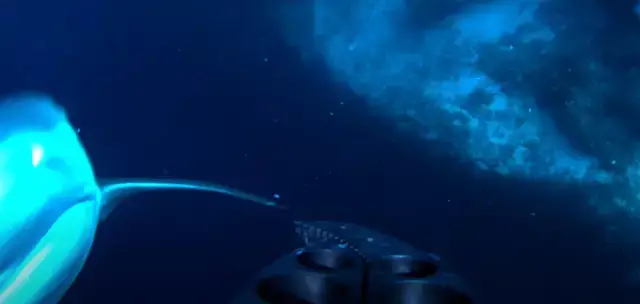
But then it gets even more surprising as after spotting a crab, they even find a plastic bag which they bring up to the surface.
In 2022, a group of scientists led by the Goethe University Frankfurt went in search of more answers in regard to its formation.
They travelled to the area and discovered that around 574 storm events had taken place over the last 5,700 years.
Dr Dominik Schmitt, lead author of the study and researcher in the Biosedimentology Research Group at Goethe University Frankfurt, explained: "Due to the unique environmental conditions – including oxygen-free bottom water and several stratified water layers – fine marine sediments could settle largely undisturbed in the Great Blue Hole.
"Inside the sediment core, they look a bit like tree rings."
Authors also noted that they anticipate even more storms in the next 100 years due to human-made global warming.
Professor Eberhard Gischler, head of the Biosedimentology Research Group at Goethe University Frankfurt, added: "Our results suggest that some 45 tropical storms and hurricanes could pass over this region in our century alone.
"This would far exceed the natural variability of the past millennia."
Topics: Viral, World News, Animals
 Anish Vij