
Doctor explains people who never get dementia make the same decision within 30 minutes of waking up

Dementia rates could potentially reduce across the globe if people start adopting a new morning routine, according to one doctor.
Drawing upon neurological experiment statistics, YouTube content creator Dr Neal K. Shah has explained in a video that nonagenarians (people in their 90s) who remain 'cognitively sharp' all boast the same approach to waking up every day.
Here's what Dr Shah began his life-extending monologue: "Neurologists studied people who stayed cognitively sharp into their 90s and they kept finding the same thing in their morning routine. But first, you need to understand what happens to your brain at night."
While we're sleeping, the human brain completes a full cleaning cycle every night, washing away the very toxic proteins that accumulate in Alzheimer's patients.
Advert

"Here's what most people don't know: the quality of tonight's cleaning cycle is determined by what you do tomorrow morning," the doctor continued in his piece to camera.
"Within the first 30 minutes of waking, most people grab their phone, scroll, and in doing so they accidentally sabotage the most protective thing in their ageing brain.
"Your brain has a master clock, one specific trigger sets it every morning. Get it right and tonight's sleep is deep and restorative, get it wrong for years and the proteins will start building up. This habit is free, it takes 10 minutes and almost nobody does it deliberately."
So what exactly is he talking about here? Sunlight straight into the eyeballs, without melting the retinas and blinding yourself forever of course...
"Within the first 30 minutes of waking, before any screens, even before coffee, before anything. That one decision sets your cortisol levels, your melatonin and your brain's overnight cleaning cycle."
What does research say about sunlight, vitamin D and dementia?

Research backs up what Dr Shah is saying, but with one important caveat.
A 2022 study of 362,094 UK Biobank participants found that people who spent two hours outside in the summer and one hour outside in the winter had the lowest risk of dementia.
The results had a 'J-shaped' association though, which means that too much as well as too little sunlight could increase the risk of dementia.
Vitamin D deficiency, however, is highly likely to increase the risk of dementia.
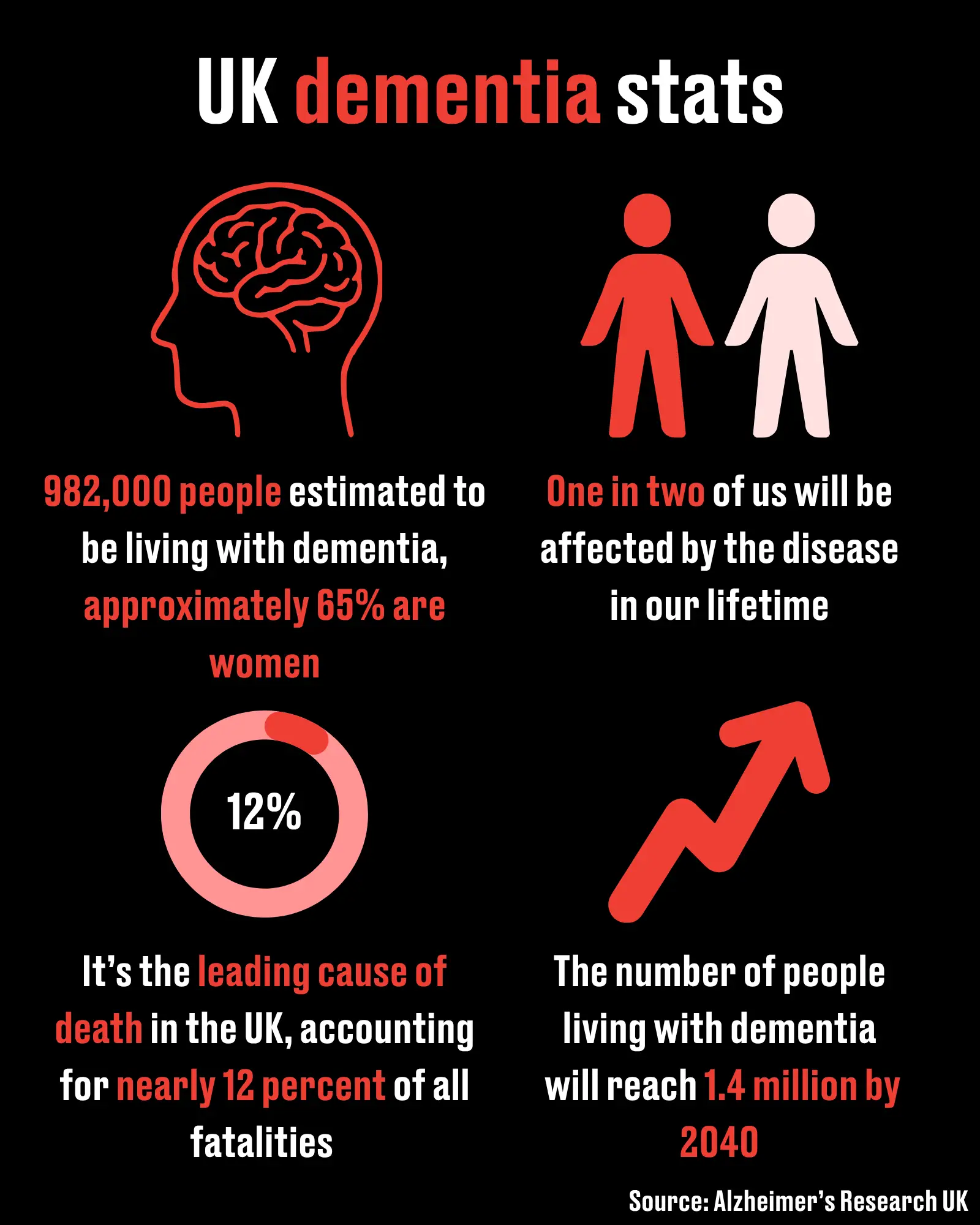
A 2014 study by the University of Exeter of 1,658 Americans found people with a severe Vitamin D deficiency were twice as likely to get dementia, while people with a moderate deficiency were 53 percent more likely to develop the disease.
Other sources of Vitamin D aside from sunlight include oily fish, red meat and egg yolks.
Common early symptoms of dementia
According to the NHS, the first signs of dementia often include:
- mood changes
- struggling to find the right word in a conversation
- being confused about time and place
- difficulty concentrating
- finding daily tasks harder
- memory loss
 Dan Seddon