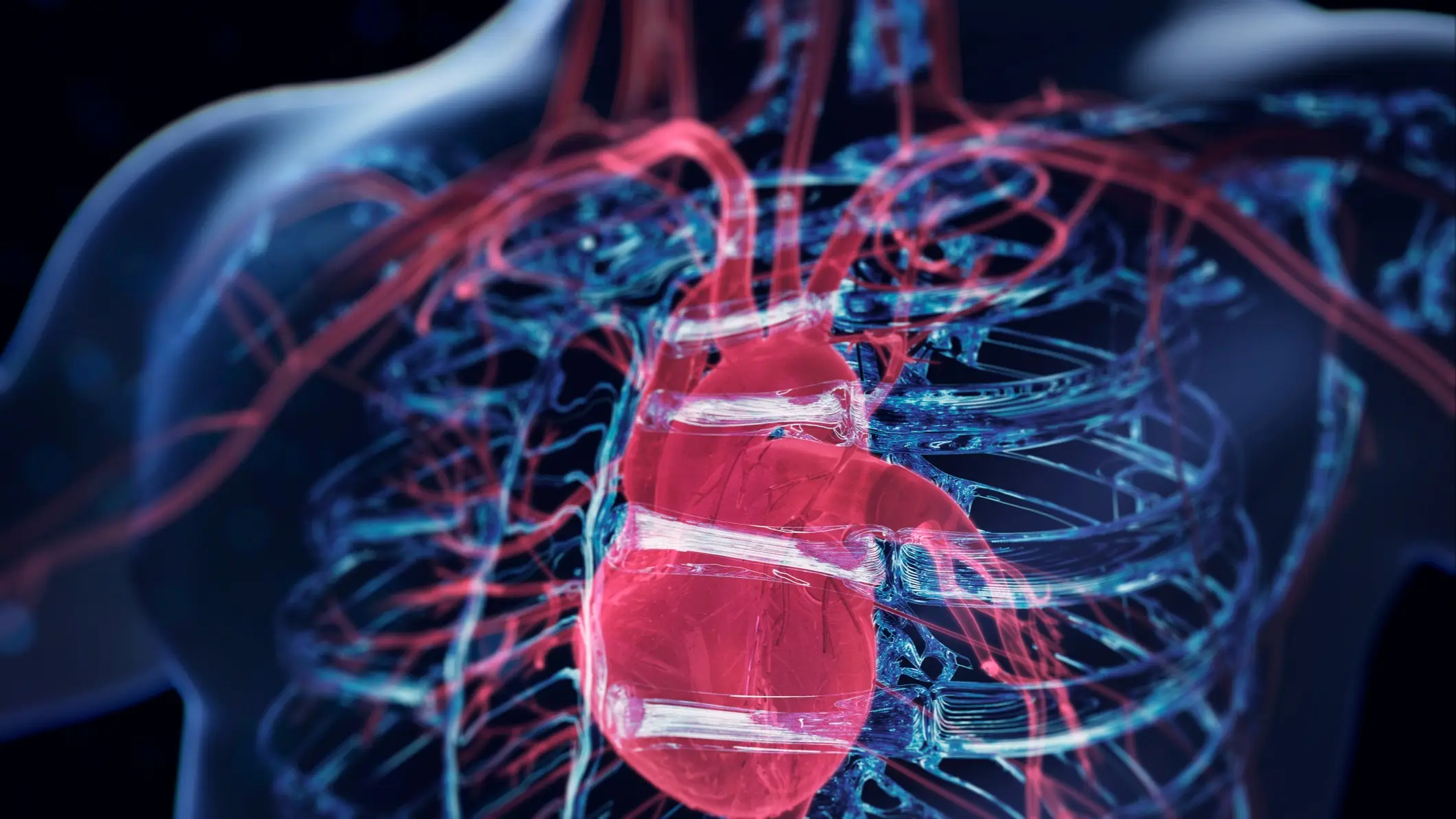
Cardiologist shares major 'red flags' you could have heart disease

Millions of people in the UK are said to be affected by heart and circulatory diseases.
And it’s estimated that 17.5 million people are killed every year by cardiovascular disease.
Heart disease is any condition that affects the heart’s normal functioning, including the likes of Kawasaki disease, rheumatic heart disease and peripheral artery disease (PAD).
The Victor Chang Cardiac Research Institute is based in Australia and is billed as the ‘home of heart research fighting heart disease’.
Advert
And on YouTube, it shares videos about heart health, symptoms of disease, advice and more.
One Short includes a cardiologist sharing the major ‘red flags’ that someone could have heart disease, going beyond chest pain. “Sometimes the red flags are more subtle than you’d expect,” it says.

In the clip, Cardiologist and Institute Professor Jason Kovacic explains symptoms that people shouldn’t ignore.
“Chest pain is the classic heart disease symptom,” he says. “Chest pain usually arises because of blockages in the arteries and a lack of oxygen supply.
“It’s often described as a really crushing, heavy pain like an elephant sitting on the chest.”
However, he says that the chest pain (which can also be referred to as angina) ‘can be more subtle than that’.
Professor Kovacic says it can also be experienced in the upper epigastrium (that’s the upper central part of your tummy to me and you – just below the ribs and above the belly button). It can also even be felt in the shoulder.
He also says that ‘another classic symptom’ can be shortness of breath.
“That can often occur when the heart isn’t pumping as well as it should,” the cardiologist explains.
“And palpitations is really important not to forget.”
He describes these as a ‘beating in the chest or of the heart’.
Professor Kovacic says palpitations can be ‘signs of a rhythm problem’.
“Dizziness, tiredness, fatigue, blackouts, collapses are all other symptoms of heart disease that are important to consider” the expert continues.
“So if you have any of these and they’re significant, it’s important to think about getting them checked out. It could just save your life.”
The NHS explains that for some people, the first sign that they have cardiovascular disease might be experiencing angina, a heart attack or stroke.
It’s worth noting that many symptoms overlap with other conditions or diseases. You should always seek health advice from a medical professional if you have any concerns.
Topics: Health
 Jess Battison