
Heart surgeon reveals four foods we consume every day that are 'proven to reduce lifespan'

A heart surgeon has revealed the four different types of foods that have been shown to reduce lifespan.
In the UK, the average life expectancy for females is 83 years old, while it's slightly less for males, at 79.1 years old.
Genetics and lifestyle play a role, and one doctor has revealed the kinds of foods that can negatively impact longevity.
Cardiovascular surgeon, Dr Jeremy London has explained that there are several different types of foods and drinks can impact how our cells function.
Advert
Let's get into them...

Ultraprocessed food
Dr London explained that the 'longer the shelf life, the shorter your life'.
While most of us are aware that we should be minimising processed food, Dr London explained that many ultraprocessed options can create problems when it comes to sugar metabolism and body inflammation.
“Ultraprocessed foods are the industrially manufactured branded food products made from ingredients that are mostly of exclusive industrial use," said Dr London.
“Containing little to no whole foods and designed to maximize convenience, palatability, and corporate profits.
“... Foods that are manufactured for shelf life, longer shelf life, hyper palatability.
“... It's packaged foods, packaged snacks, frozen meals, protein bars with additives, fast foods, things that we see all the time, things that we see down the aisle of the grocery store.
“... For every 10 per cent increase in ultraprocessed foods that is consumed, there is an 10 per cent increased risk in mortality.”
Sugary drinks
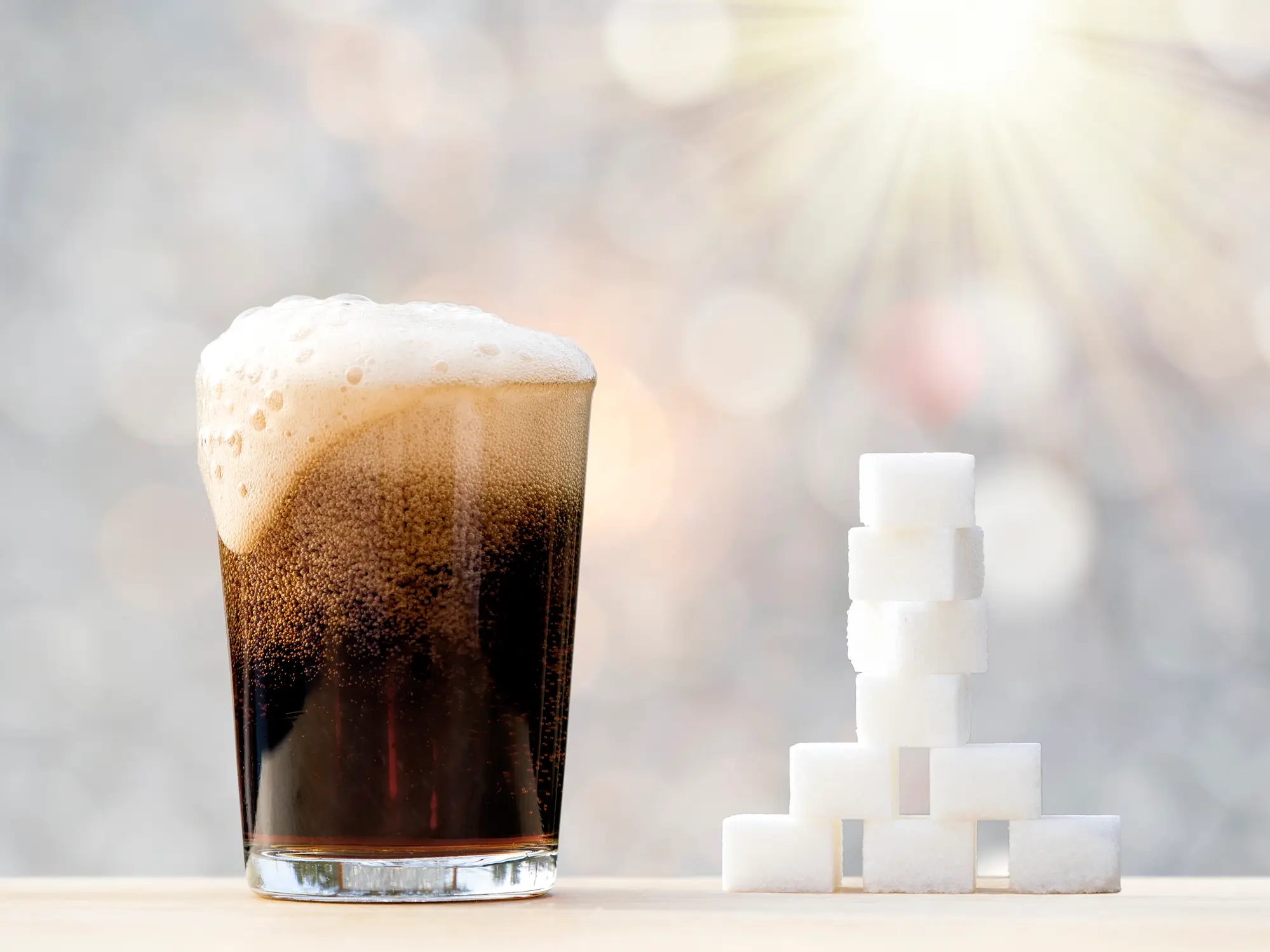
Dr London explained that sugary drinks are one of the 'most damaging foods we can ingest' due to their links to heart disease and type 2 diabetes.
Sugary drinks can be anything from fizzy sodas to fruit drinks, energy drinks and sweet teas.
“We know that there is a direct correlation with heart disease, type 2 diabetes, and an increase in all cause mortality," said Dr London.
“Liquid sugar is different than solid added sugar. Well, it absorbs much more quickly.
"... It can drive insulin resistance and fatty accumulation in the liver because your liver is trying to deal with this overabundance of sugar.
“One of the other key points with liquid sugar is that it registers differently in your body than solid sugar because you're drinking it. you don't ever feel full.
“Many people will drink these sugary drinks throughout the day.
“If you are already drinking sugary drinks, quitting these could really be one of the biggest levers you could pull to make a significant difference in your overall metabolic health.”
Excess saturated fats
Dr London explained that while not all saturated fats are bad, they shouldn't make up more than 12 percent of your daily calories.
Anything over this figure can increase mortality risk significantly, due to an increase in LDL cholesterol.
“This next category is a little more nuanced and it's saturated fats," he said.
“Not all saturated fats are bad and our bodies do need some, but you don't want your saturated fats to make up more than 10 to 12 percent of your total caloric intake.
“When we're talking about saturated fats, we're talking about fatty red meat. We're talking about butter. We're talking about high fat dairy in large quantities.
“Mortality risk increases significantly if we get above that 10 to 12 percent.
“Primarily with an increase in LDL and APOB. We know that these are direct risk factors for cardiovascular disease.
“By eating too much saturated fats, you secondarily increase your LDL cholesterol because your body is not able to clear it.”
Processed meats
It's no secret that processed meats are linked to certain diseases. According to research conducted by the World Health Organisation (WHO) processed meats are considered a Group 1 carcinogen - something which is something is known to cause cancer - with guidelines recommending you should cut them out of your diet as much as possible.
“This next category is kind of a separate category in and of itself because it's been in the spotlight for many years and it's processed meats, lunch meats, hot dogs, processed bacon, sausages, things of that nature," said Dr London.
“For each 50 grams per day that you ingest, it increases mortality risk by about 15 percent.
“Most of these meats contain nitrates, which has been found to be a direct carcinogen or cancer-causing compound.
“It can increase inflammation. It changes your lipid metabolism and it can also disrupt gut metabolism.
“You get an increase in LDL cholesterol again, total body inflammation, and accelerated plaque formation in your arteries.
“Having these things occasionally is probably okay, but it should definitely be limited if not eliminated from your diet.”
Dr London explained that in addition to the four food groups, no amount of alcohol is safe for overall longevity.
“Alcohol is truly toxic to every cell in the body," he said.
“It disrupts sleep. It disrupts your overall metabolism and can directly impact longevity.
“If you want to drink because you're making a conscious decision to do so, your body, your rules, but don't drink because you think there's health benefit.”
Topics: Health, Food And Drink, YouTube
 Lucy Devine