Why you should trust your gut if you think someone might be struggling

Content warning: This article discusses suicide.
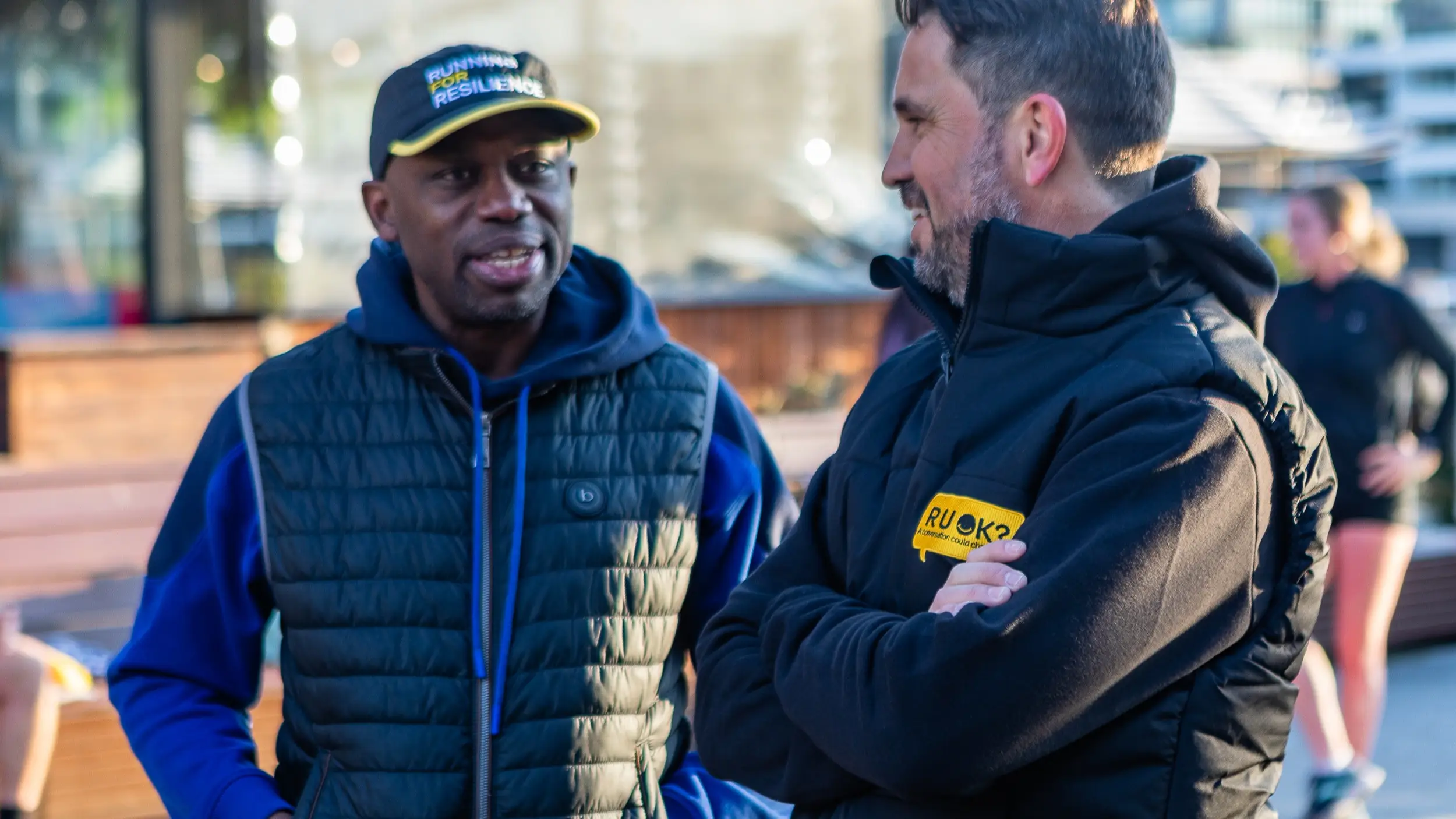
You don’t always know when someone is struggling. They might seem quieter than usual, withdraw from plans or be going through a major life change, but sometimes there’s no obvious sign at all. That message is particularly personal for R U OK? Community Ambassadors Mahir Munot, Lachlan McTackett, Kevin Heath and Mitch McPherson, who have each experienced the impact of speaking up, being heard and having someone check in.
For Mahir, 20, it was a teacher from another school who noticed him crying on a bus home after he had experienced severe bullying that had become physical. She asked if he was OK, despite not knowing everything he was going through.
“The teacher did not know everything I was going through, and she could easily have assumed someone else would step in, but she trusted what she was seeing and asked,” Mahir says. “It taught me that if someone is on your mind, you do not need proof that something is wrong. If you’re thinking about it, Ask R U OK? Any Day.”
That conversation gave Mahir the confidence to open up to his parents, teachers and local community and get the support he needed. It also shaped his work as an advocate, where he now encourages conversations across diverse communities.
Lachlan McTackett, 28, understands how significant that first question can be. After moving away for university, he began experiencing depression and suicidal thoughts at around 19 and tried to handle it himself until someone asked if he was OK.
“I learned firsthand that a conversation can save a life, because it was a conversation that saved mine,” Lachlan says. “After that conversation, things began to change for the better. I finally opened up to my mates and to the people close to me about what I'd been keeping to myself for so long.”
His mates couldn’t make every problem disappear, but they helped him feel less alone and supported him to get the help he needed. Now, he makes checking in a regular part of his relationships.
“I make checking in a normal and regular part of all of my relationships rather than waiting until it cannot be avoided,” he says. “Even if the person is doing great, I've opened the door for them to know that they can talk to me if that ever changes.”
That regularity is something Mitch McPherson, 39, also believes in. After losing his younger brother Ty to suicide in 2013, the founder of SPEAK UP! Stay ChatTY became passionate about encouraging people to speak openly about their mental health.
“It has made me more attentive to changes in people, especially when someone becomes quieter, withdraws or just does not seem like themselves,” Mitch says. “But it has also taught me not to wait for an obvious sign. Checking in should be a normal part of how we look after our mates, teammates, colleagues and family.”
Knowing when to ask is one thing. Knowing what to say can feel like another. But the ambassadors agree you don’t need the perfect words, qualifications or answers to start a meaningful conversation. “The teacher who approached me did not have a perfect speech or all the answers,” Mahir says. “She simply noticed, asked and listened, and that was enough to help me take the next step.”
The R U OK? ALEC framework — Ask, Listen, Encourage Action and Check In — offers a simple way to approach the conversation. You can start by asking what’s been happening, give the person space to talk, encourage them to consider what support they might need and then follow up.
Kevin Heath, 35, a proud Butchulla man and Aboriginal health professional, says listening is often more important than having the right response. “My experiences with loss have taught me how powerful it is when someone takes the time to genuinely see you and listen,” Kevin says. “A conversation may not change everything immediately, but it can interrupt that sense of being alone. It can remind a person that they matter, and that people care about them.”
And if someone doesn’t open up immediately, that doesn’t mean you got it wrong. Mitch says it’s important to give them time while continuing to let them know the door is open. “Give them time to answer and do not be discouraged if they do not open up straight away,” he says. “If you’re thinking it, Ask R U OK? Any Day. Persisting is key here.”
For Lachlan, that follow-up was an important part of his own experience. His first conversation didn’t instantly make everything better, but his mates kept checking in and showing up for him.
“These sorts of things often take more than one good conversation to resolve,” he says. “Someone may feel better after opening up and still have difficult days later. Checking in again says, ‘I meant it when I said I’m here’.”
That’s why R U OK?Day is a prompt to start a conversation, not the only day to have one. A message, phone call, coffee or walk a few days later can help turn one conversation into ongoing support. “You do not have to wait until someone appears to be at crisis point,” Mitch says. “Checking in should be a normal part of how we look after our mates, teammates, colleagues and family.”
R U OK?Day 2026 is Thursday September 10, but checking in is something worth making a habit of all year round. If someone is on your mind, trust that feeling, ask the question and give them the chance to talk.
For more information and guidance on how to ask, visit R U OK?’s conversation guide.
If you or your mates need support, please contact Lifeline on 13 11 14, or Beyond Blue Australia on 1300 22 4636.
 The LADbible Team