How to spot online shopping scams, fake texts and celebrity adverts

Black Friday is almost upon us and with Christmas in the pipeline there's rarely been a busier time for shoppers, or scammers.
With everyone getting ready to spend money on Black Friday the scammers have plenty of schemes in place to trick people into parting with their money.
Report Fraud warns that during the last festive period between 1 November and 31 January scammers swindled shoppers out of £18.3 million in the UK, and with over 14,000 people making claims the average victim was scammed out of £1,278.
As such it's important that you do everything in your power to double check that what you're clicking on and sending your money to is a legitimate place of business and not a front for scammers.
Advert
How to spot a fake shopping or delivery message
The scammers will very often have your phone number or email address and send you a message and engage in a spot of 'phishing', a term for scam messages designed to trick you into inputting private information or clicking a dangerous link.
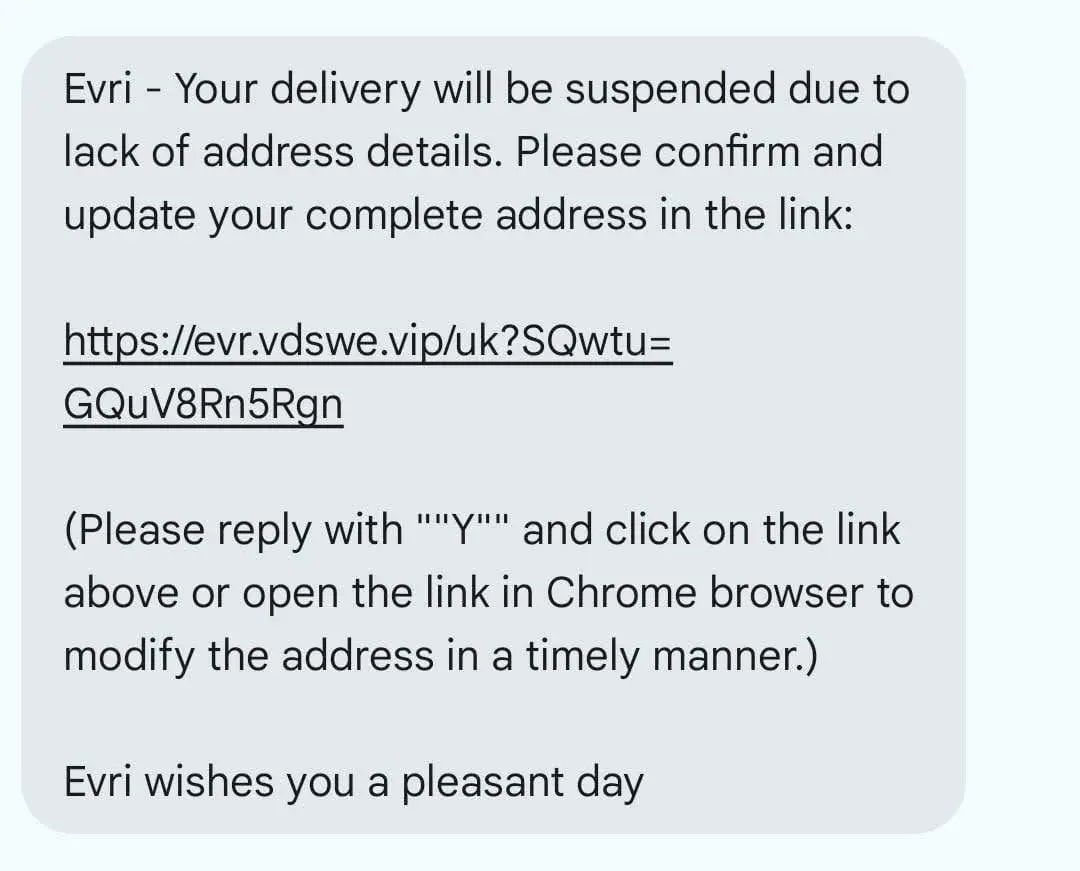
Take the message below, for example, Which highlighted it as an example of a fake message you might receive and it bears many of the tell-tale signs.
The first sign to be on the lookout for is the sense of urgency communicated to you, in this case if you don't act now your delivery which you may not have even made 'will be suspended'.
It's a trick designed to panic you into giving up details and clicking the link they lay out for you.
Another example of this false urgency was used in a recent scam where criminals impersonated Amazon and told customers there'd been suspicious activity with them having to act now or someone would use their account and linked bank card to buy things.
Between 5 and 14 October a total of £86,837 was stolen from Brits.
As for the link they want you to click it's often a complete mess as in the example below, look at the letters and you'll see it's not their real site.
If you really want to check then go onto the verified site of the company the message claims is contacting you and look at the link, chances are it's not going to resemble the thing you've been sent.
The message will also likely be coming from a number you don't recognise, so don't click the link and instead report it to 7726 then delete it.
How to check a shop or website before paying
Before you hand over any money there are checks you can do to make sure you've come to the right place.
The National Cyber Security Centre (NCSC) warns that some links are getting closer to the real thing than before, as they pointed out that the Tesco website is www.tesco.com but a scam site is www.tescos-sales.com which may be enough to dupe some people.
Further, increasingly elaborate scams have set up false websites so clicking a dodgy link takes you somewhere that almost looks legitimate.
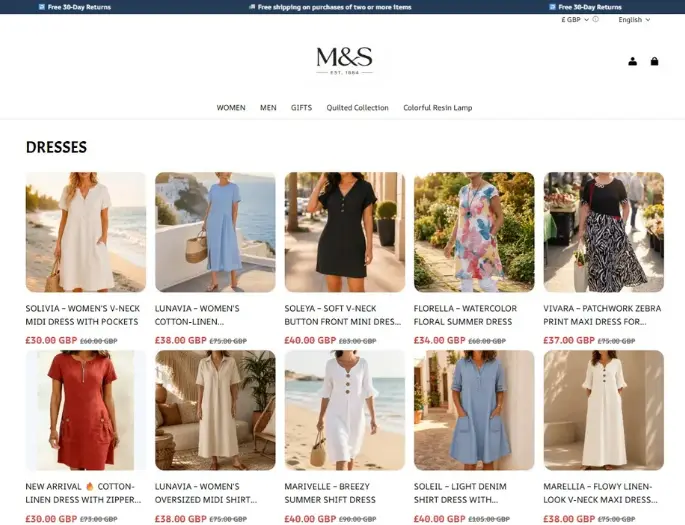
Another Which investigation uncovered the below website as a fake, masquerading as the real M&S, and there are some signs to spot. First and foremost is that the logo isn't quite right, and if you look at the pictures of the clothes they're claiming to sell they look AI generated.
Once again independently checking the website of the company you think you're buying from is worth doing, don't click on any part of the suspicious site and definitely don't input any personal information.
LADbible Group has contacted M&S for comment.
How to spot fake celebrity adverts
If the scam doesn't steal a trusted brand image to try and dupe you then it may attempt to use a celebrity likeness instead.
If people can fall for a fake romance scam with a famous face plastered over it then they'll fall for the apparent credibility and trust of a celebrity in an advert.
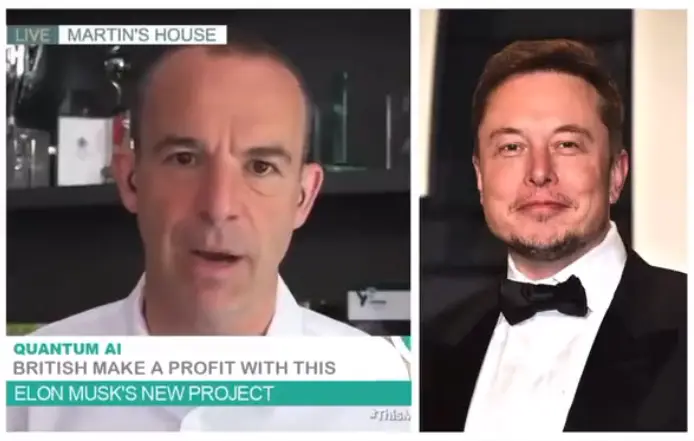
In the UK one of the most popular figures scammers like to use is Martin Lewis, given his reputation for financial advice if he endorsed something then it'd be imbued with a certain authority, but as Lewis himself has made abundantly clear he doesn't do ads.
Scammers love putting his name and image to things but if you see an advert featuring the Money Saving Expert himself then you can be sure it's a fake.
Given the state of AI deepfakes you can't trust footage of someone telling you they endorse something, there's every chance AI spat it out and stole someone's image in order to gain credibility.
Lewis himself regularly makes the point that he doesn't do adverts and lays out the kind of scams love using him most, including cryptocurrency and AI.
What to do if you clicked, shared details or paid
If you clicked on a dodgy link:
You might already have downloaded a virus to your device by clicking the link, so run antivirus software and let it do a scan to check for potential bugs.
You may also want to disconnect your device from the internet if you're worried that it's trying to upload something to your device.
If you shared personal details:
Depending on the details you shared out you'll want to take steps, if you put in a password then you'll need to change it and all of the passwords you use the same string of letters and numbers for.
If you've handed over your bank details then you should contact your bank ASAP and let them know what's happened to your account.
If you paid out money:
You should definitely be getting in touch with your bank as a matter of urgency if you've been scammed out of money, though be aware that there's no guarantee you'll get it back.
It's also something you should report to Report Fraud as you've been the victim of crime, which will be where you go if you live in England, Wales or Northern Ireland.
If you live in Scotland then you'll be reporting it to Police Scotland.
How to report scam texts, websites and adverts
Depending on how the scam came to you there are various ways you can report it.
Any suspicious text messages you get which you think are scams can be sent onto 7726, while the NCSC also has their own page which you can use to report dodgy sites and links.
ASA is another place you can report scamming adverts in a paid-for space.
Reporting a suspicious text, site or ad isn't the same as reporting a crime, for that you need to get in touch with Report Fraud or Police Scotland.
Topics: Martin Lewis, Money, LADwallet
 Joe Harker