'Biggest ever male great white shark' reappears and his movements could help solve huge question

Researchers are one step closer to solving a long-standing mystery shrouding marine life after an infamous great white shark reappeared.
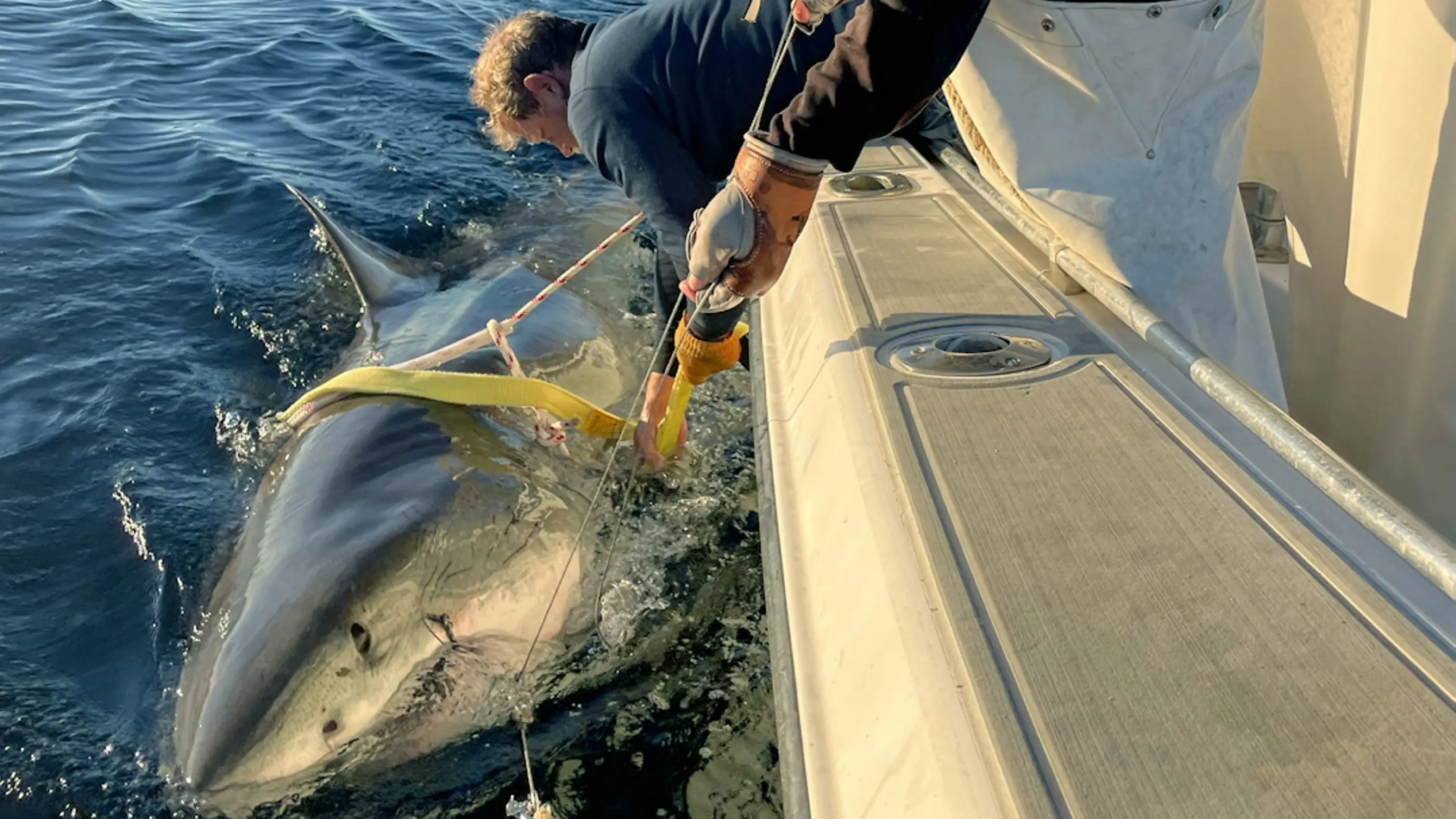
Weighing in at a whopping 1653 pounds and spanning 13 feet in length, Contender is quite the big fish - and he's making an even bigger splash in the scientific community.
OCEARCH, a marine research organisation, managed to tag the apex predator in January this year. Contender is the 'largest male white shark' in the Atlantic Ocean, which is on their books.
OCEARCH explained that after almost a month of silence, Contender cropped back up again in October...and now, his location has been pinging on the Global Shark Tracker once more.
Advert
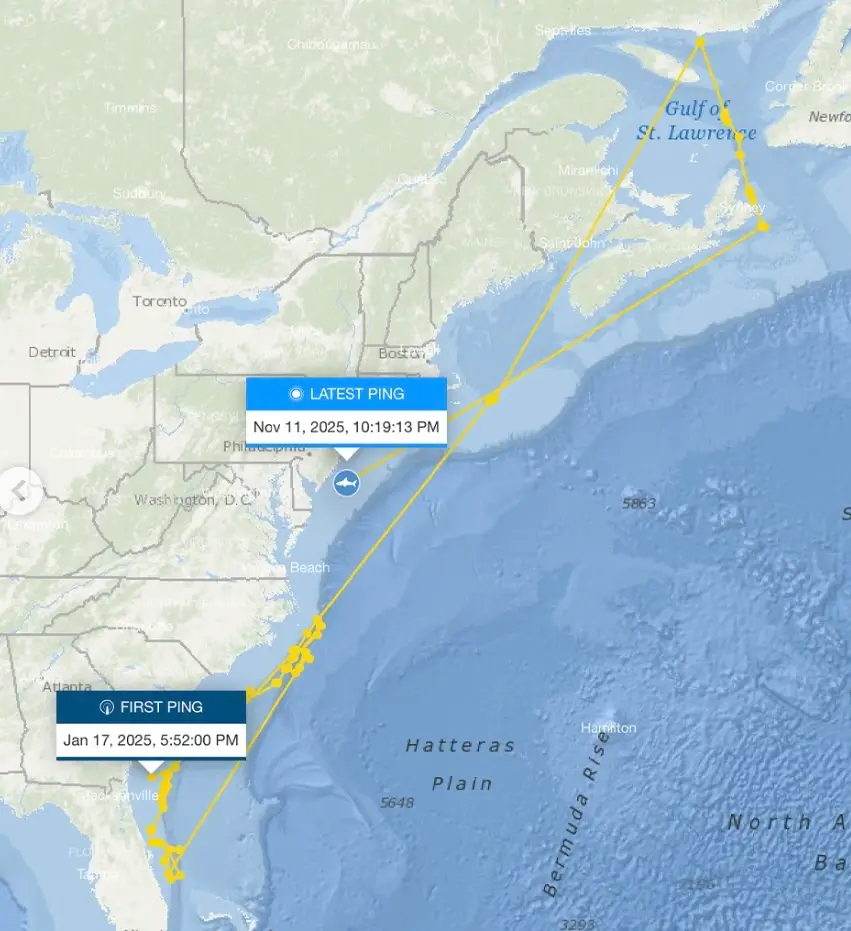
The non-profit first began tracking the humongous shark's movements off the Florida-Georgia coast, before he began heading up the East Coast and into Canada.
Over the summer months, from April to mid-June, Contender was located loitering around North Carolina - venturing from the Outer Banks and onto Cape Hatteras.
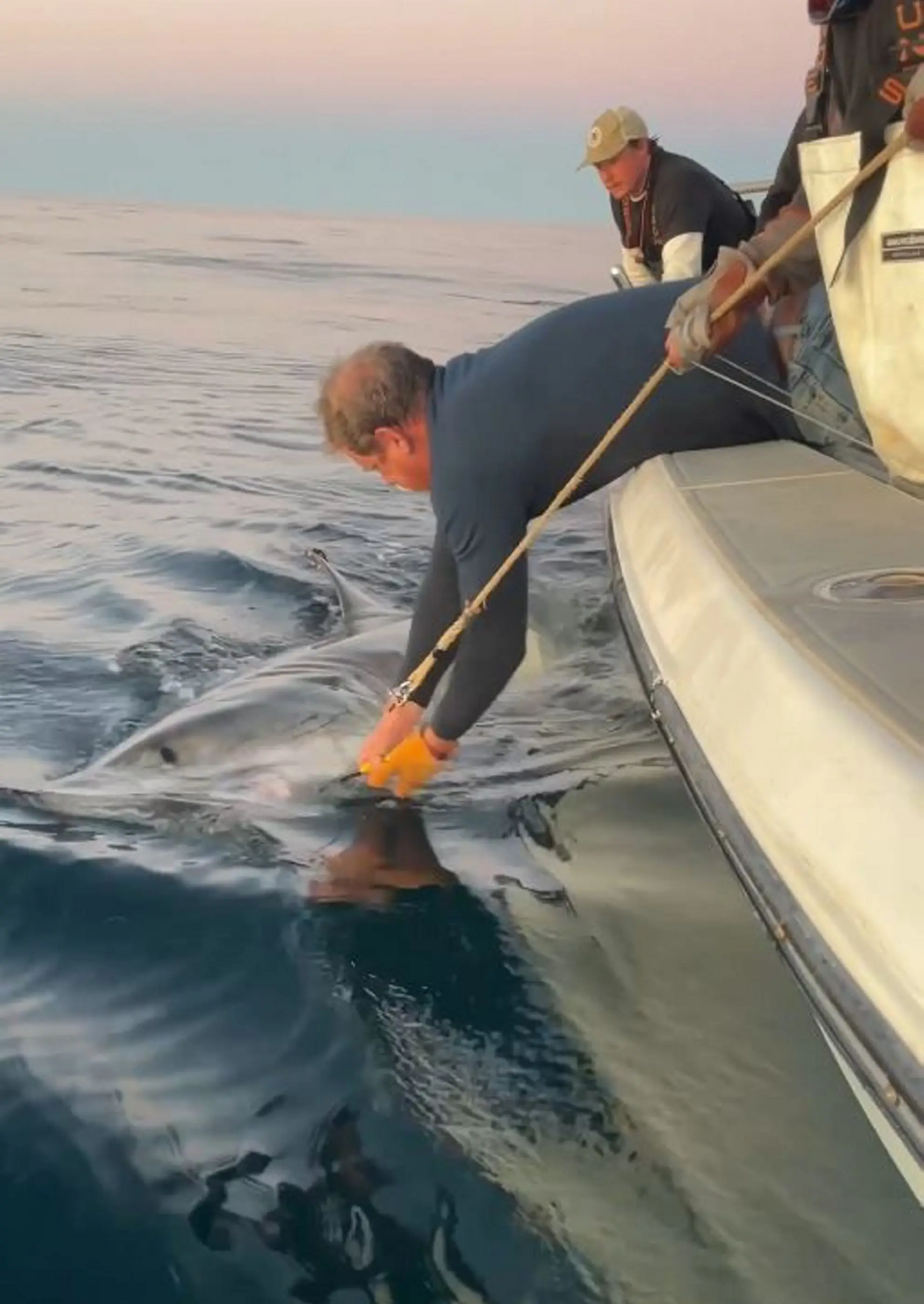
He then continued north before milling about the coast of Massachusetts in July, OCEARCH said, but Contender then went quiet for a number of months.
The great white then reappeared in September close to Quebec, before a flurry of activity followed in late October as he moved back down towards the US from Canada.
It's safe to say that Contender has covered a lot of ground over the last year, anyway.
Experts at OCEARCH previously described the predator as 'one of the furthest northern pinging sharks that we've had'.
"Only a couple have made it that far north," Chris Fischer, founder and expedition leader of OCEARCH, explained last month.
"An animal like that, spending the summer and fall up north - what are they doing? Well, a lot of what they're doing is preparing for the winter."
The great white shark is believed to have made the trip north in order to build up his fat stores by eating seals, ahead of a trip back south as the colder months set in.
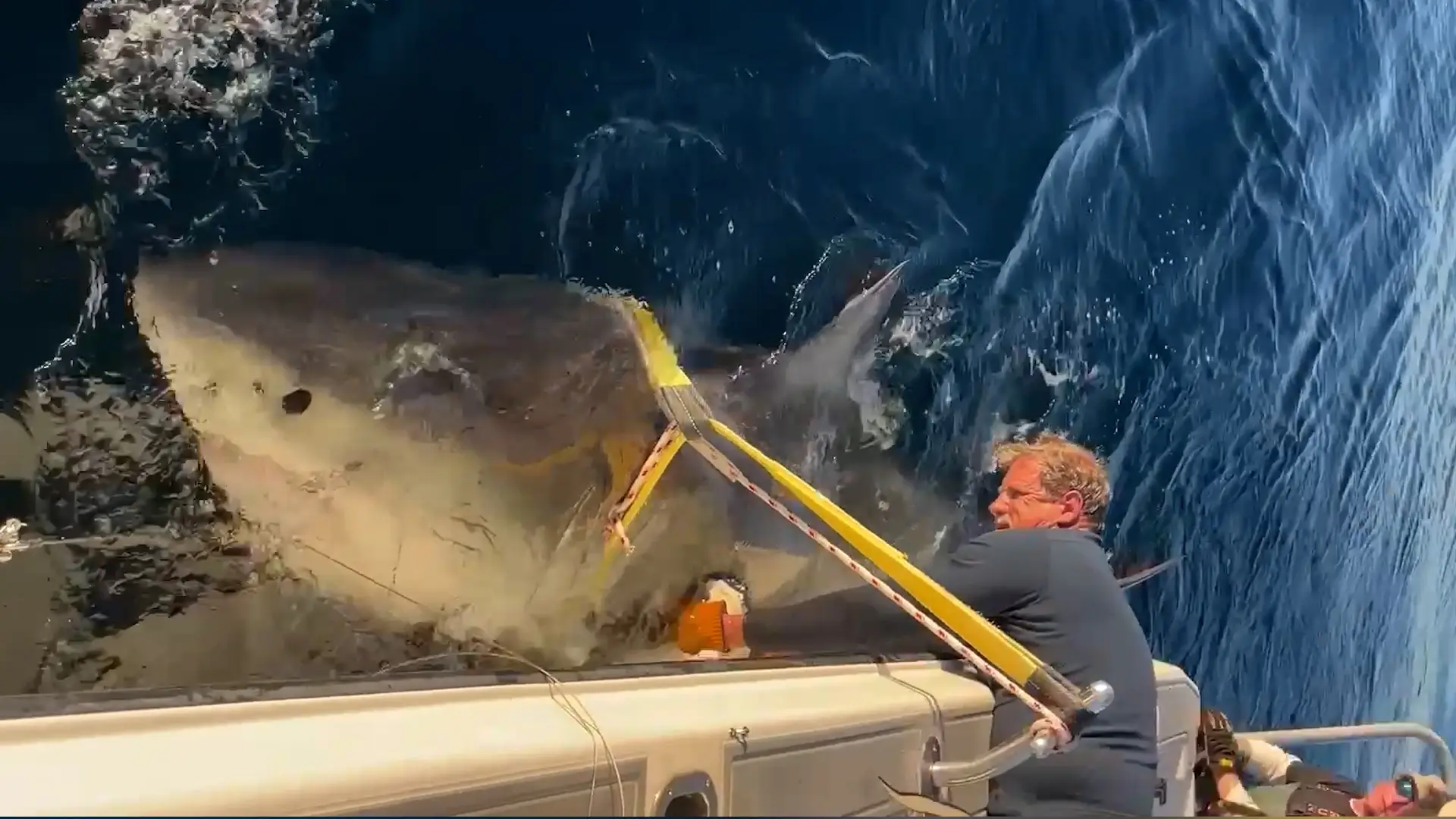
In the latest update on his progress issued earlier this week, OCEARCH revealed that Contender had pinged several miles off the coast of Atlantic City, New Jersey.
On Tuesday (11 November), the organisation said in an Instagram post: "Each ping adds another clue to the puzzle of white shark migration - and our team is tracking every move."
As well as offering them some insight into how, when, and why great whites might relocate at varying times of the year, OCEARCH can also gauge some other extraordinary information from Contender's movements.
His journey has provided several clues about one of the biggest mysteries of marine life, and boffins hope that tracking him could hopefully unveil the world's first great white mating site.
Great whites are currently believed to mate off the coast of the Southeast United States, specifically around the Carolinas; however, a particular site has never been confirmed.
"There's never been a white shark mating site identified anywhere in the world in any one of the nine populations," Fischer said previously. "It would be a first.
"It'll be really interesting to watch Contender this year," he added, explaining that next spring will be crucial for identifying breeding grounds.
"I want to know where Contender will be in March of 2026, in April of 2026. I think that could be a massive clue for identifying where they mate."
It is believed that Contender could be making his way back down to Florida in search of warmer waters and food - but keep your eyes peeled for his next ping.
 Olivia Burke